




Tehran Museum of Tradition
Project Outline
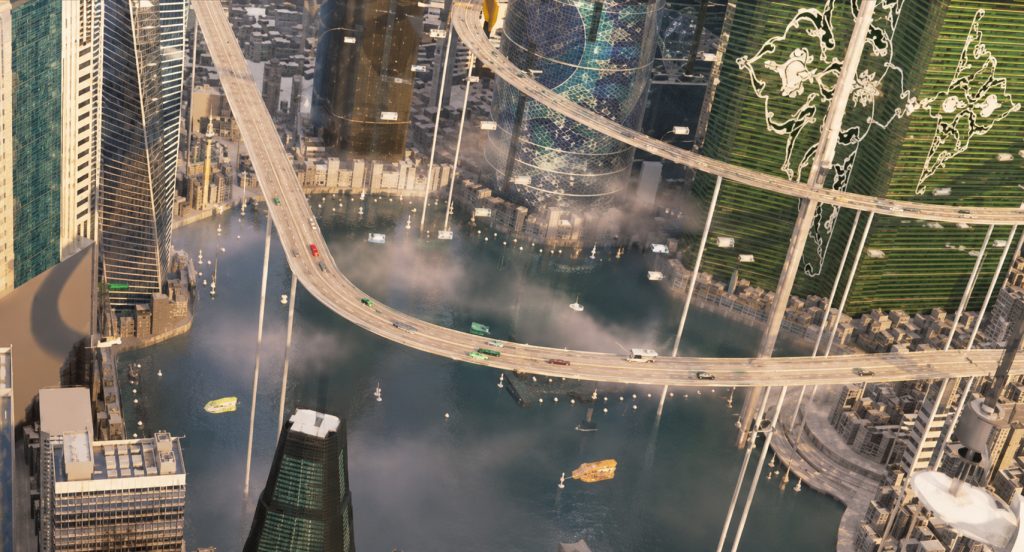
Tehran 1500 was an animated feature film released in Iranian cinemas in 2010. Set in twenty-second-century Tehran, the film presented a speculative vision of the city as a futuristic Middle Eastern megacity—technologically advanced, vertical, and luminous, yet deeply anchored in Persian cultural identity. For the development of the film’s urban environment, the city was designed by an international consultancy, while several architectural offices—including ours—were invited to contribute speculative architectural projects for key sites within the film.

Architectural Concept
Our commission was the design of a Museum of the Future: a museum dedicated to historical artifacts, positioned within this imagined future context. The project began with an investigation into historic Persian architecture. This research led us to the minaret of the Tarikhaneh Mosque—the earliest mosque built in Iran, dating back over 1,200 years. The minaret is composed of a sequence of horizontal decorative bands, each defined by a distinct geometric pattern, together forming a strong vertical rhythm of texture and proportion.
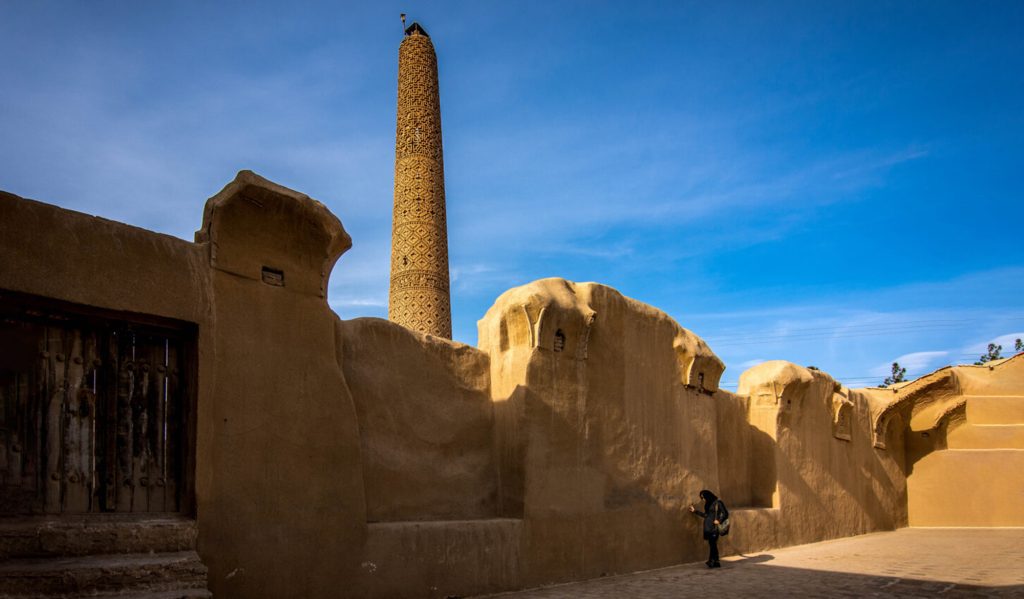
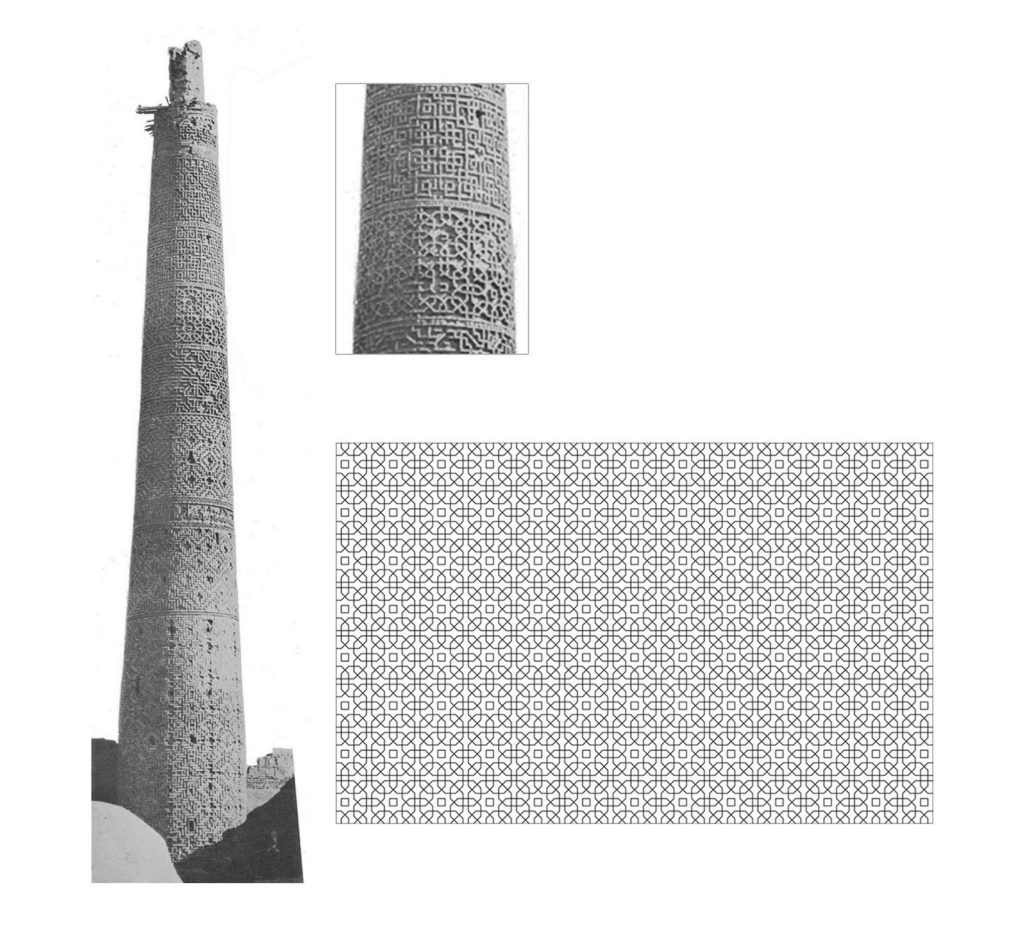
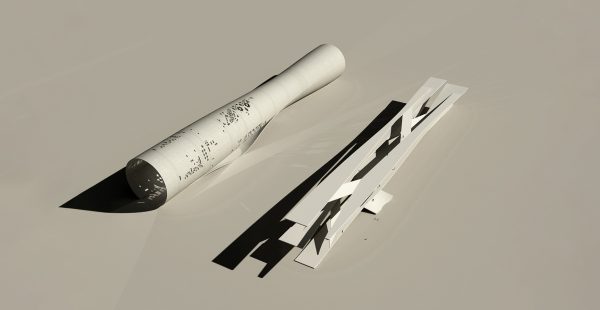
This minaret became both the formal and conceptual reference for the museum. Its vertical logic was rotated and reinterpreted horizontally, transforming orientation and scale while preserving its underlying ornamental structure.
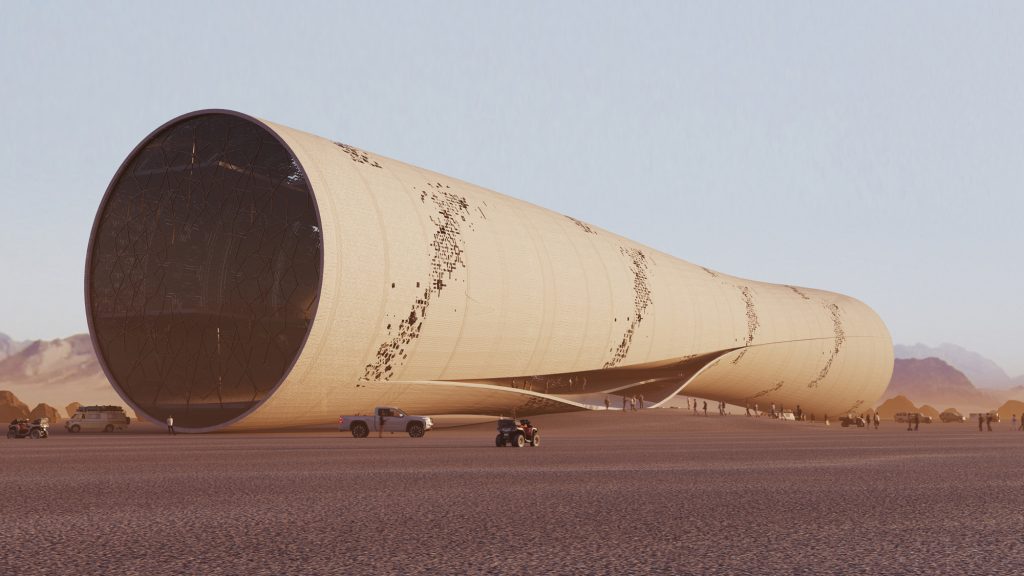
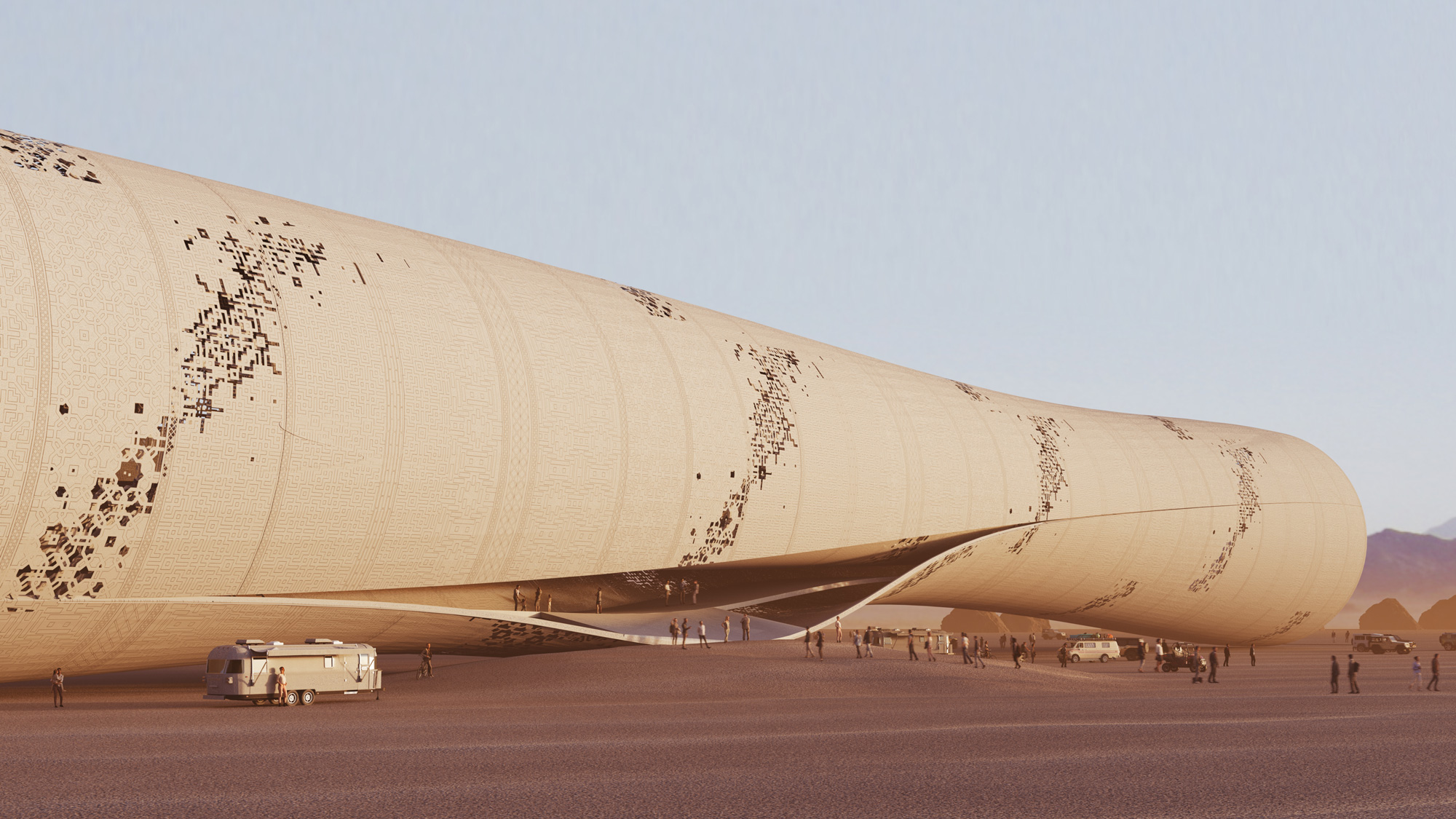
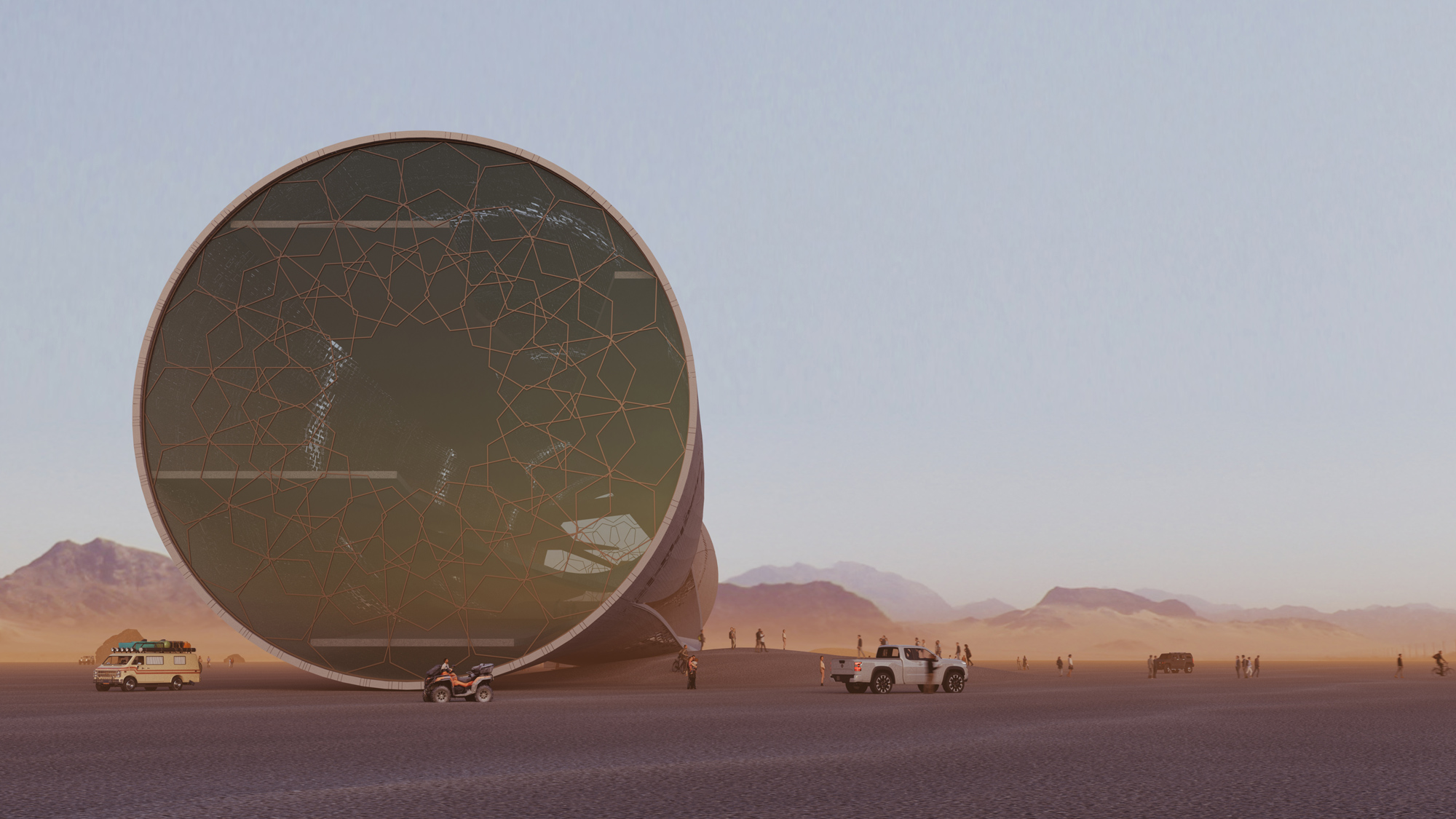
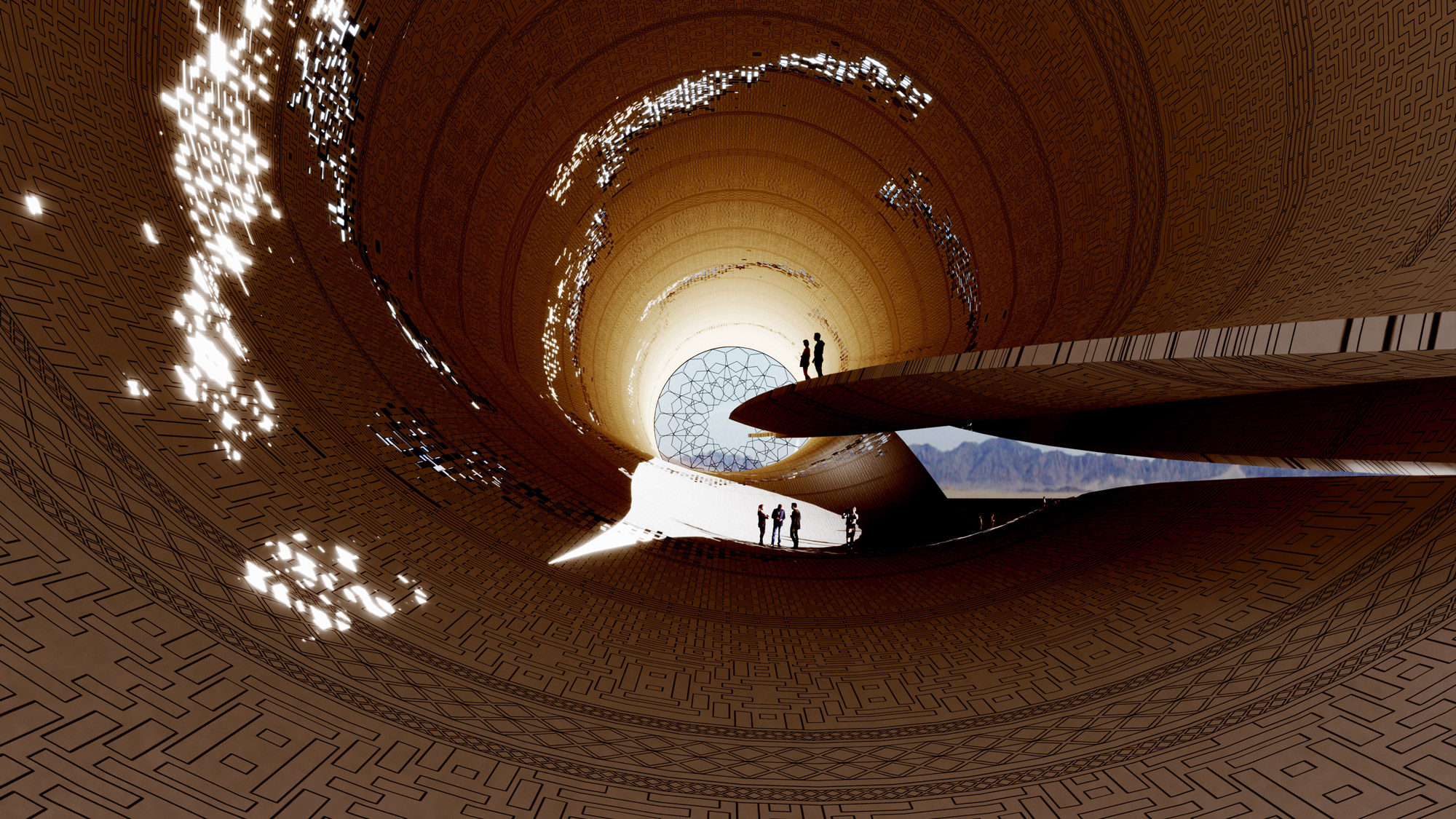
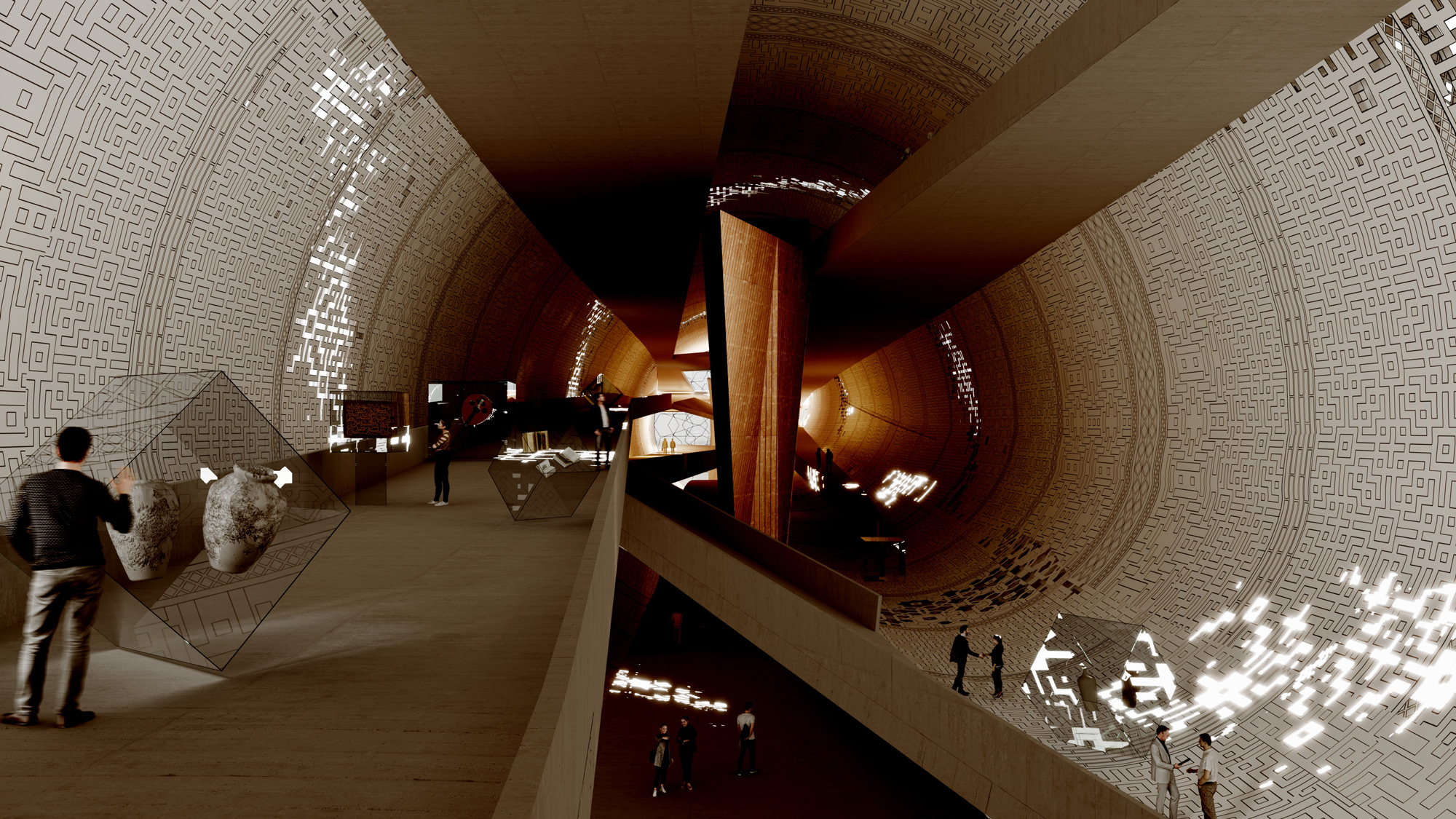
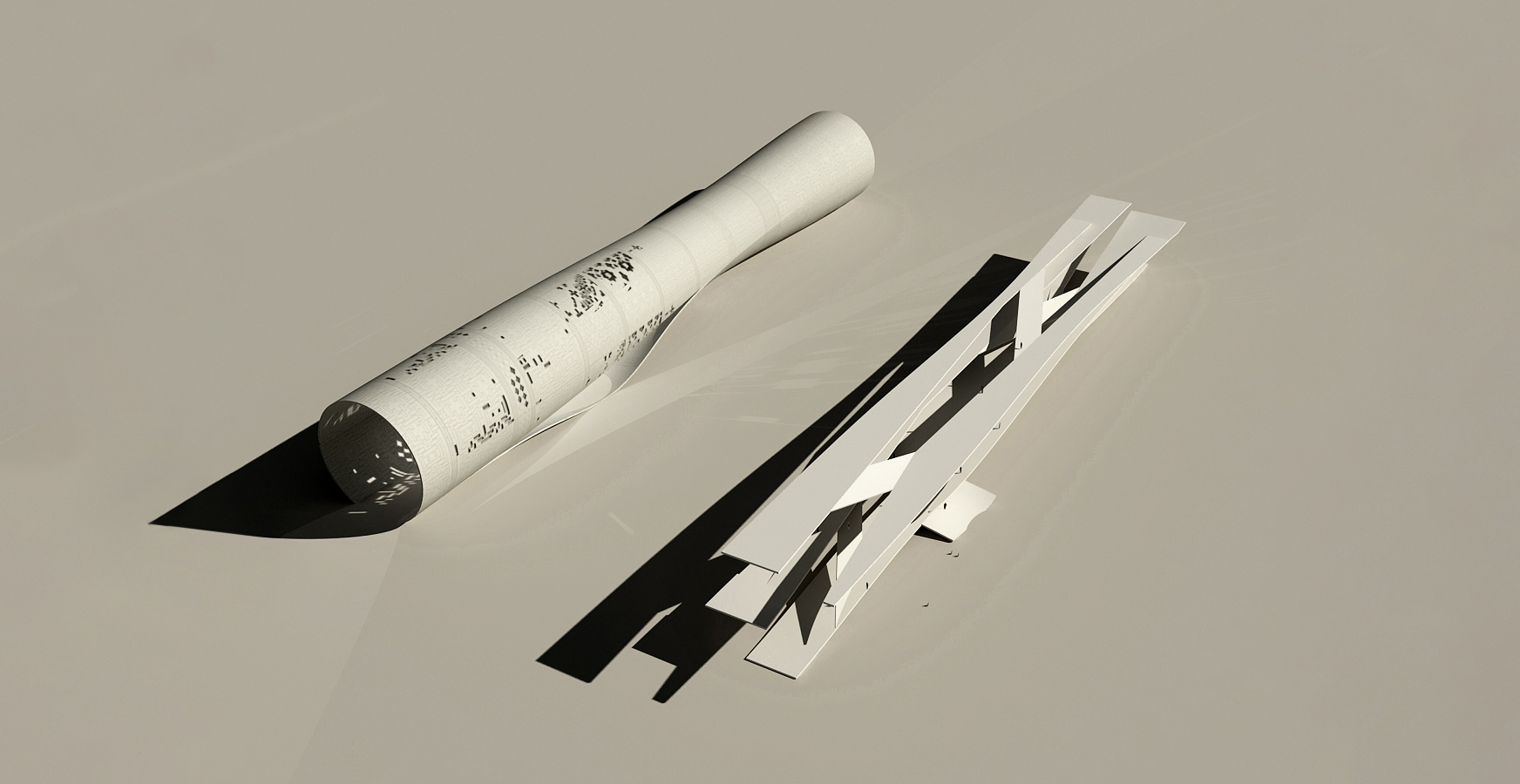
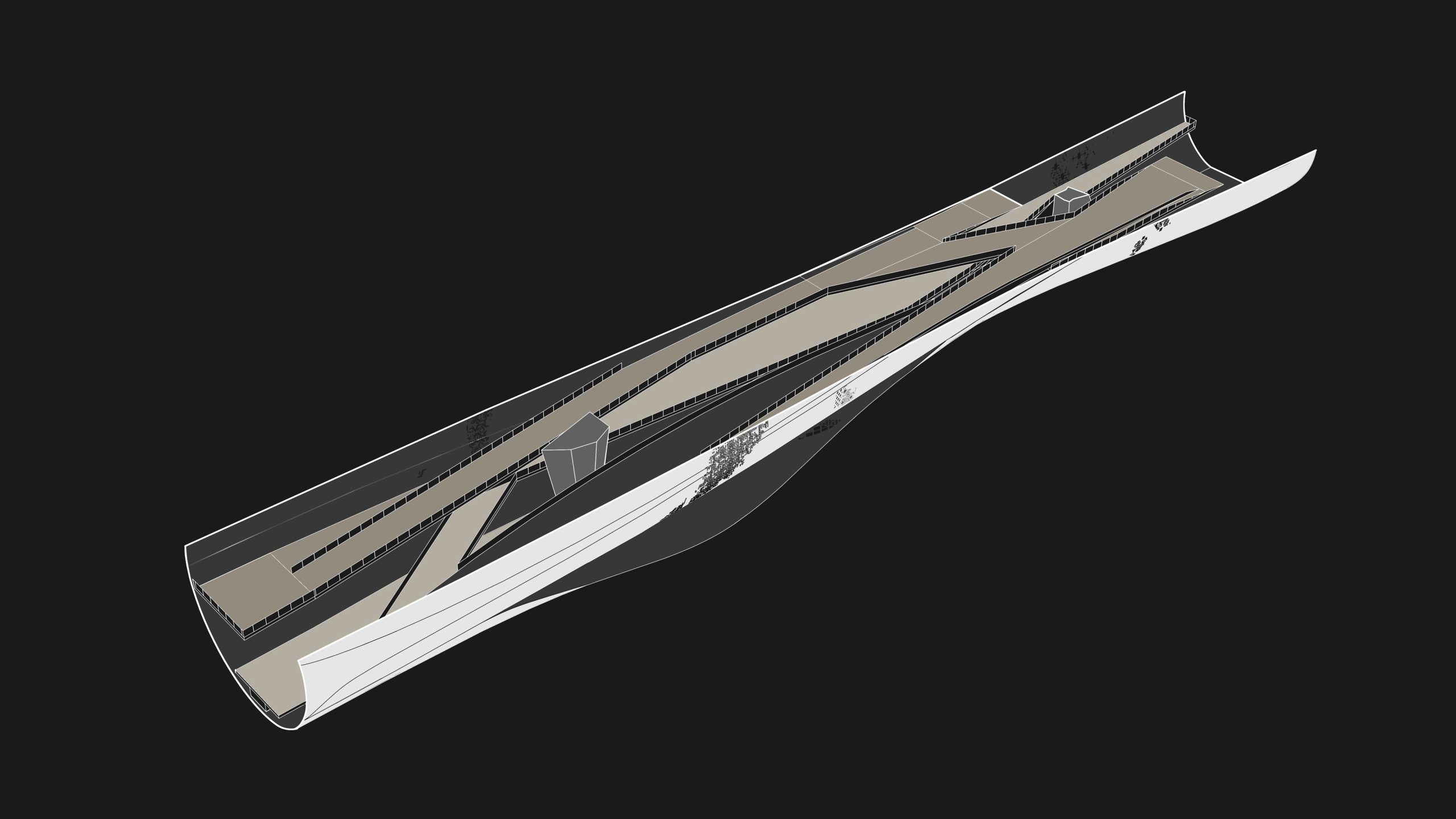
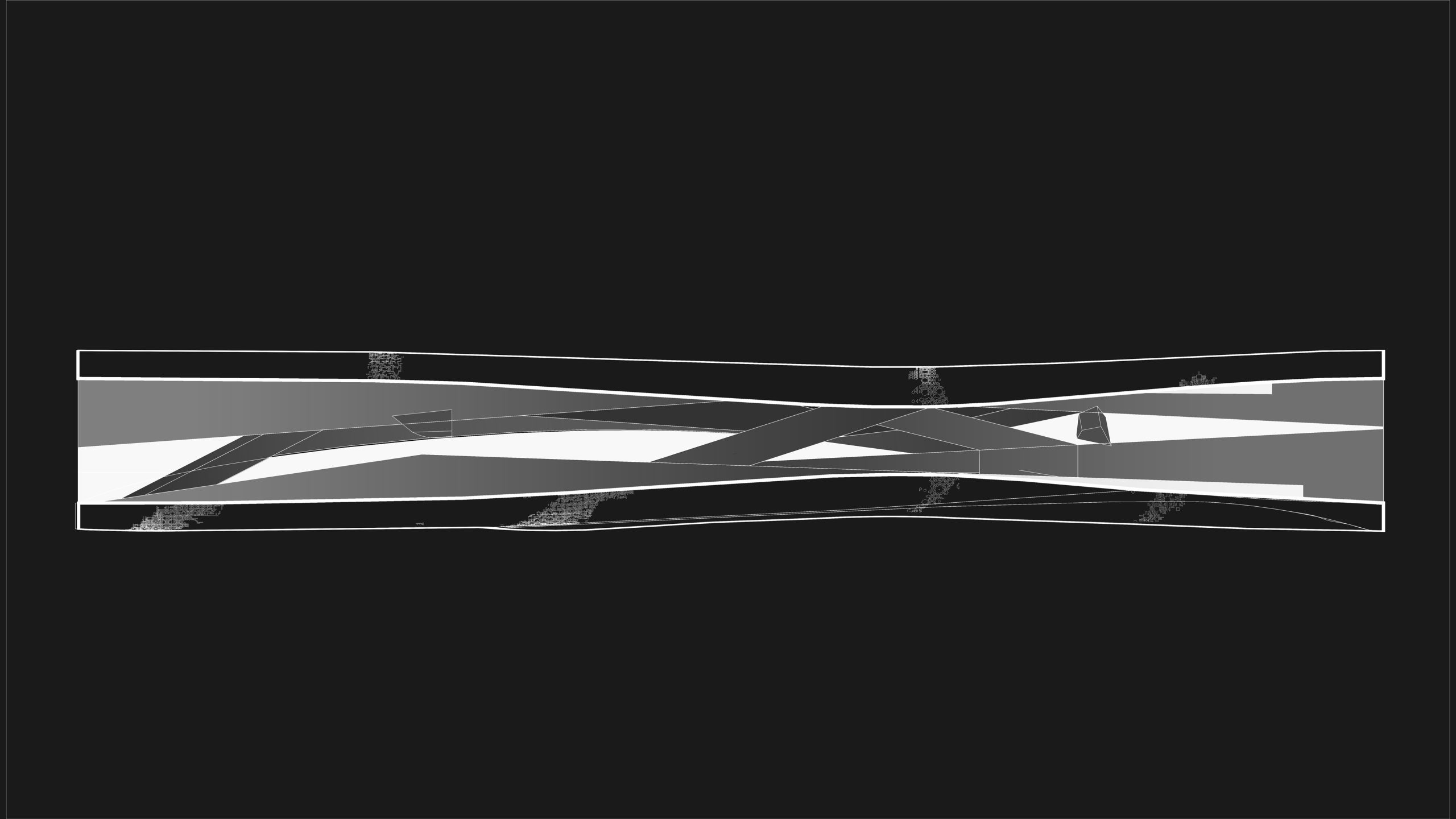
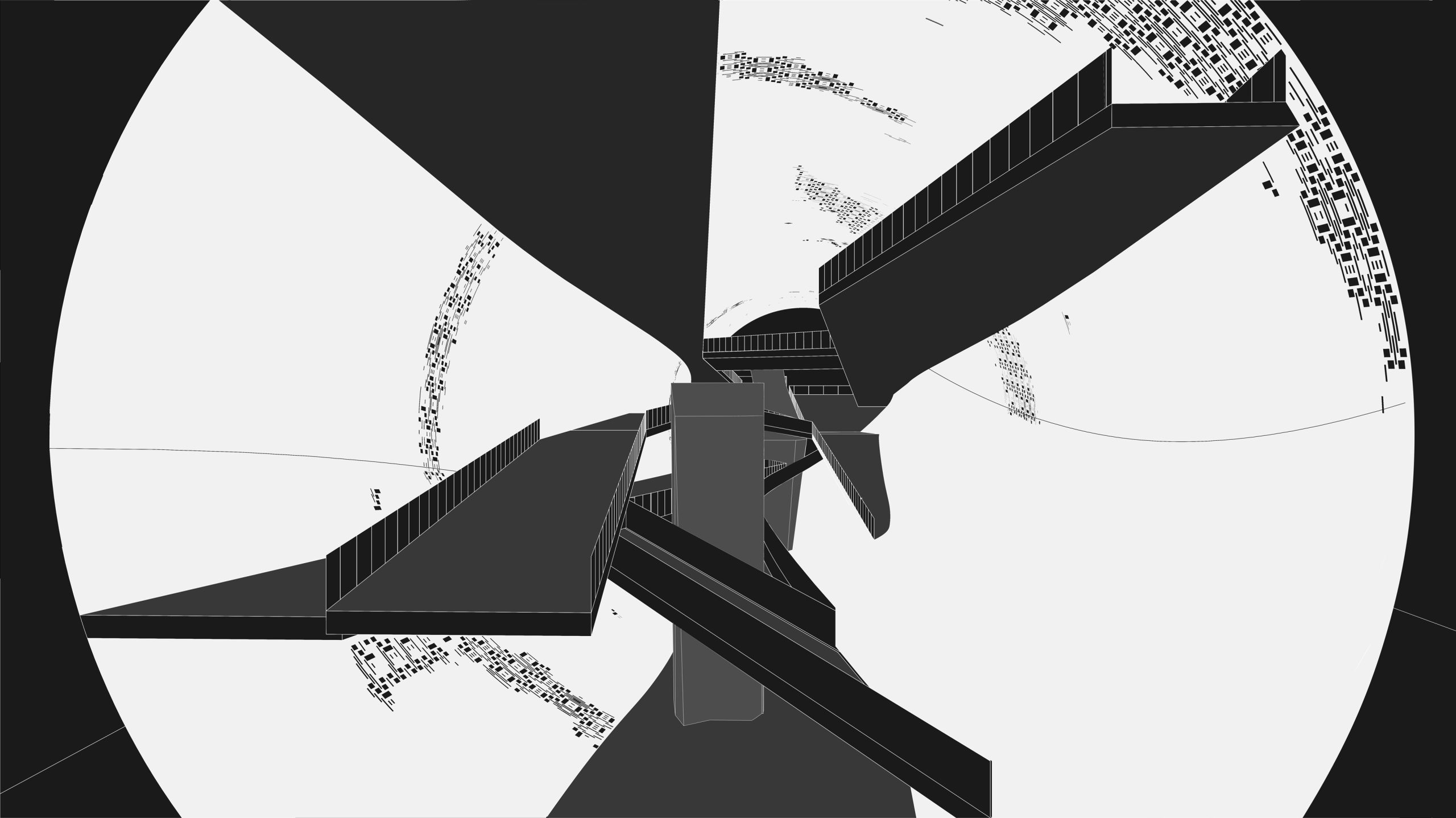
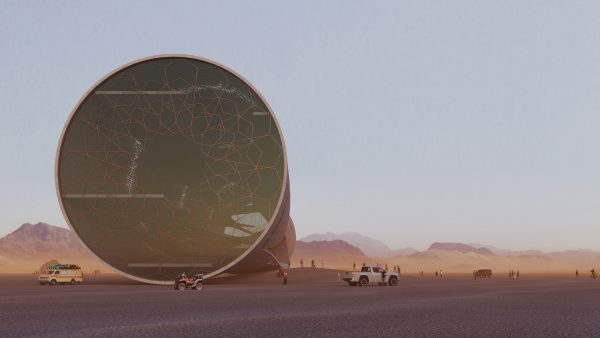
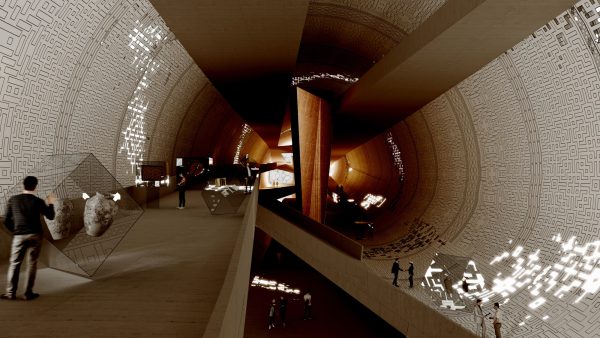
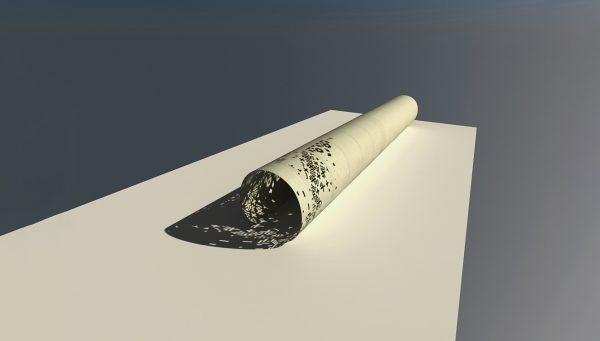
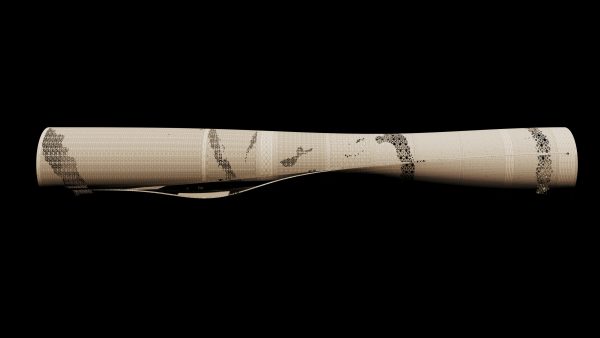
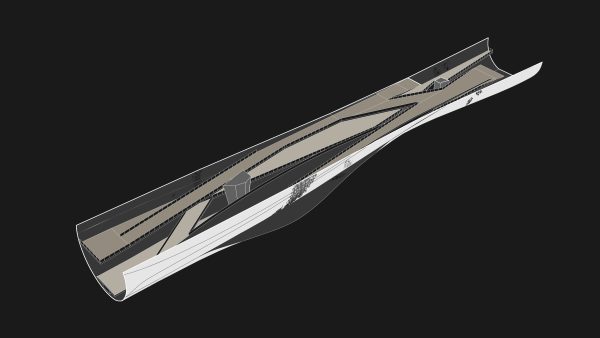
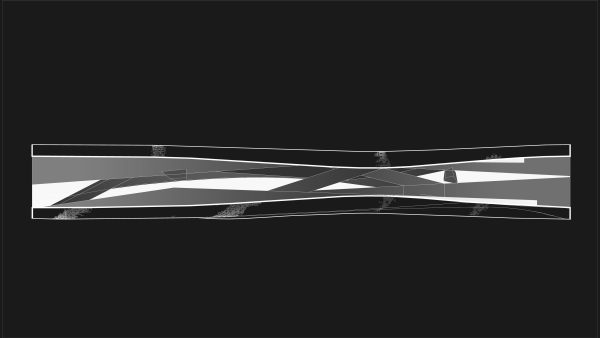
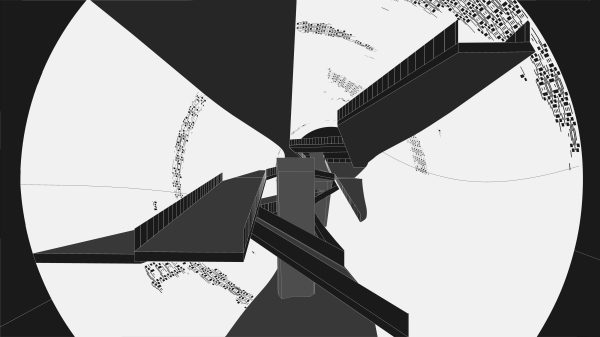
Within this elongated horizontal volume, a series of non-uniform internal surfaces were inserted to generate the required museum spaces. Programmatic organization emerged through sectional variation rather than through a fixed, rigid layout. Attention then shifted to the building envelope. The ornamental logic of the minaret was translated into the façade through carved, randomized openings derived from the historical geometric patterns. Additional cuts through the outer shell defined the main entrance, reinforcing the idea of the building as a continuous, carved object.
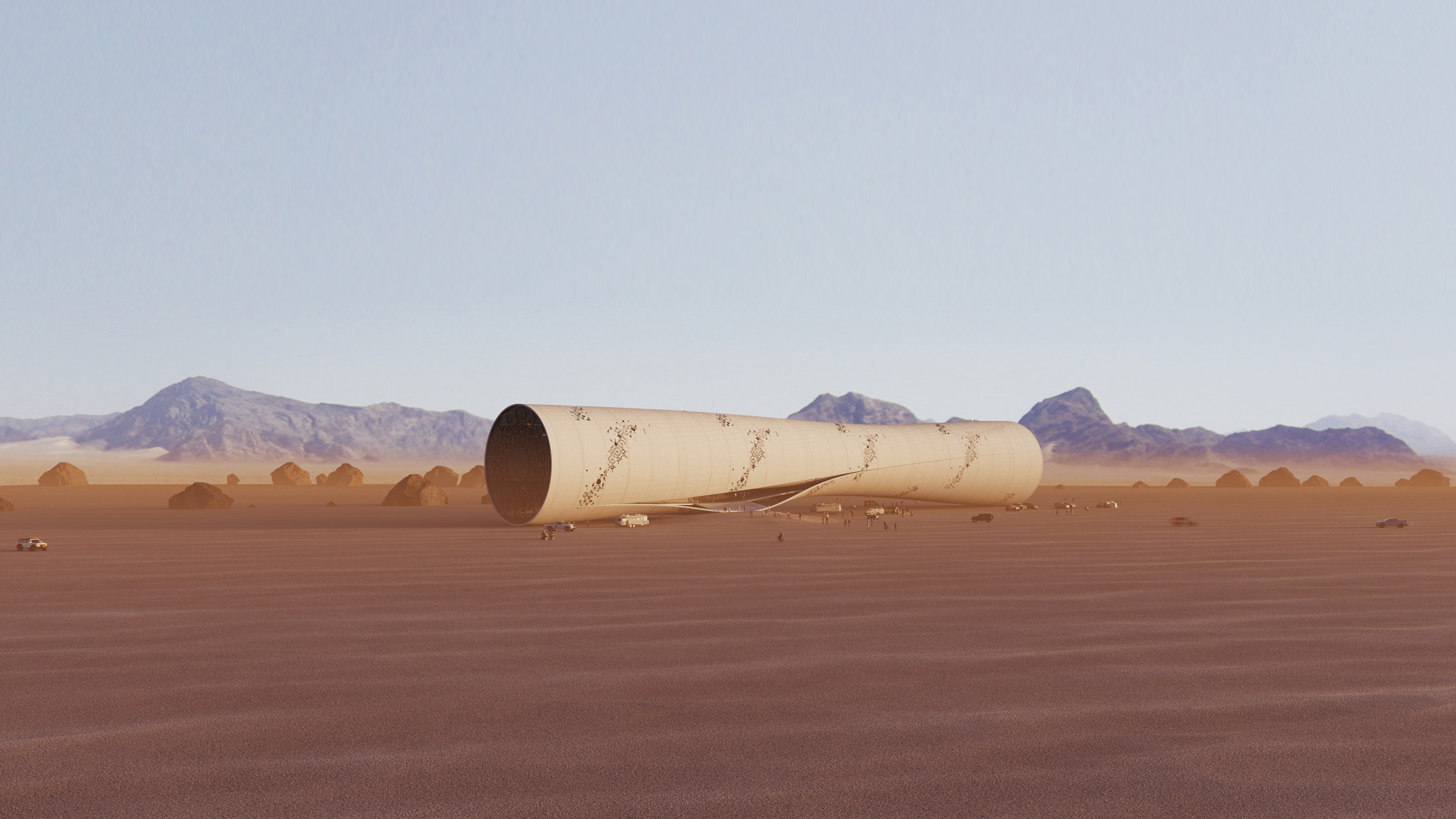
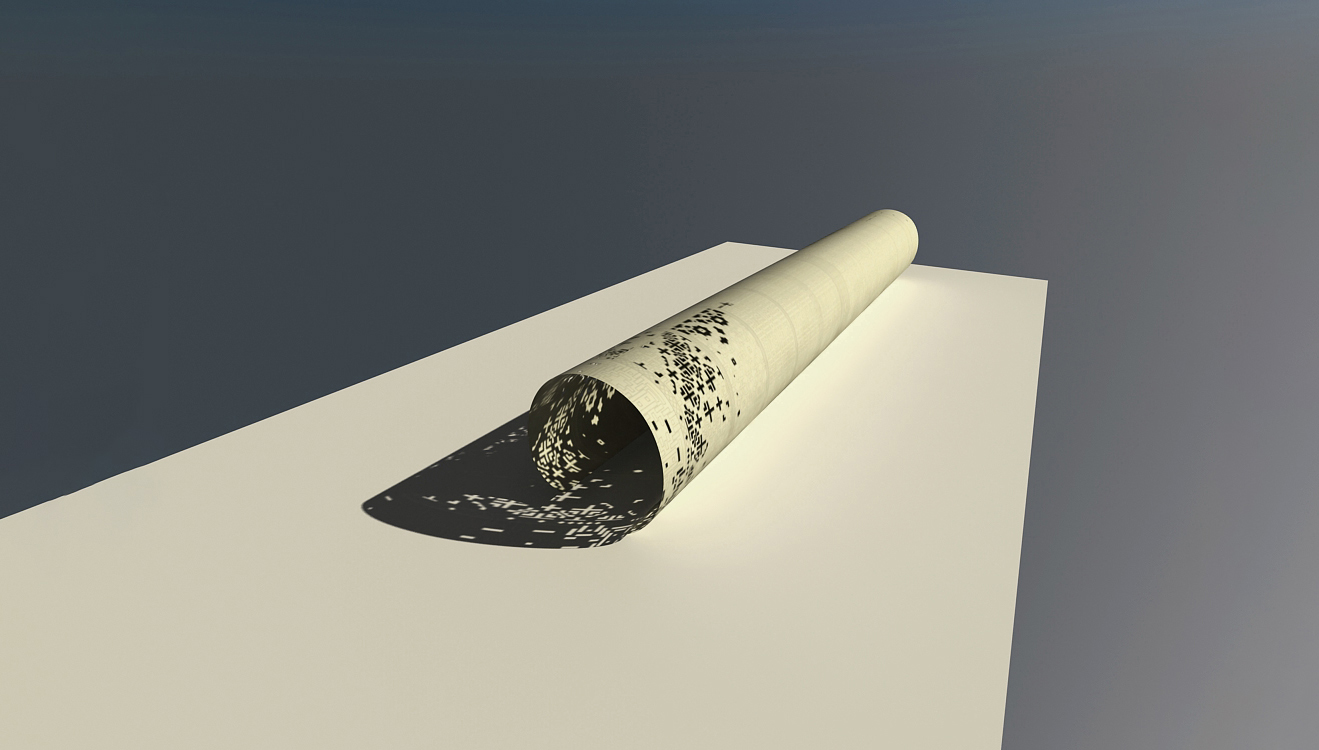
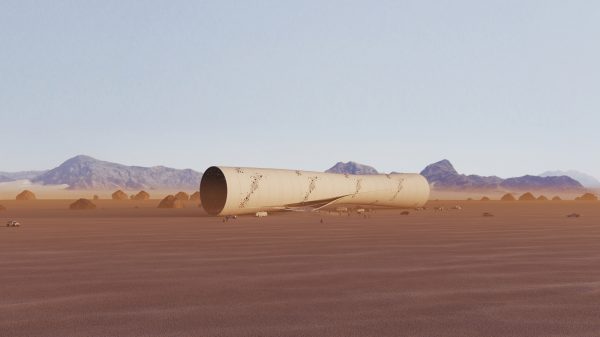
The resulting form suggested a rolled carpet—an architectural artifact suspended between motion and stillness, waiting to be unfurled across the landscape. The project was ultimately situated in the heart of the Iranian desert. In this setting, the museum’s quiet presence—simultaneously futuristic and timeless—resonated with the vastness of the terrain, completing the conceptual arc envisioned from the outset.