

Safayieh Residential Complex
Project Outline
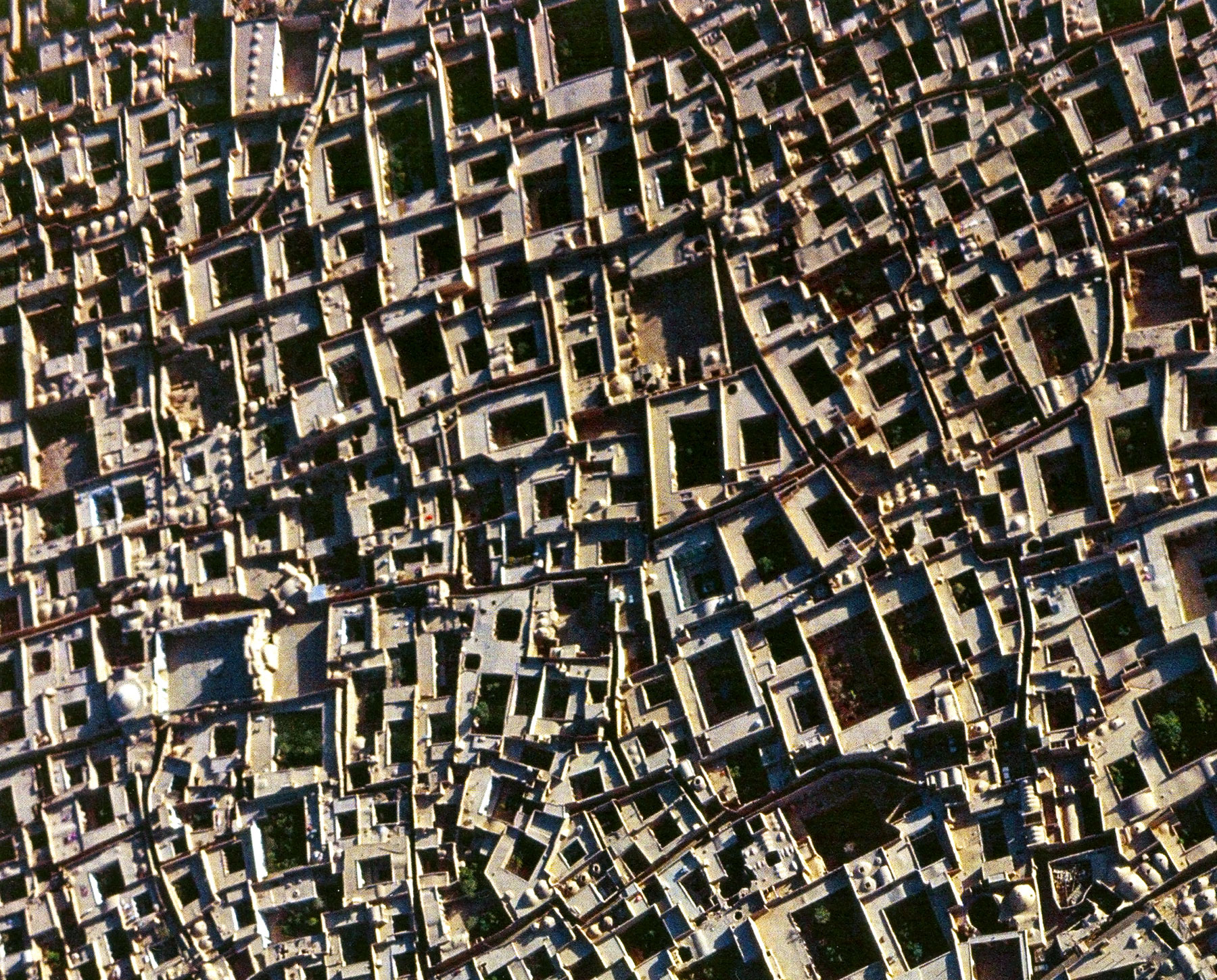
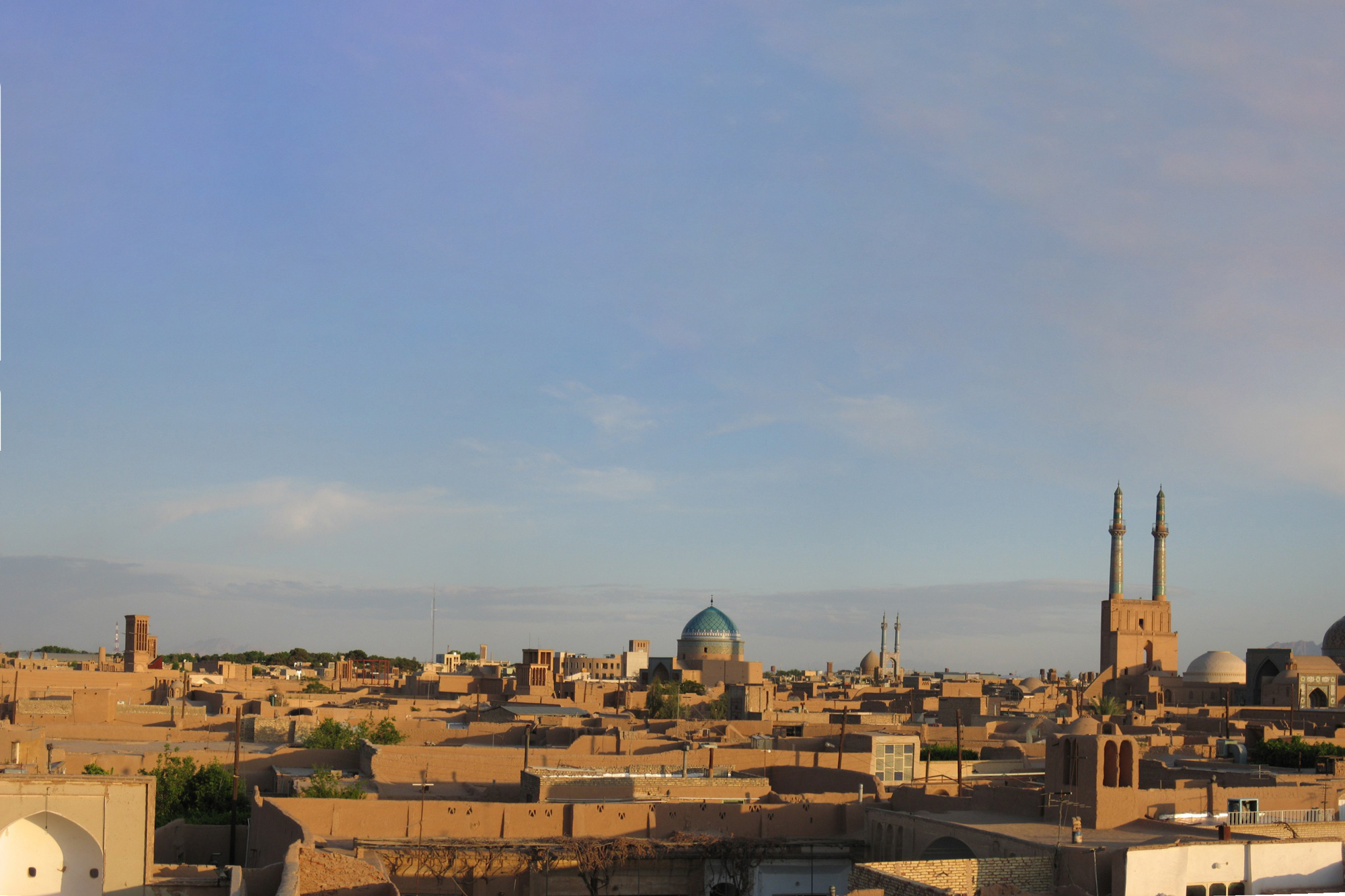
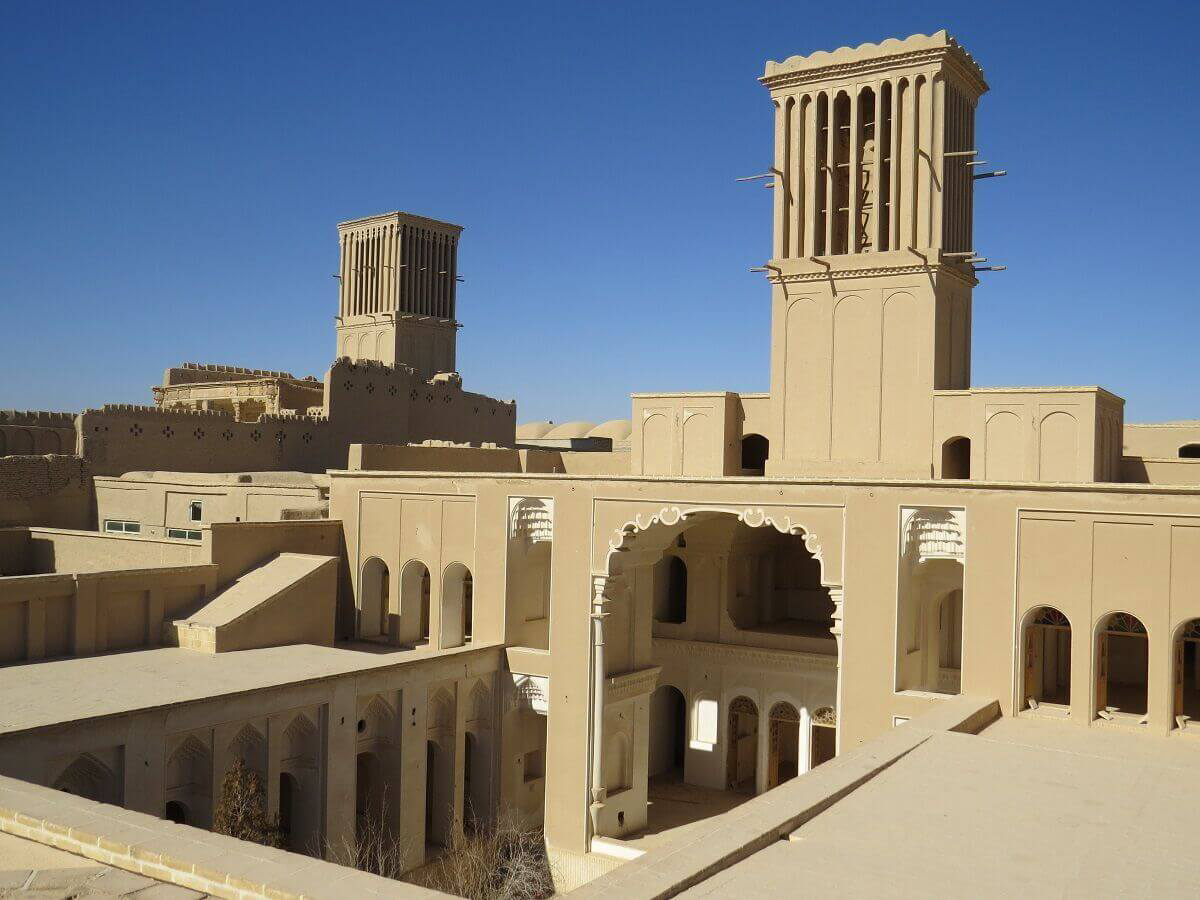
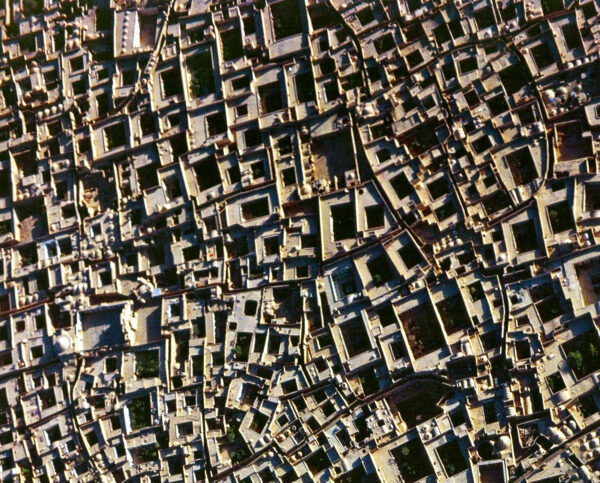
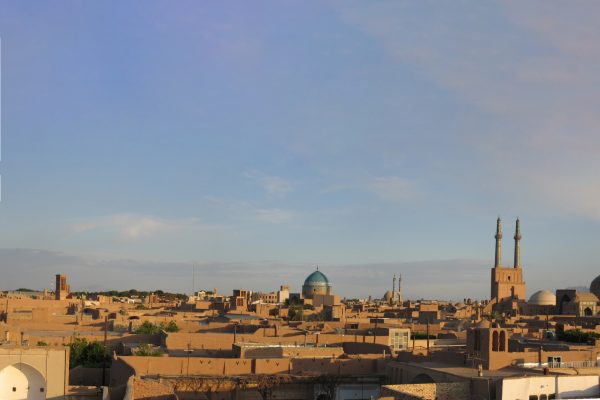
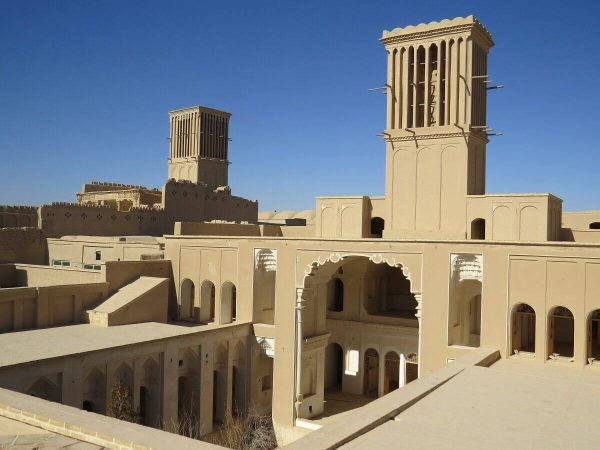
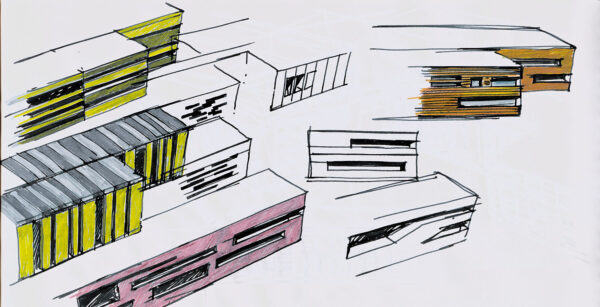
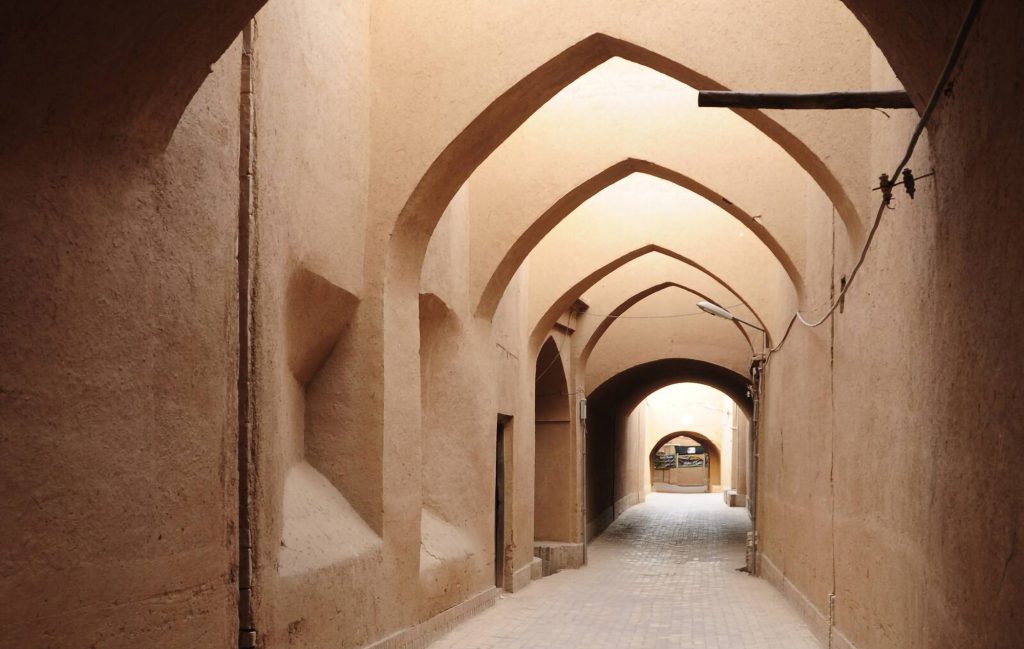
This project was developed as a competition proposal for a large residential complex in Yazd, located in central Iran. Yazd is a fundamentally horizontal city, defined by green courtyards, narrow winding alleys, and deep shadows cast by thick earthen walls. Its soft, three-dimensional roofs appear to cling to the ground, creating a monochrome urban landscape that is cool, delicate, and spatially rich. The city operates almost as a miniature world, where each corner reveals a distinct and unexpected condition.
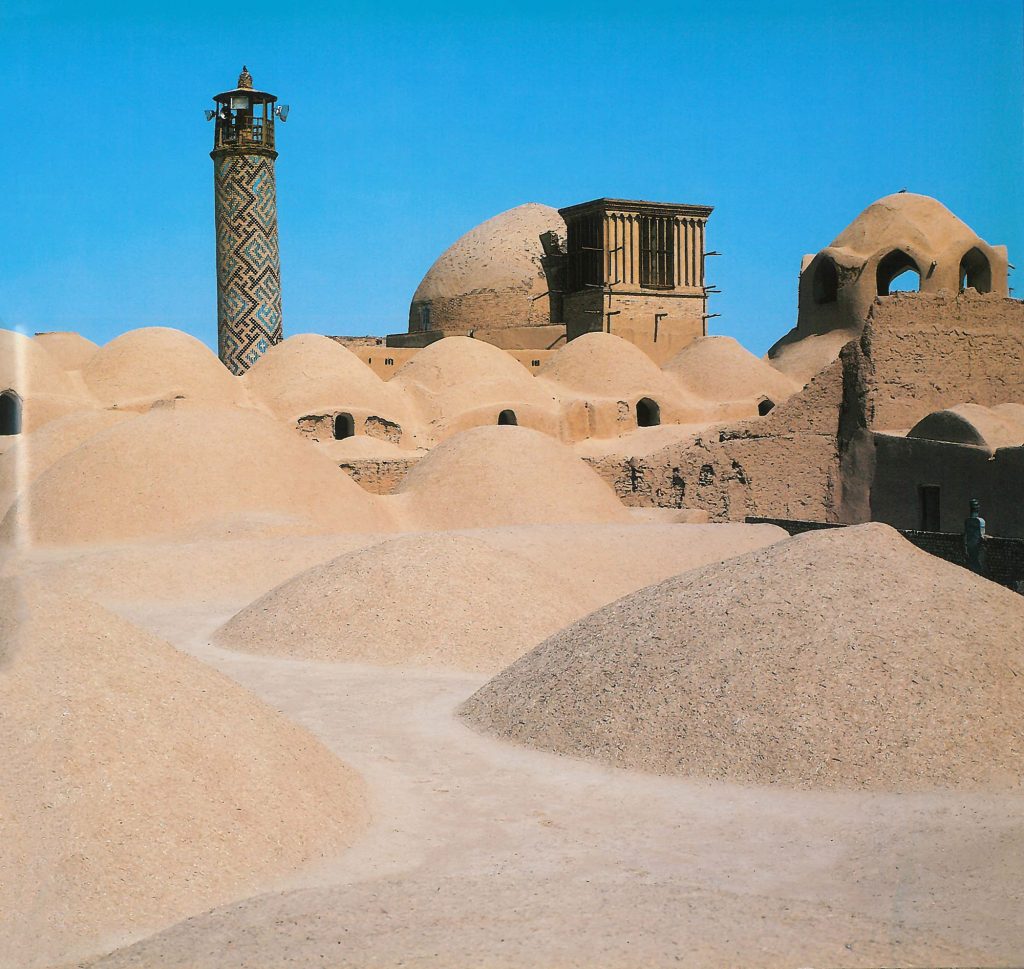
Location
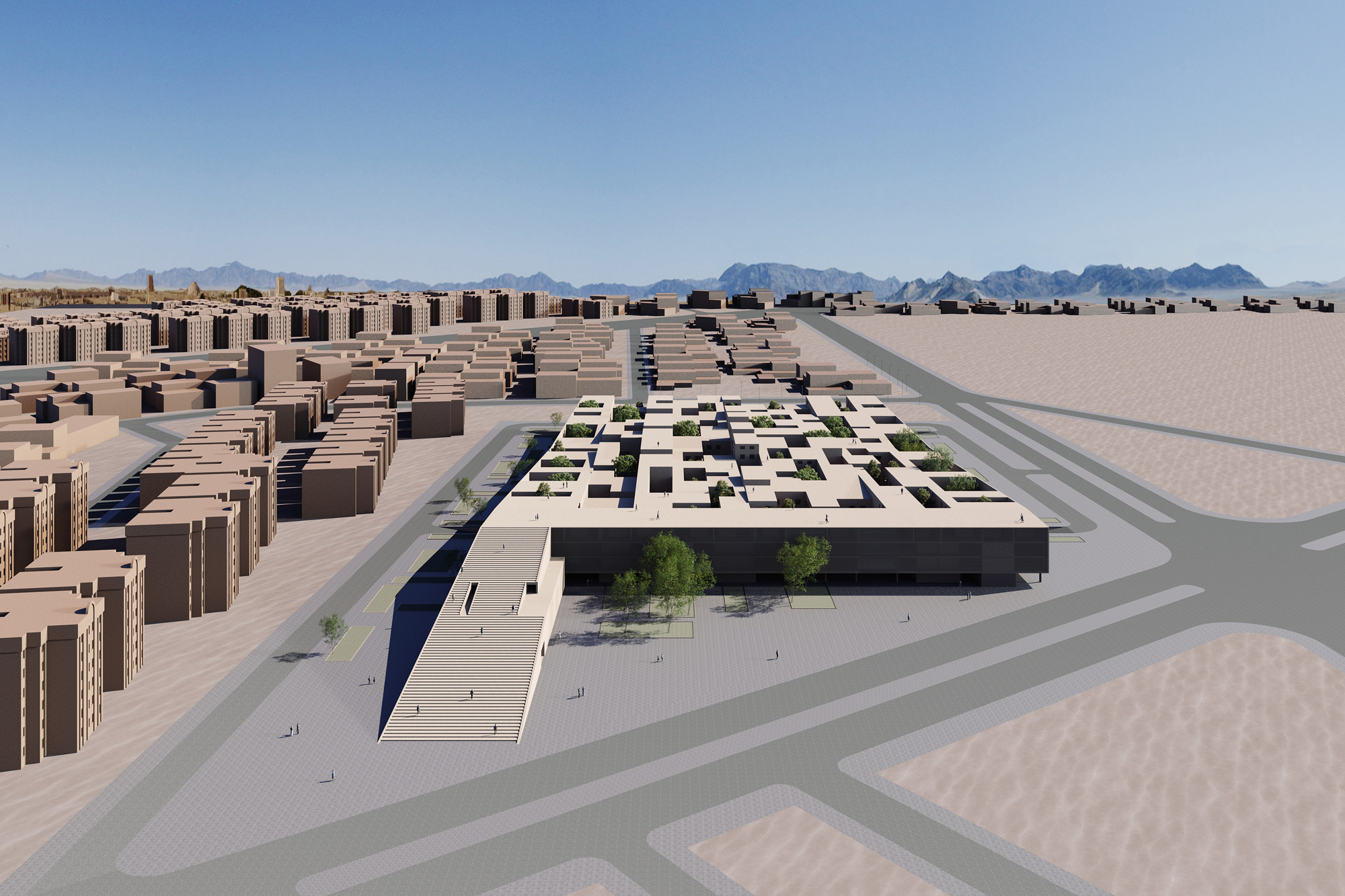
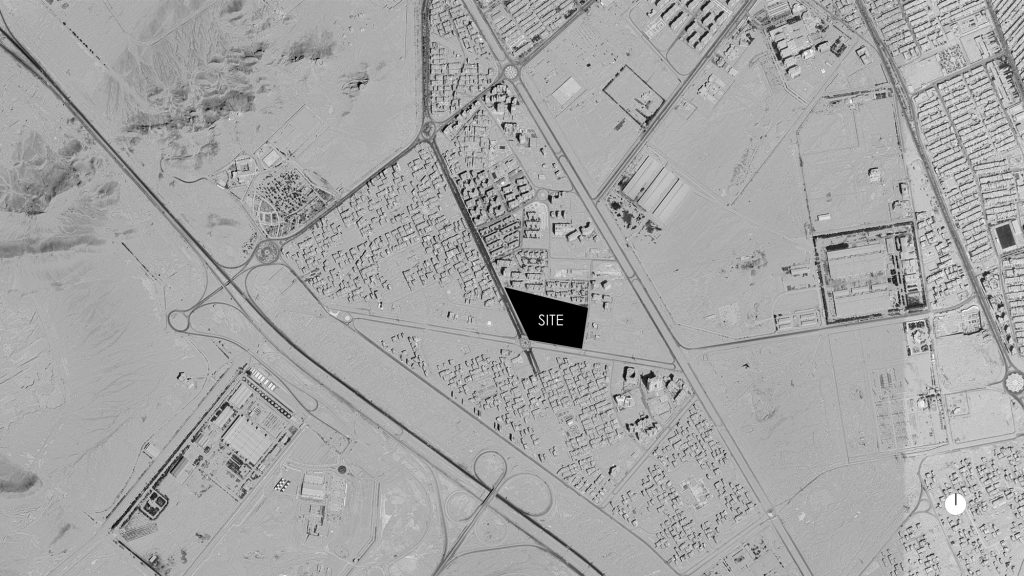
Although the site was located on the southern edge of Yazd, far from the historic core, the project sought to reconnect with the spirit of traditional Yazdi architecture—reinterpreting its spatial intelligence in a form capable of responding to contemporary living patterns. The site was part of a new development zone characterized by generic urban housing blocks.
Architectural Concept
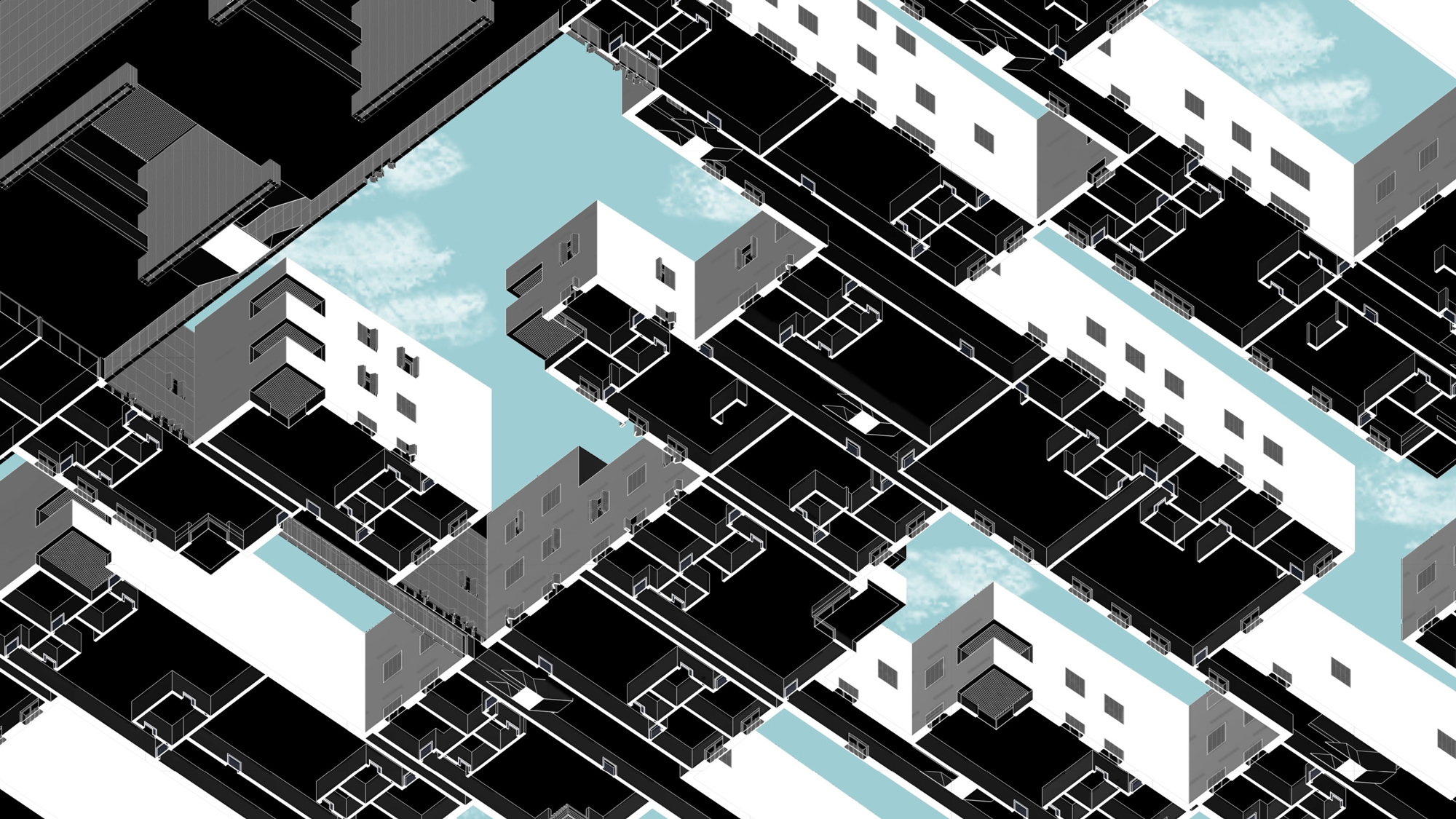
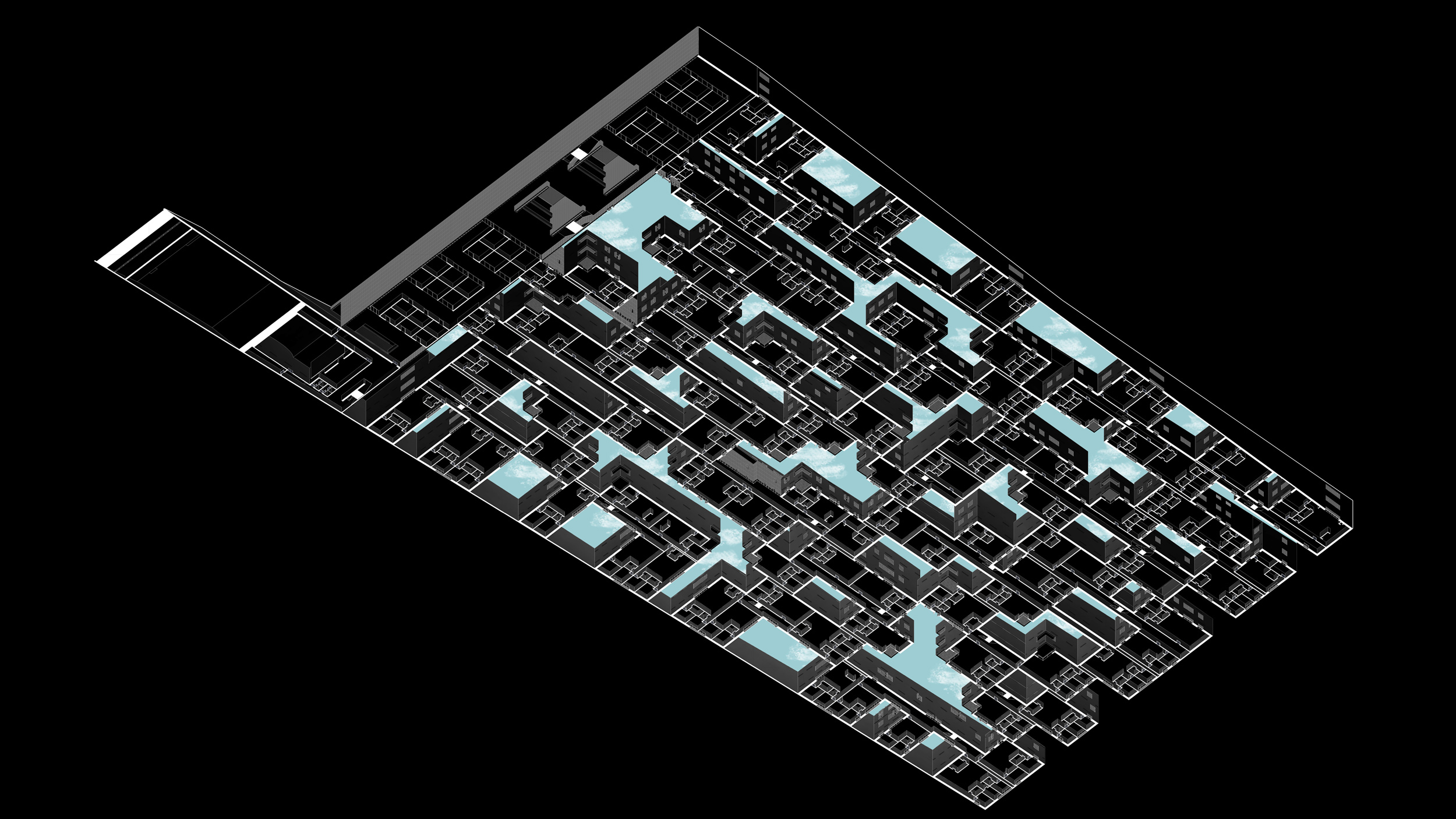
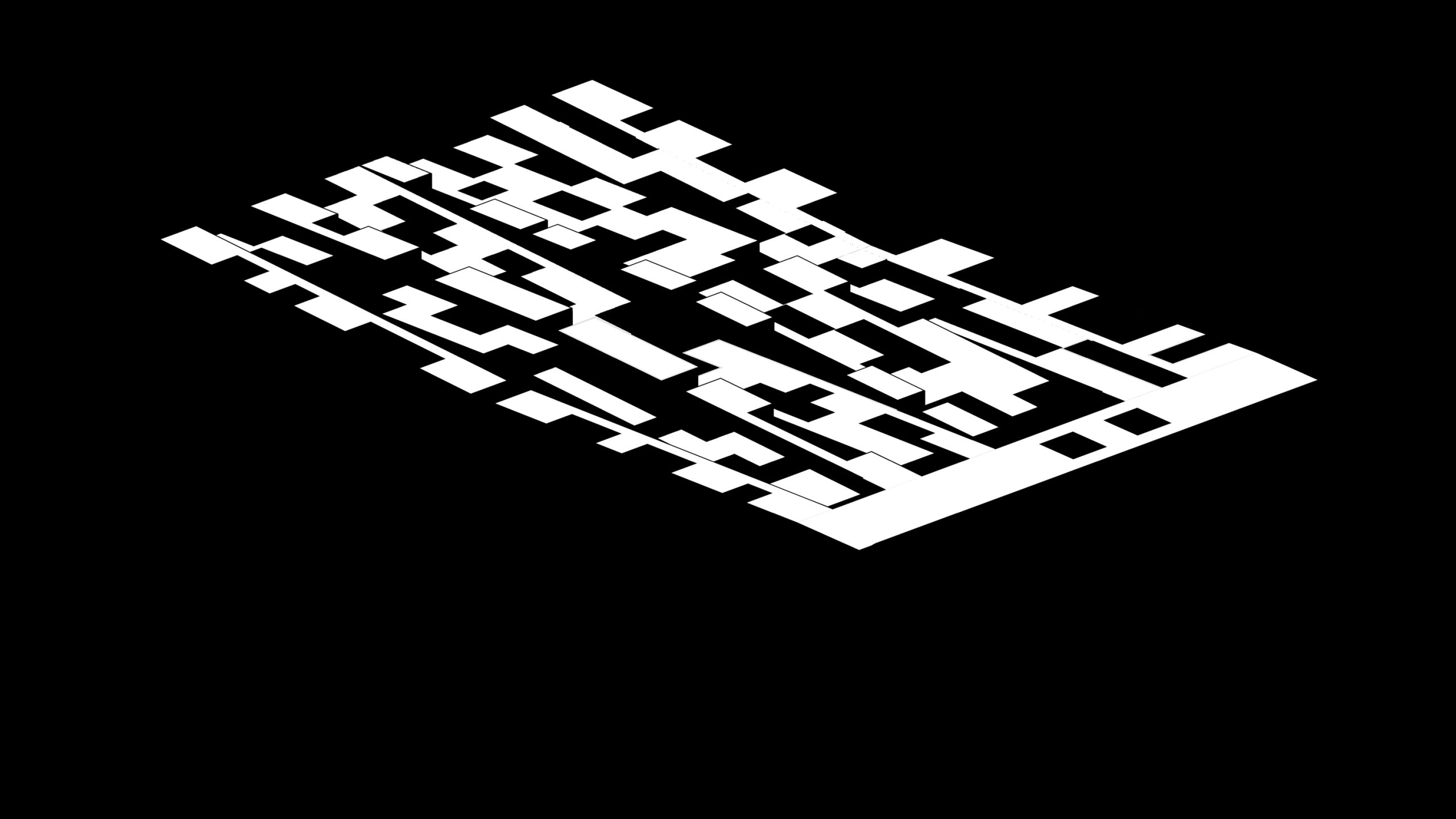
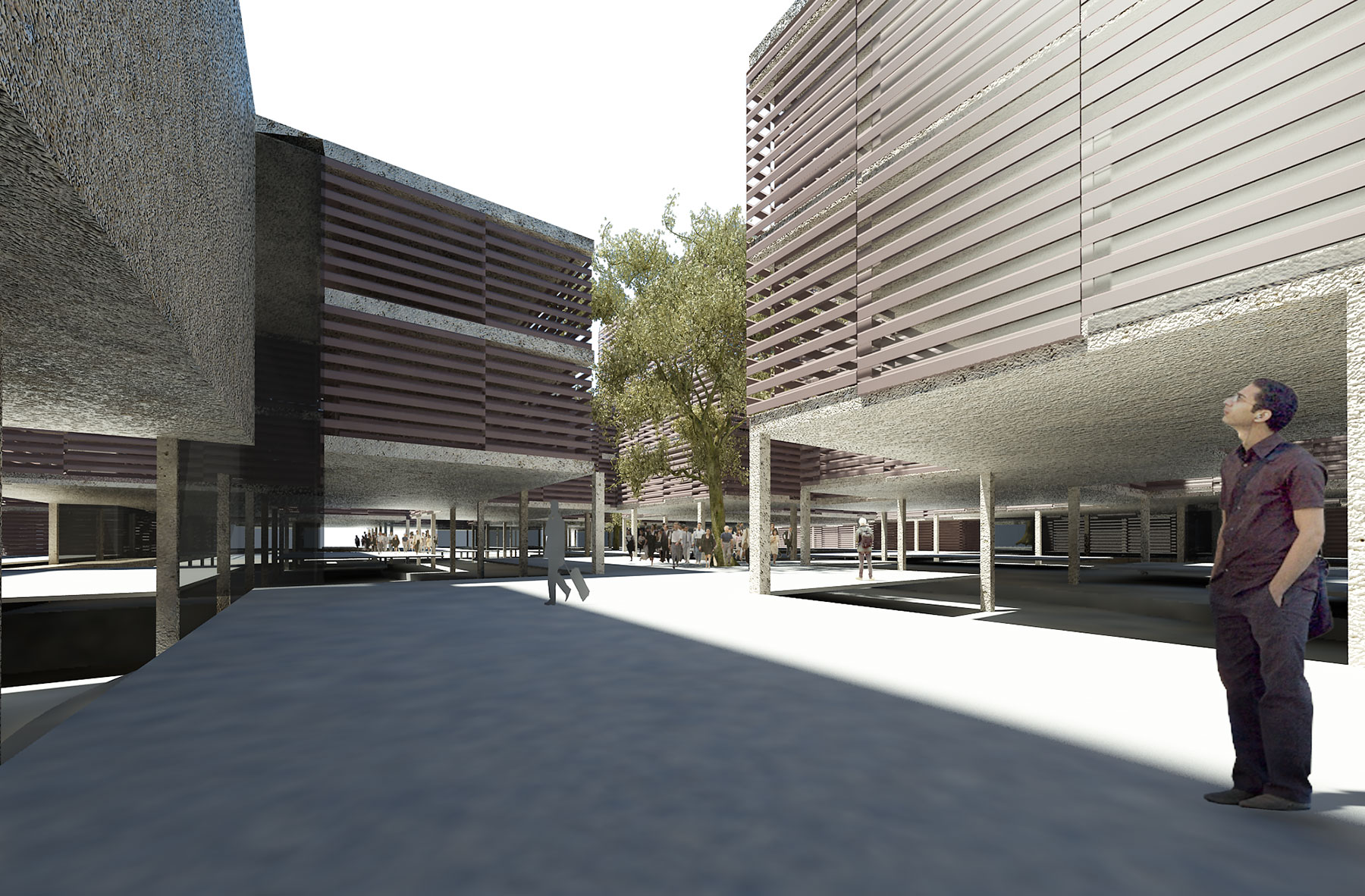
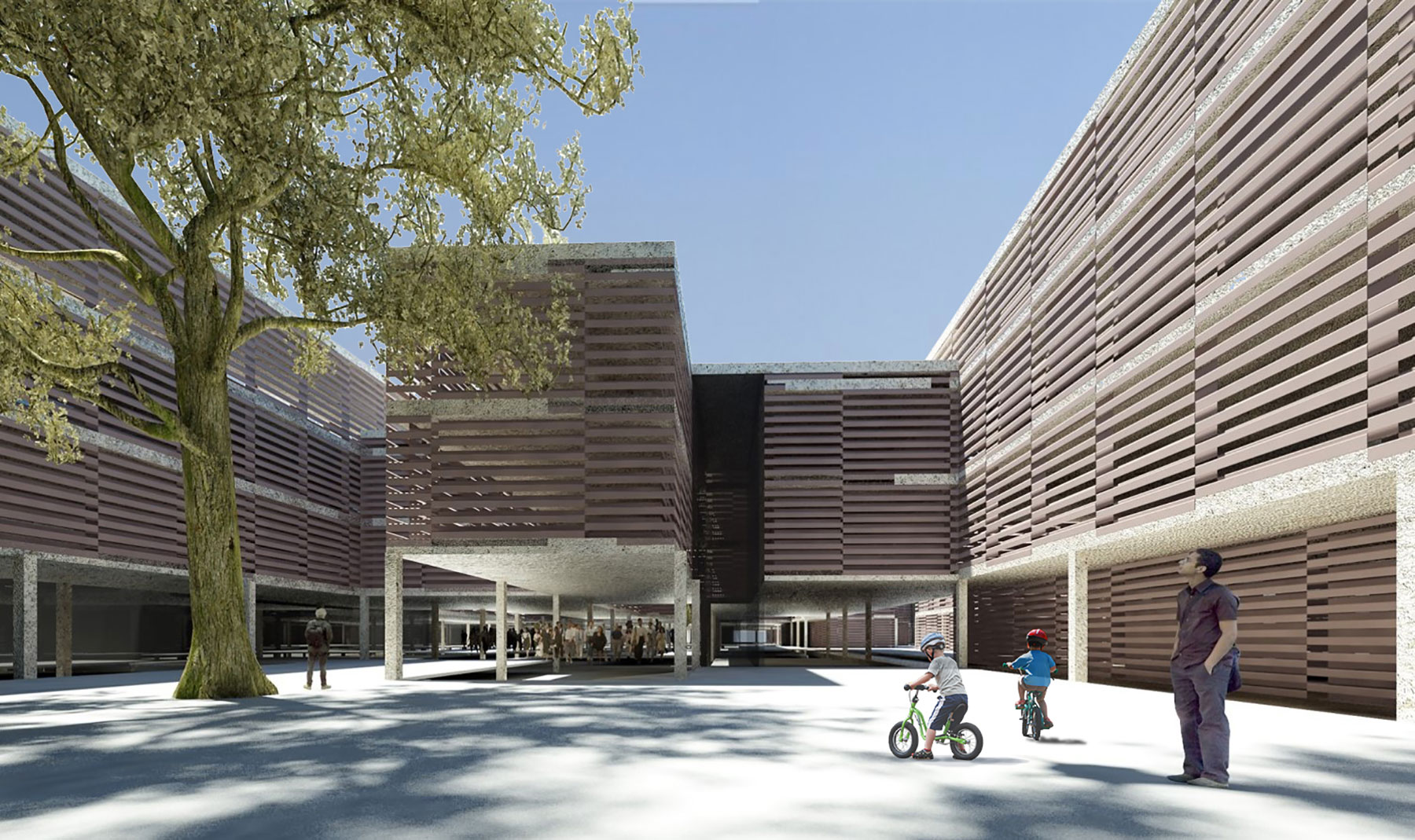
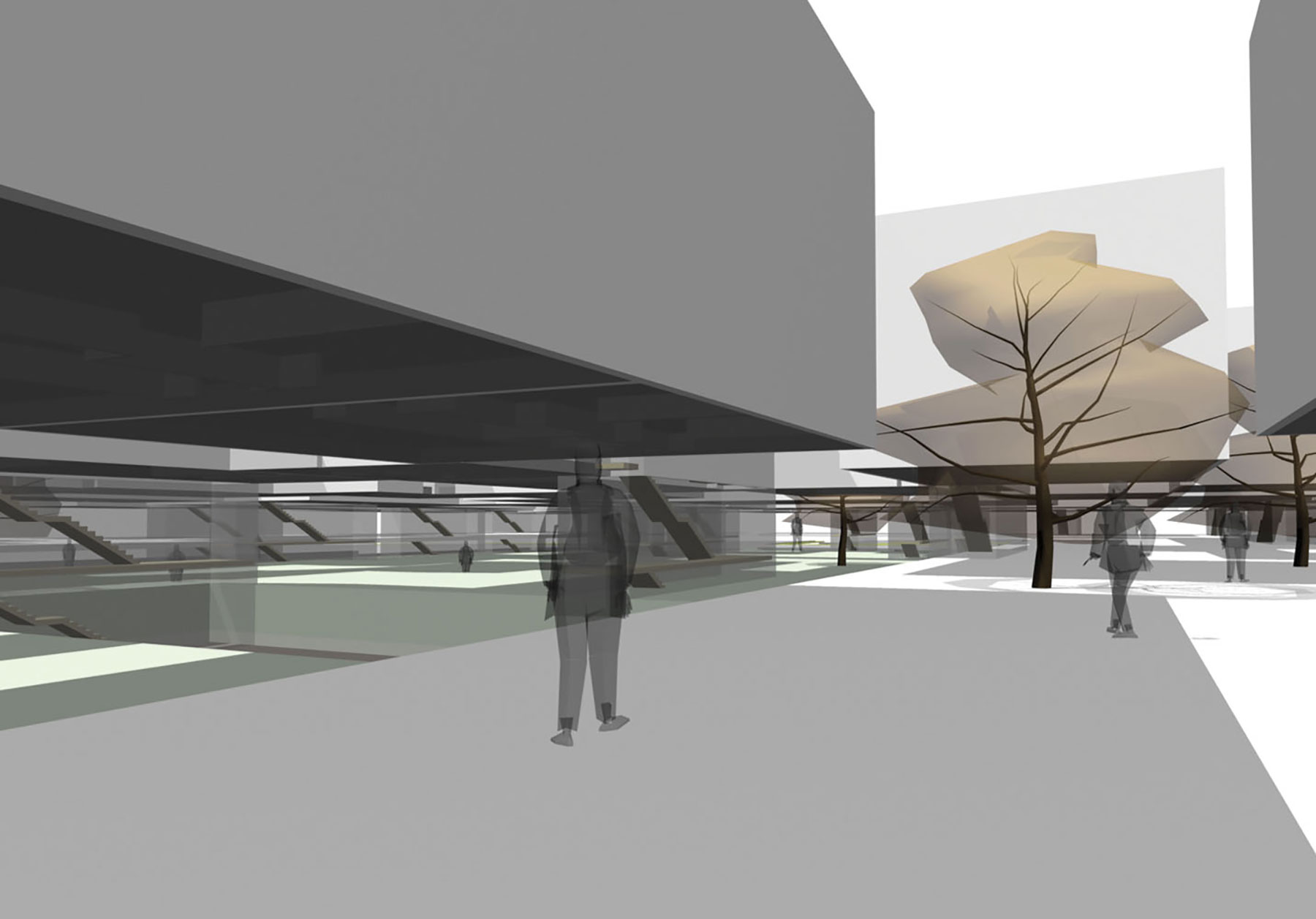
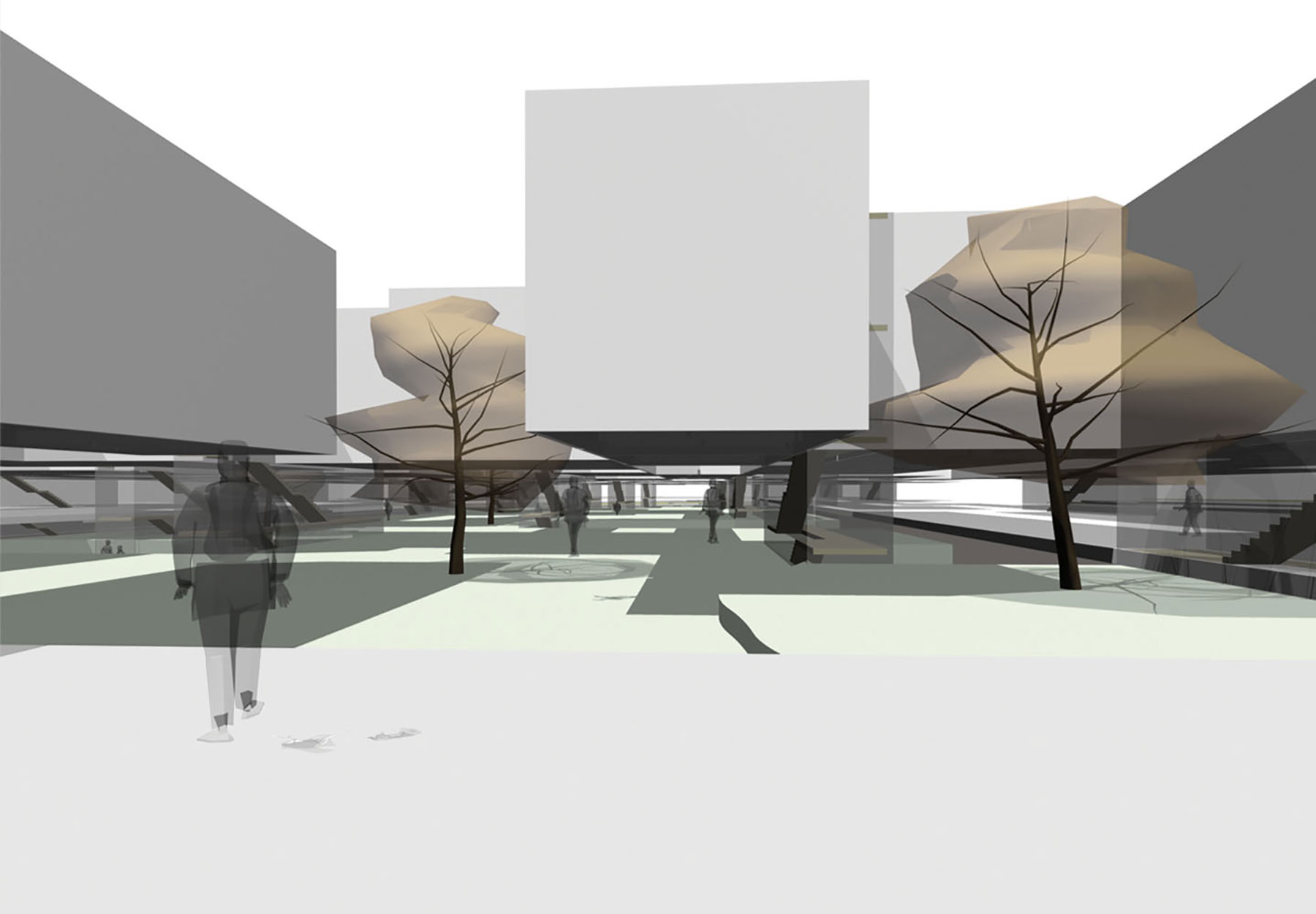
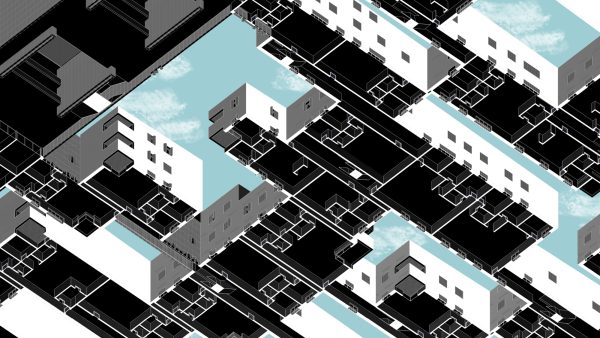
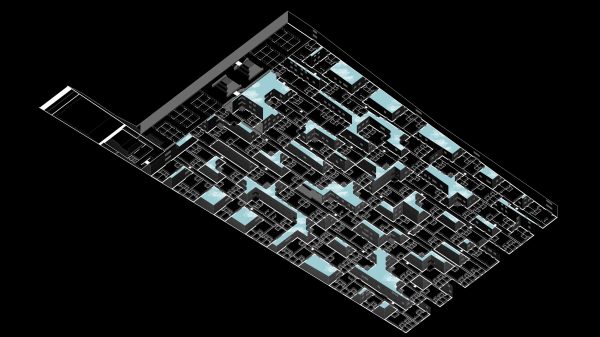
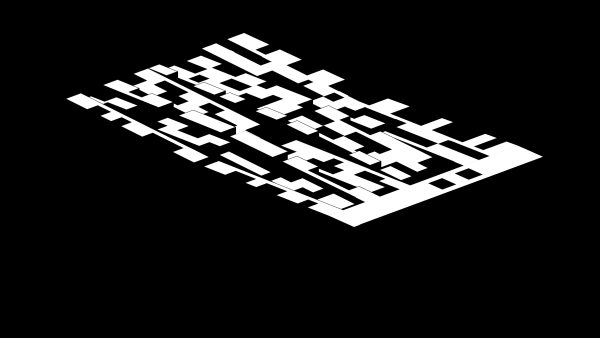
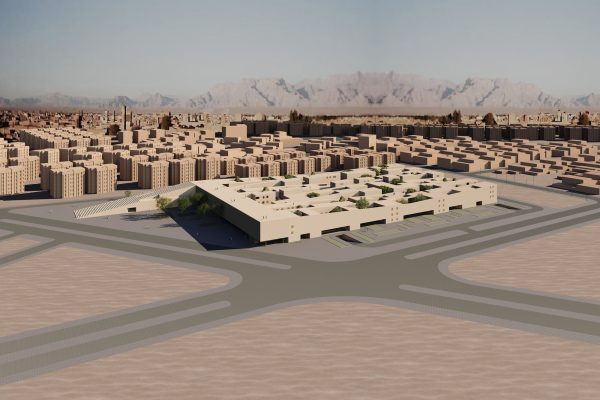
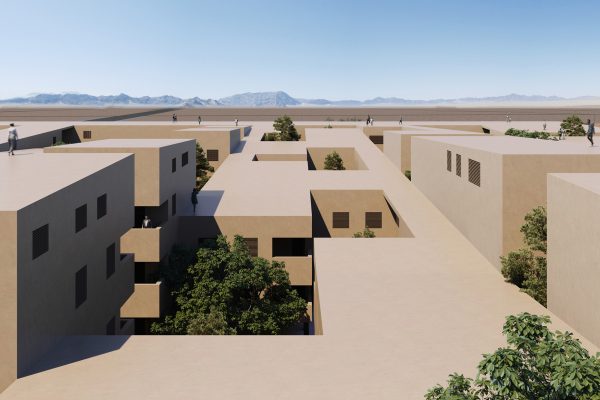
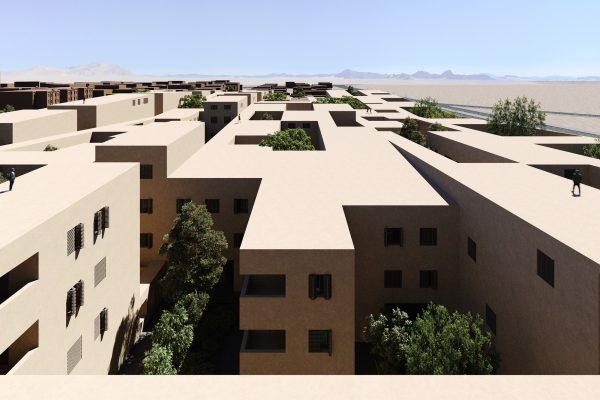
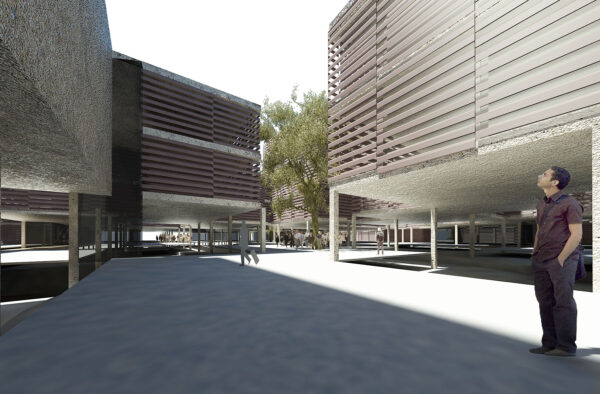
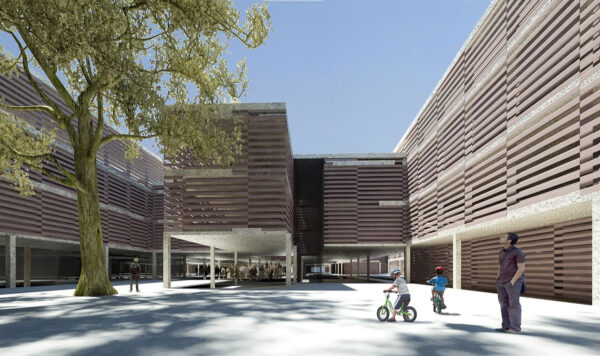
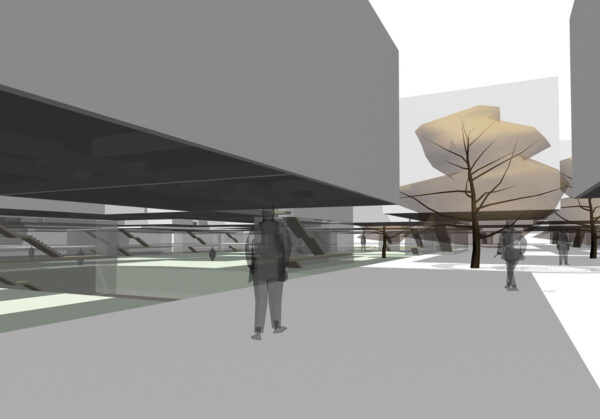
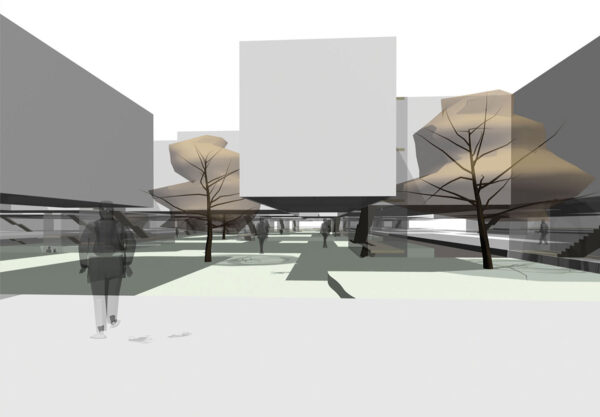
Such developments typically consist of one or two repetitive building types, five to six stories high, arranged across the site with minimal landscaped space in between. While the client initially requested a similar approach, the generous scale of the site and the unique character of Yazd’s historic fabric prompted an alternative strategy. Rather than designing a collection of isolated blocks, the project was imagined as a compact desert town—an urban fabric defined by voids, connections, and in-between spaces.
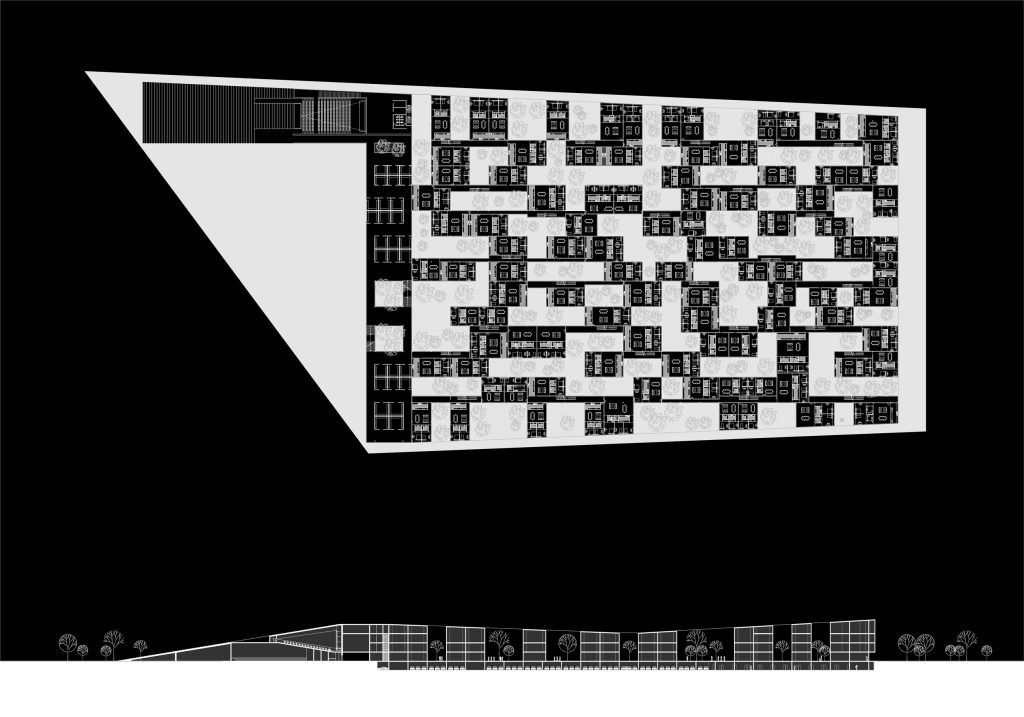
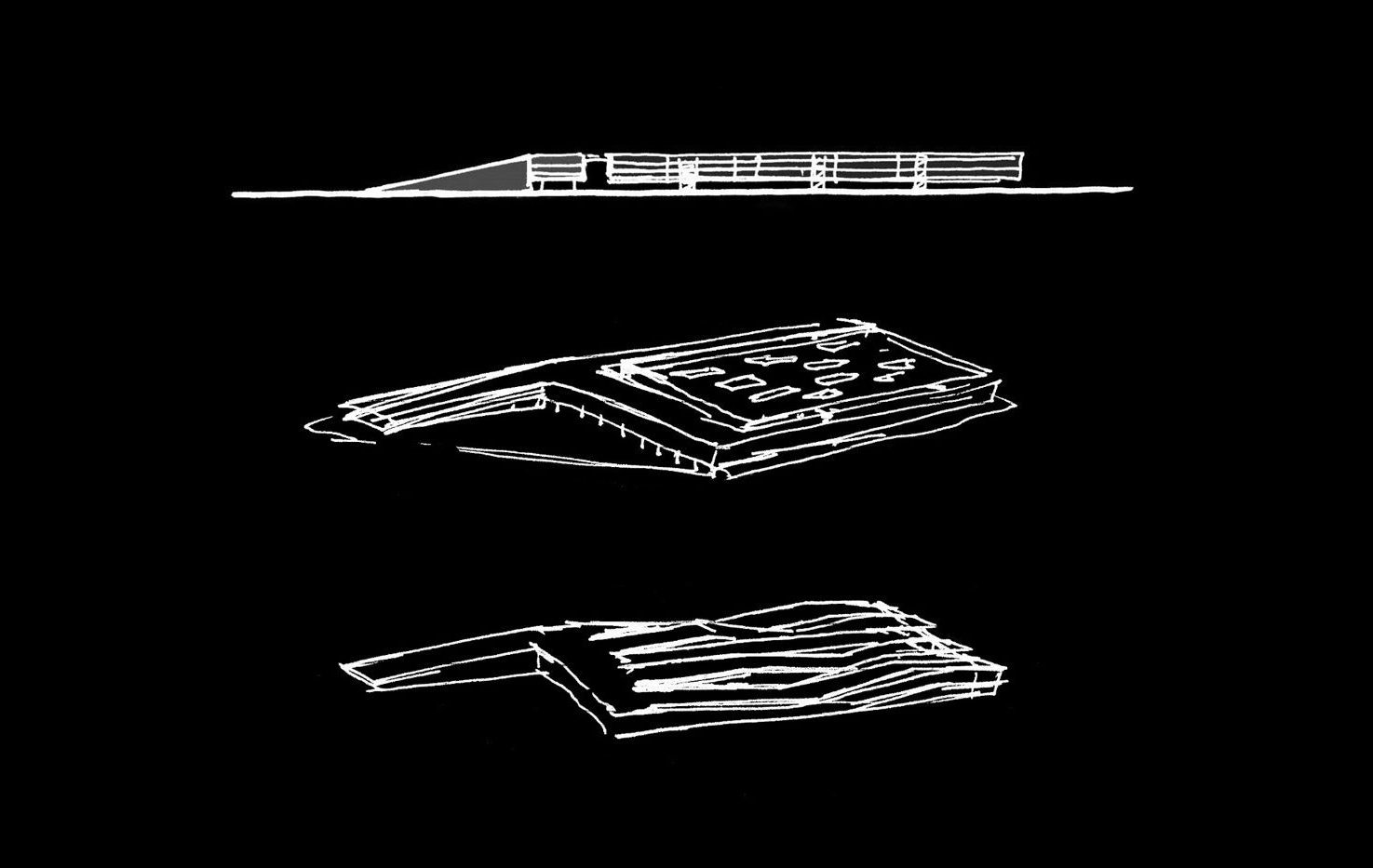
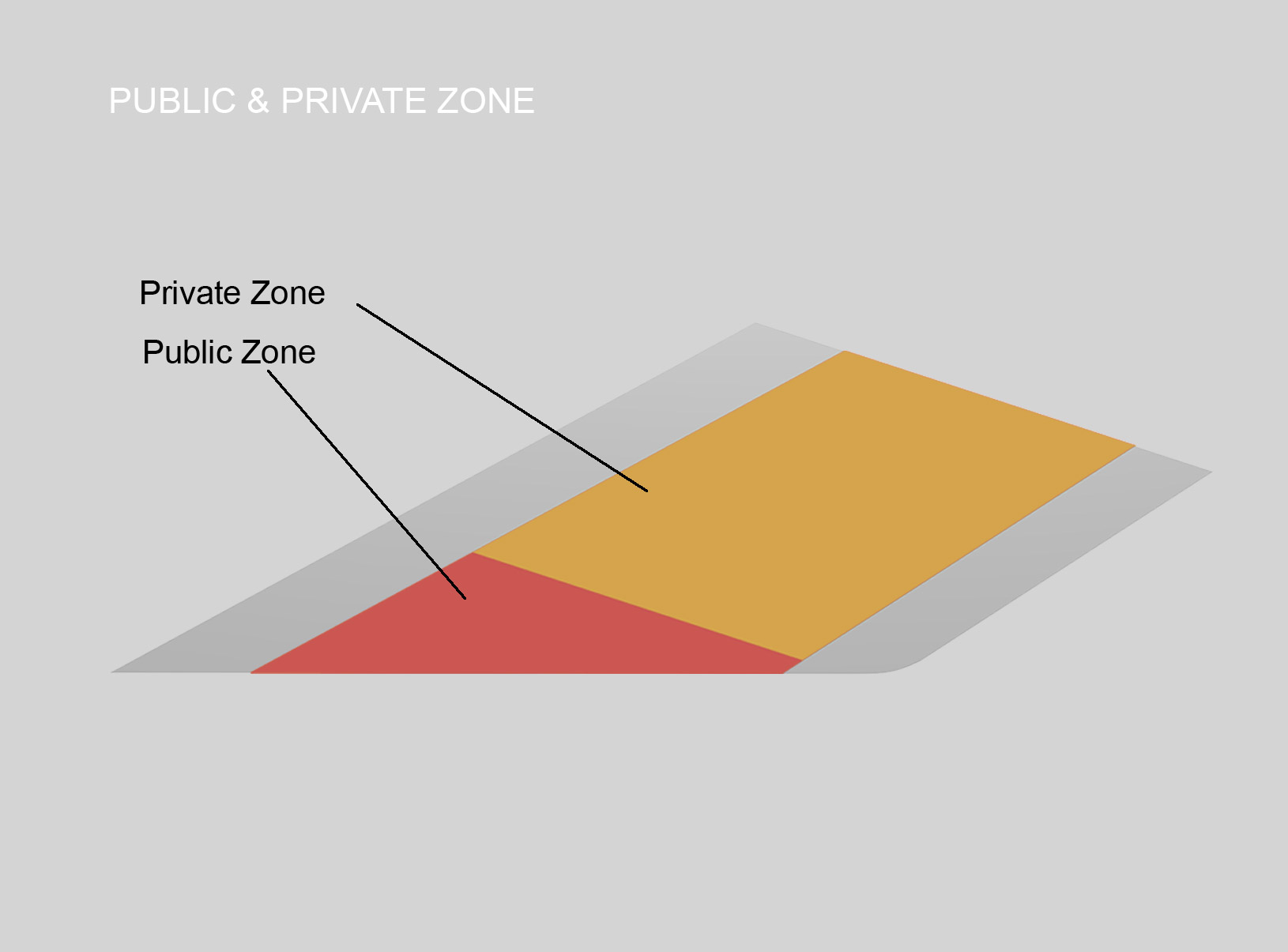
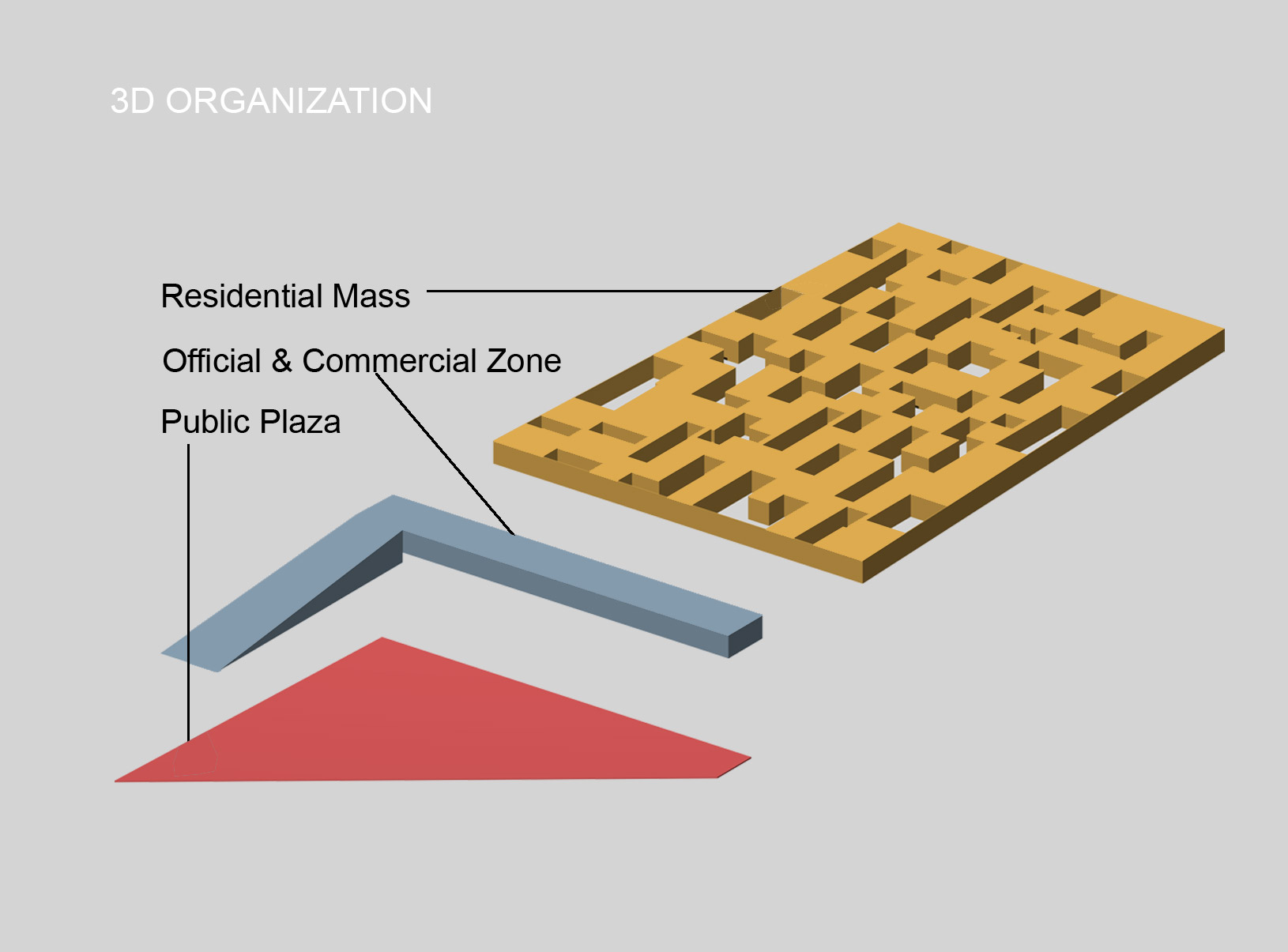
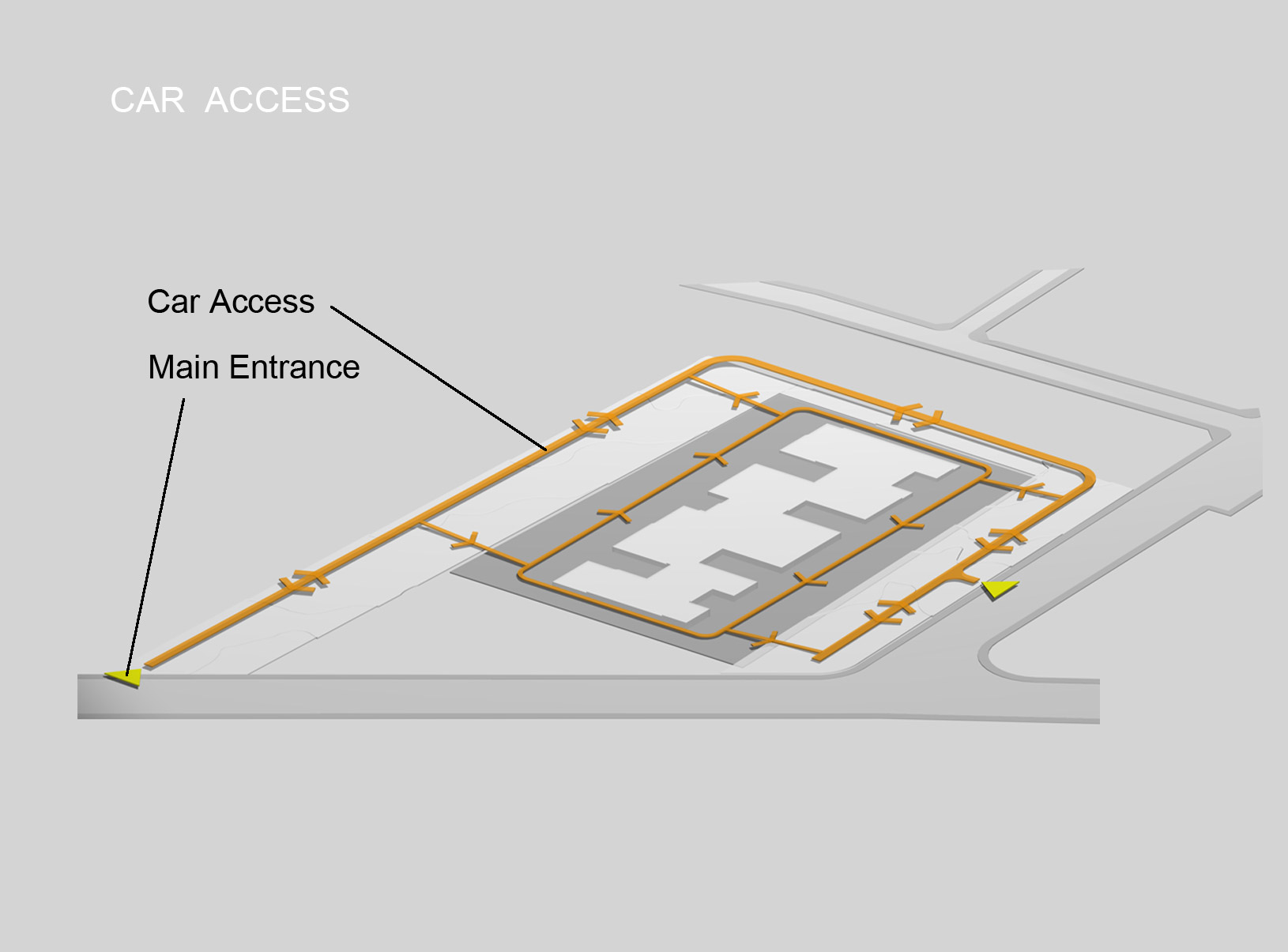
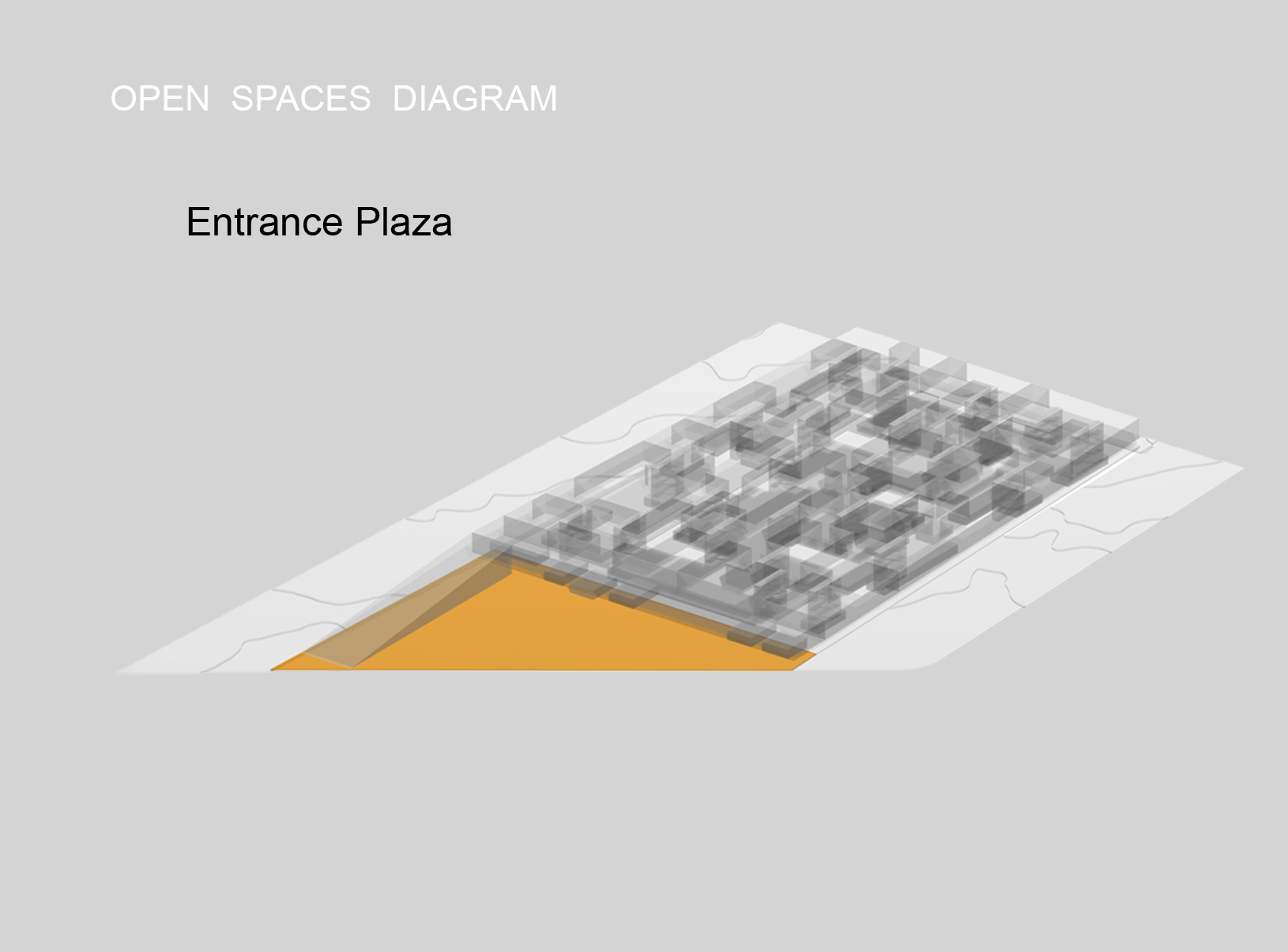
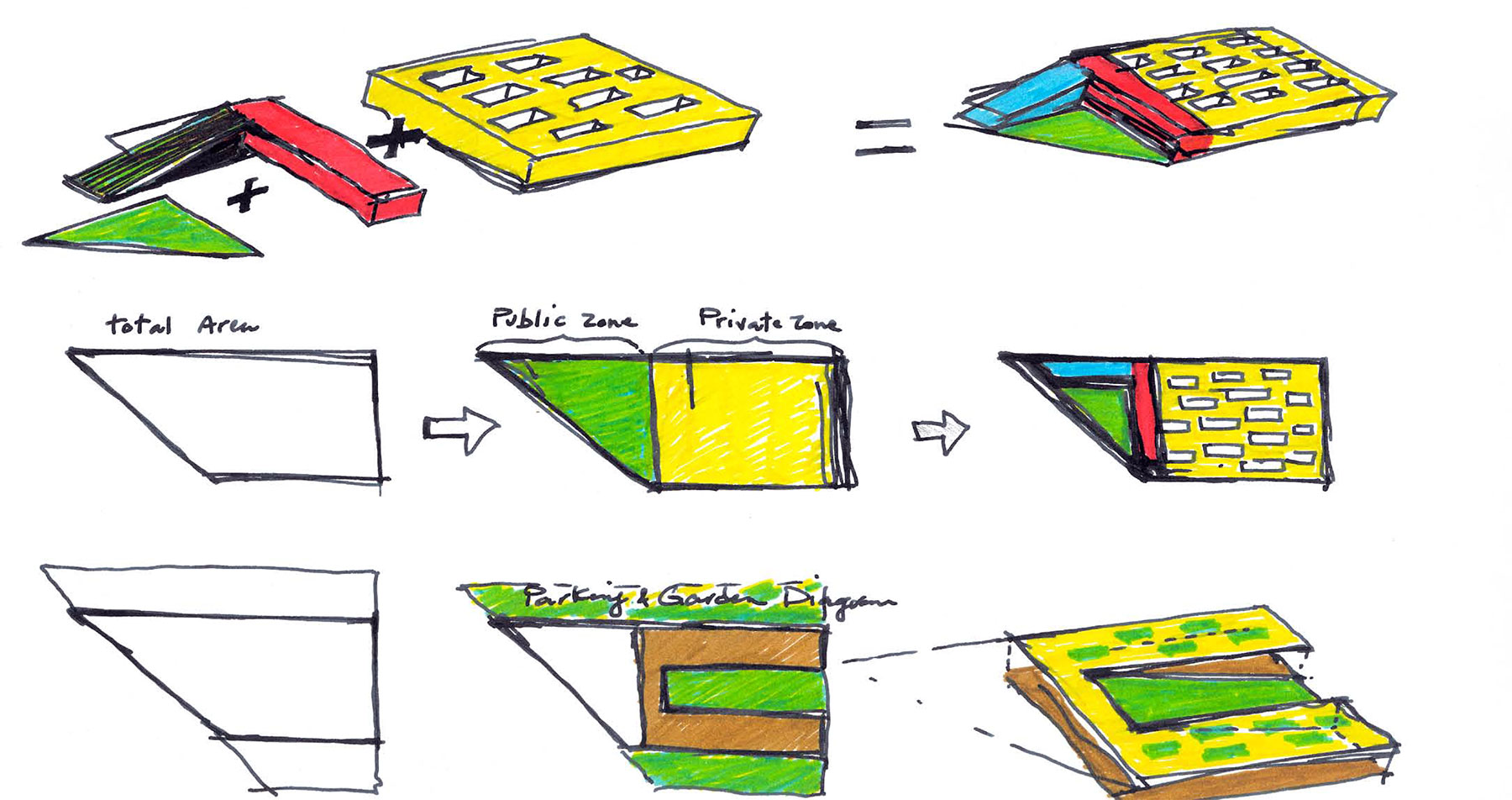
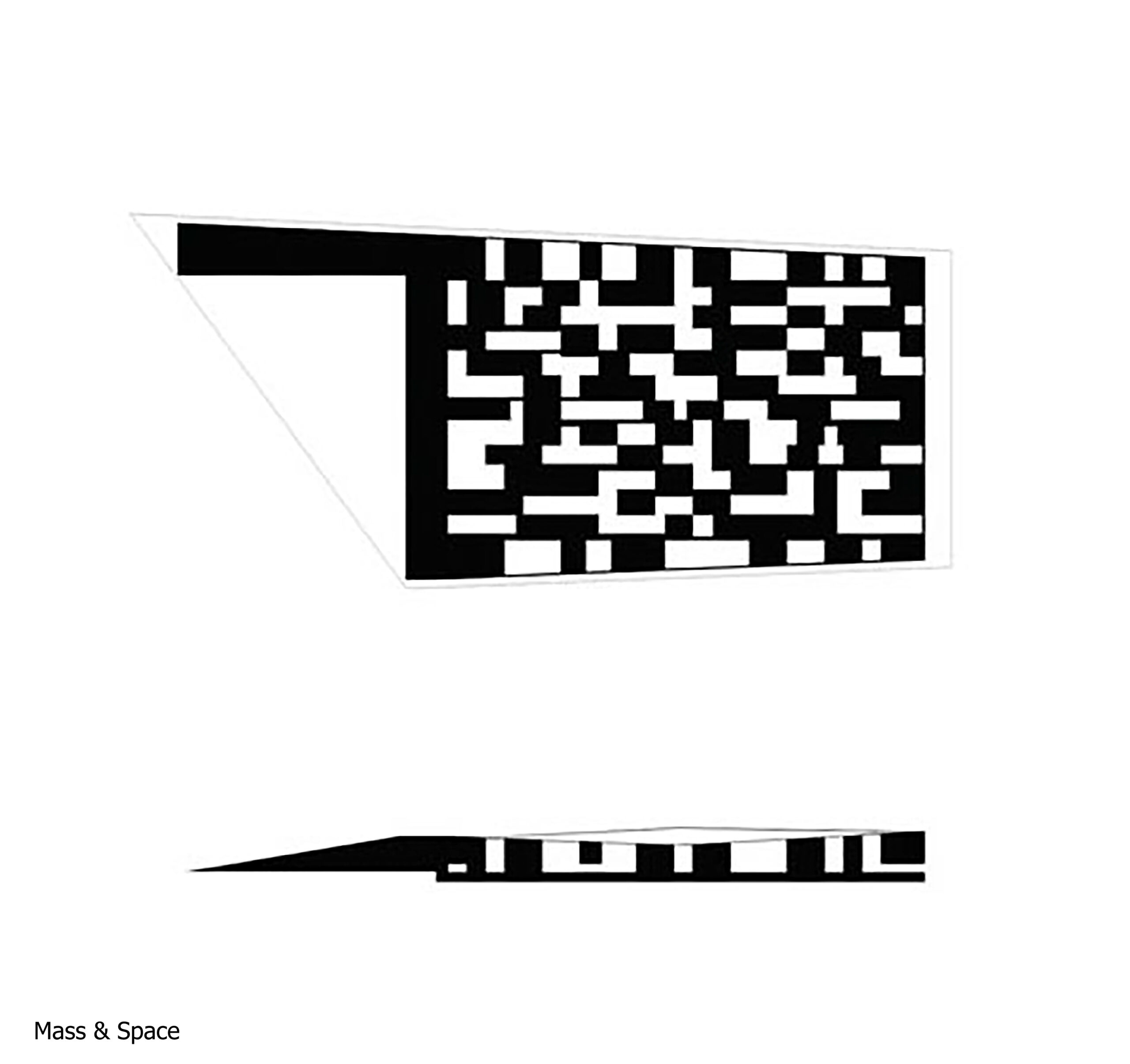
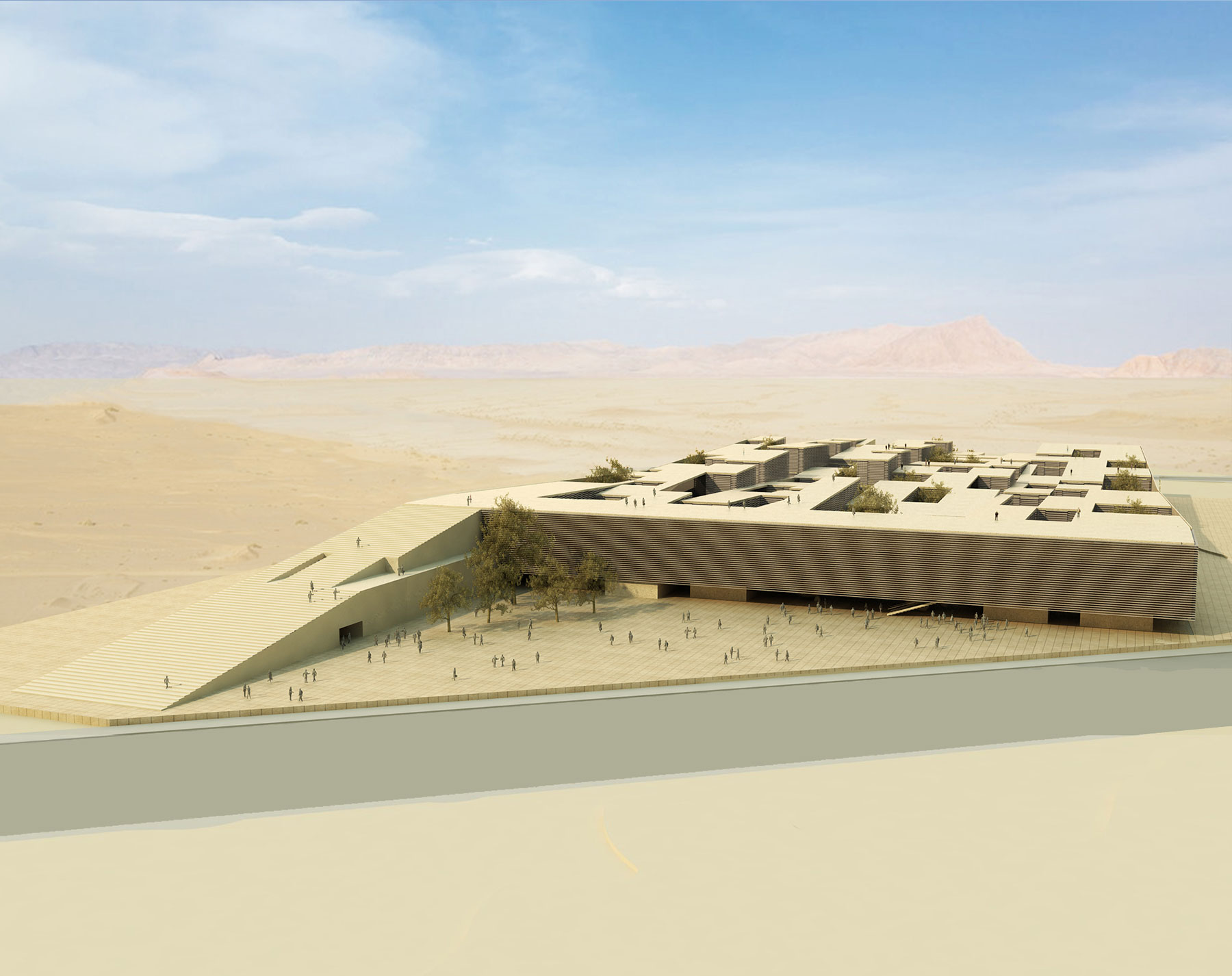
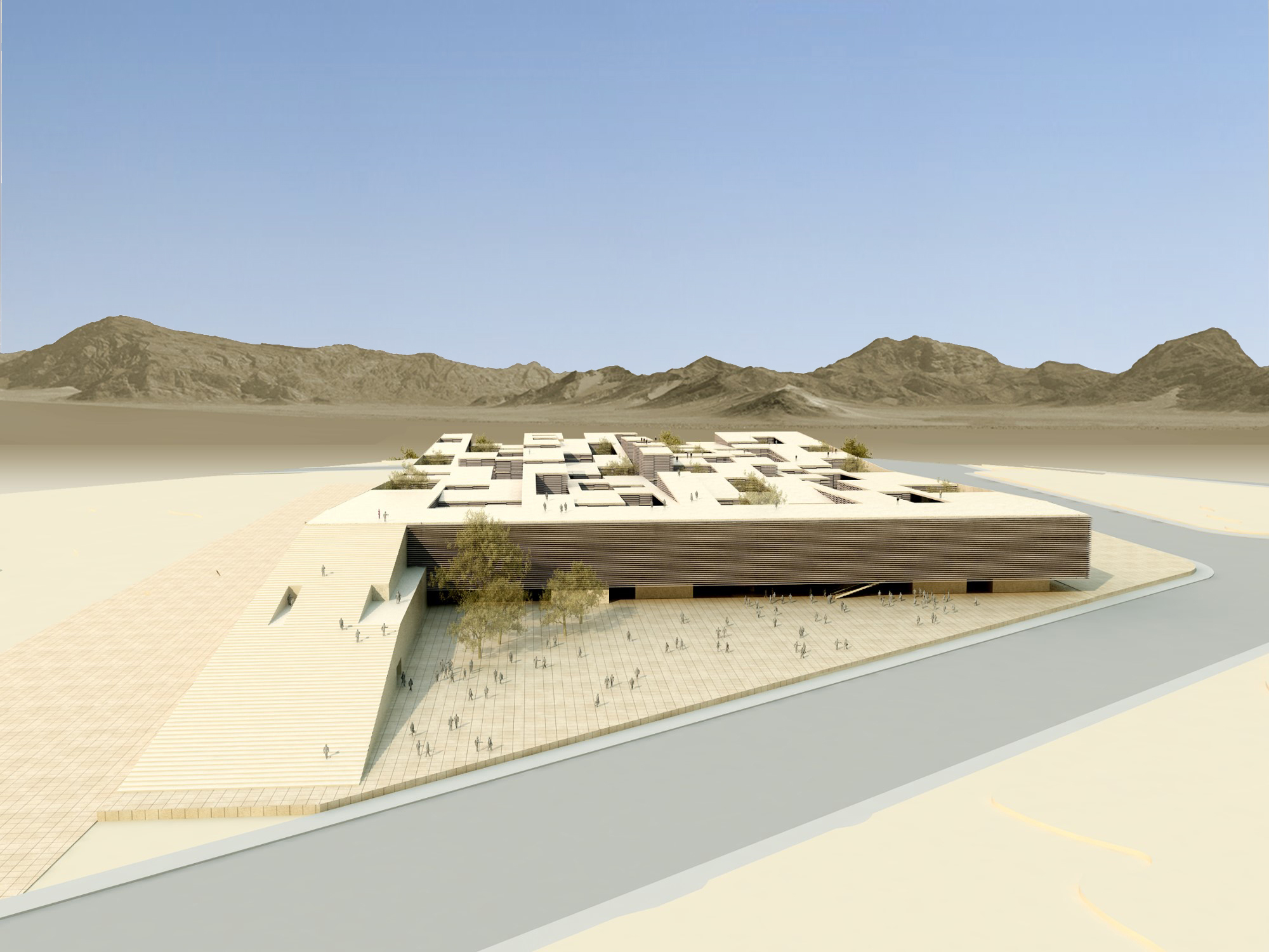
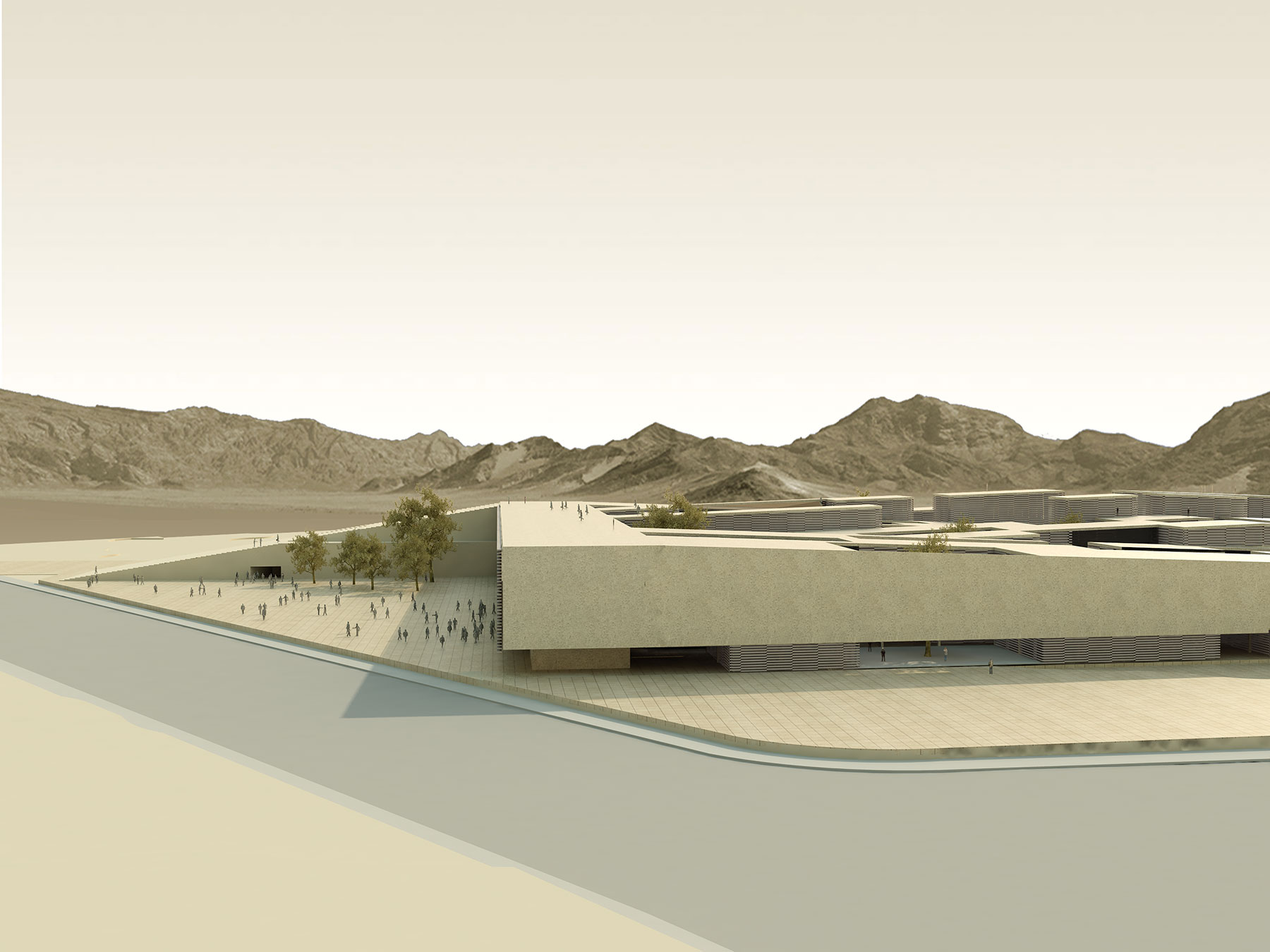
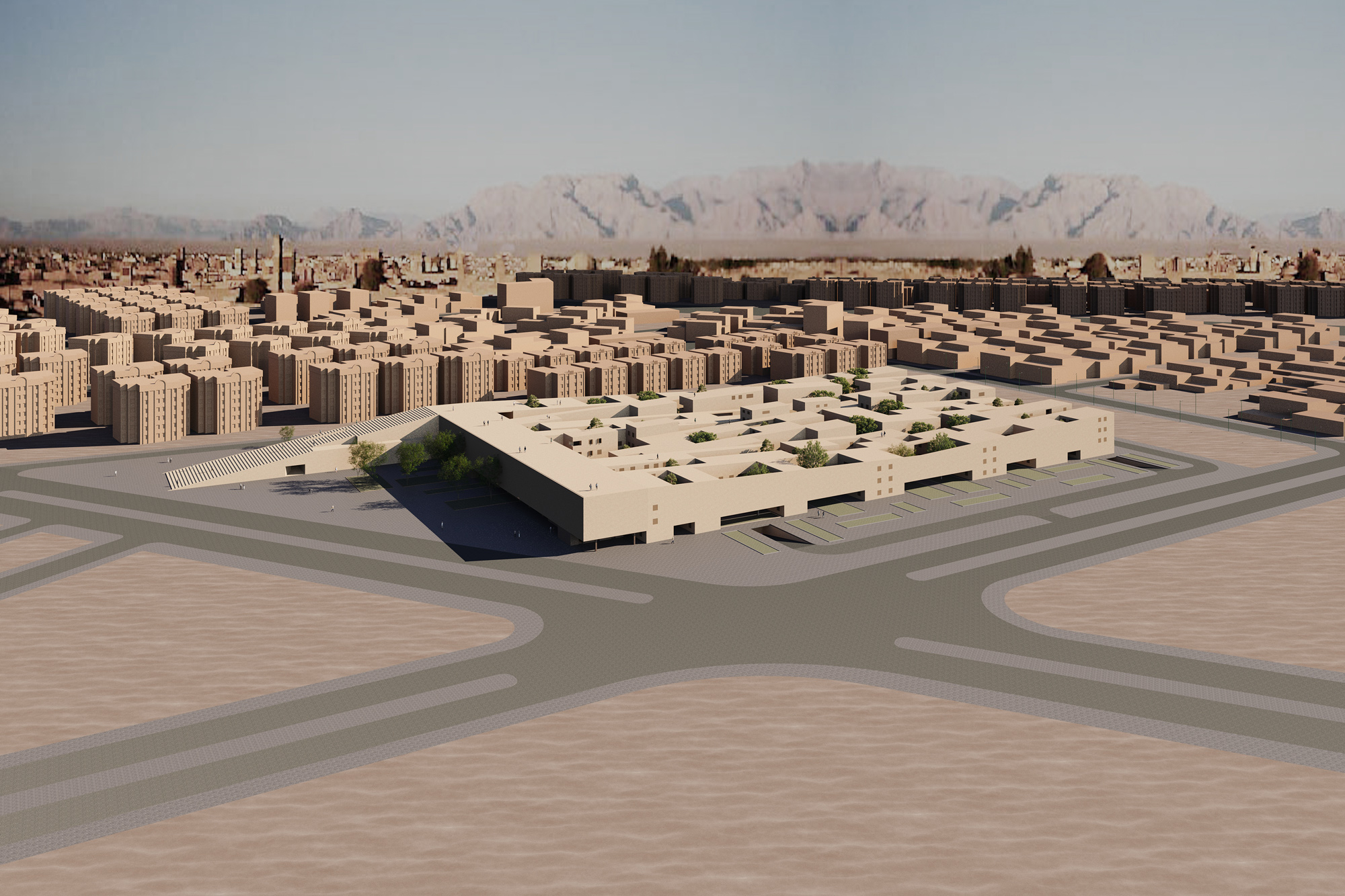
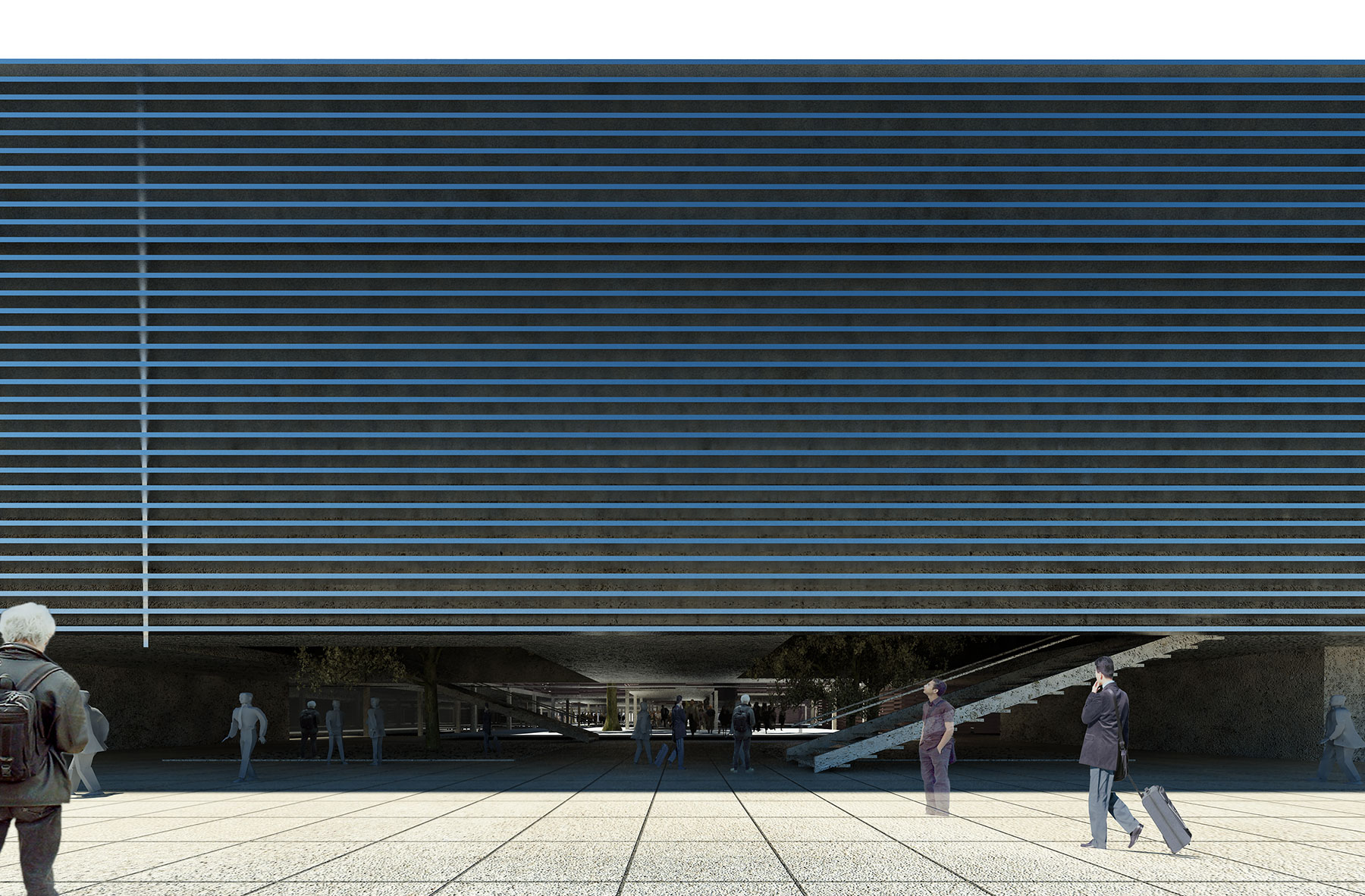
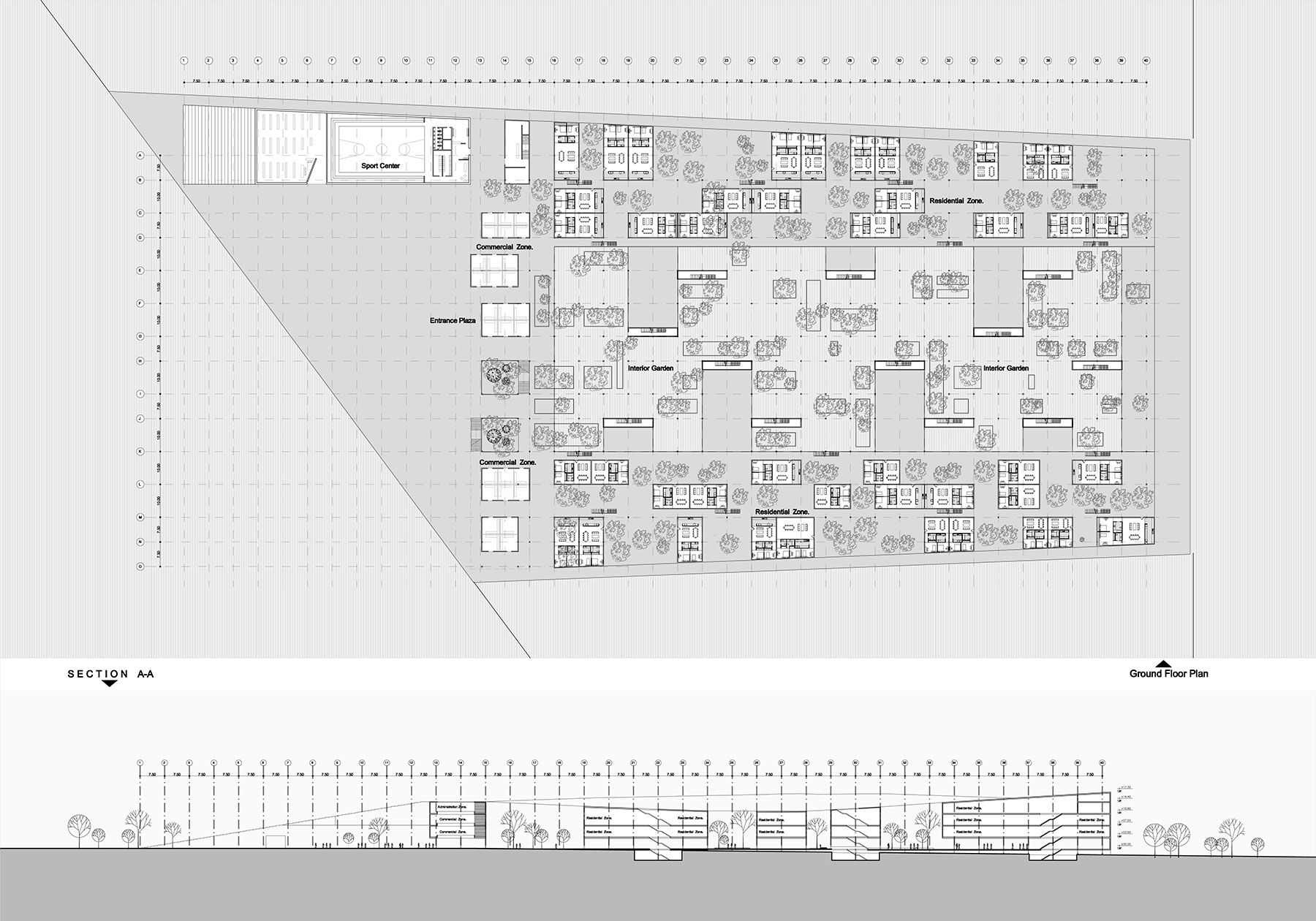
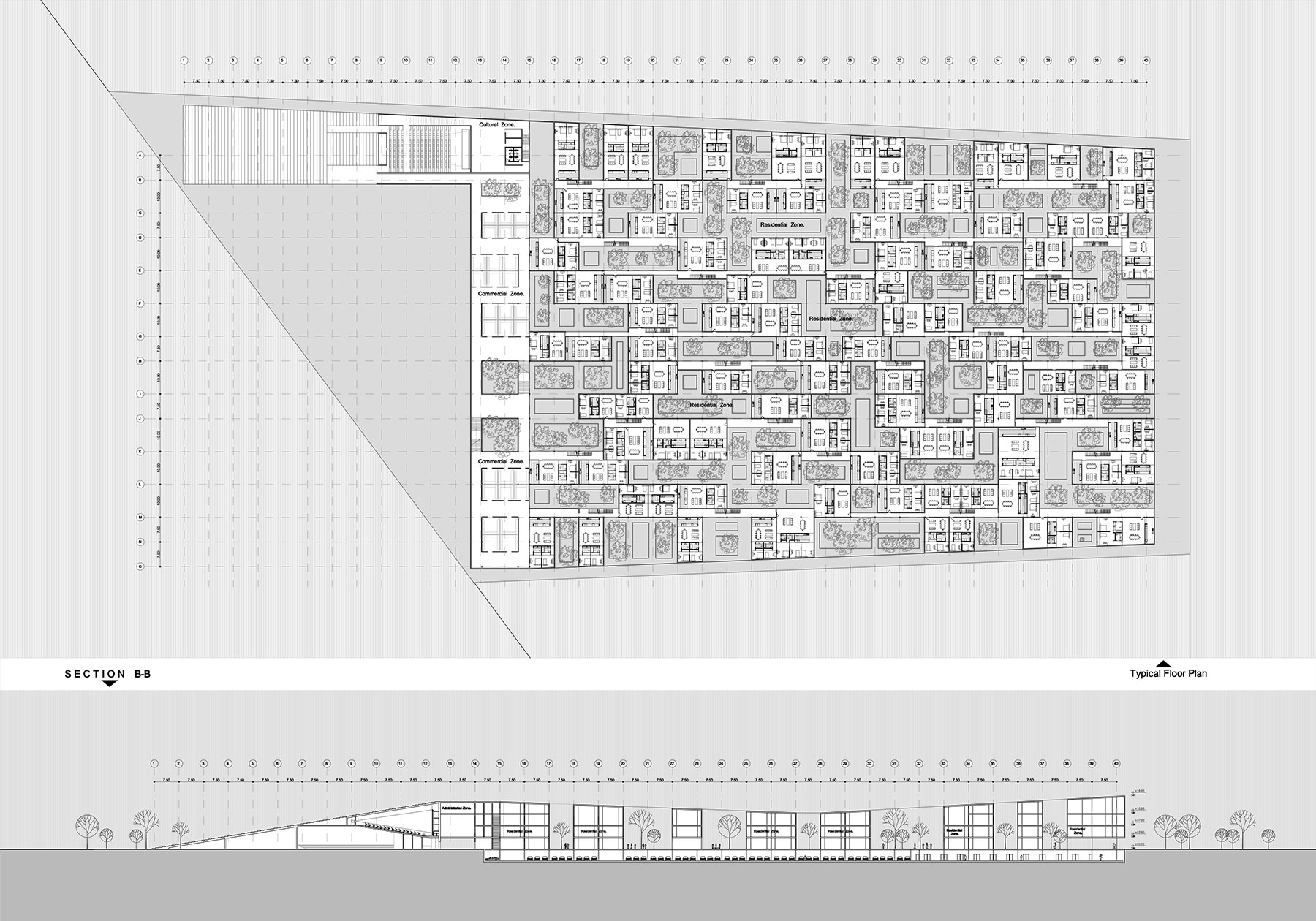
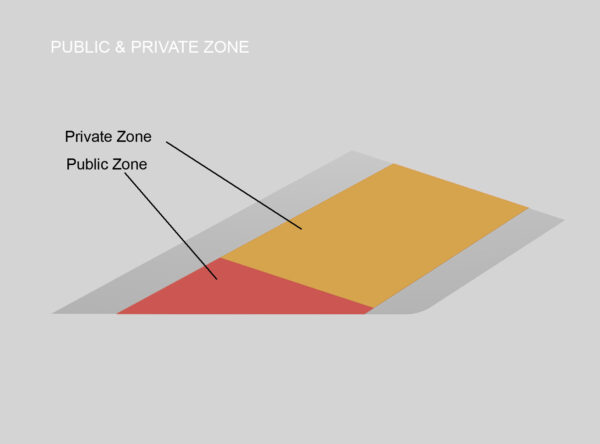
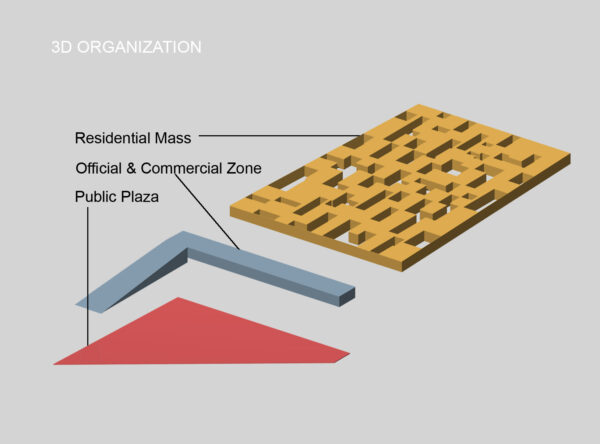
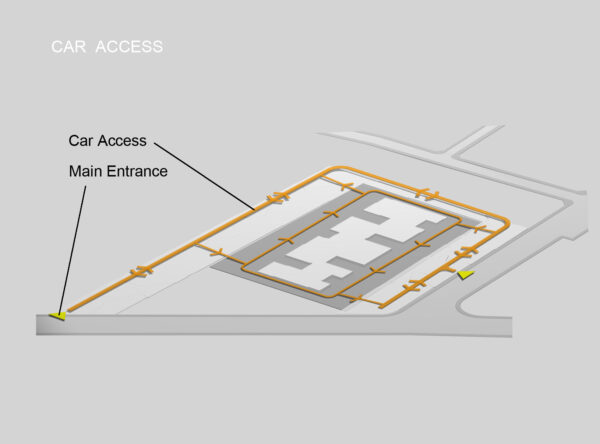
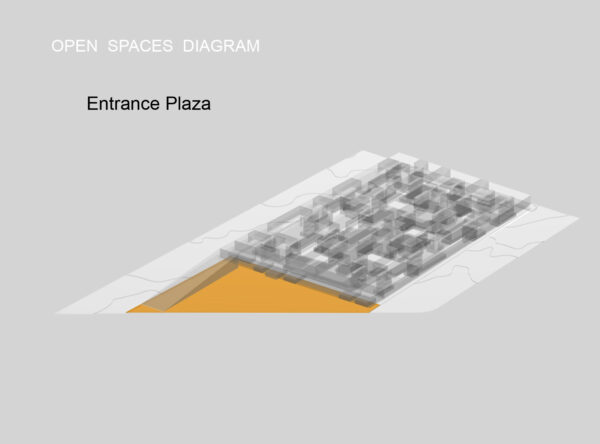
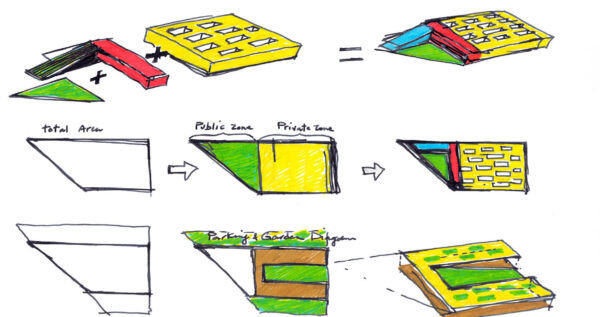
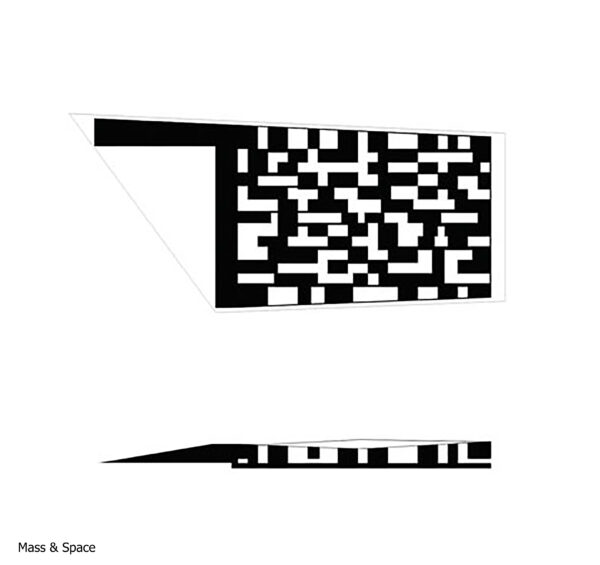
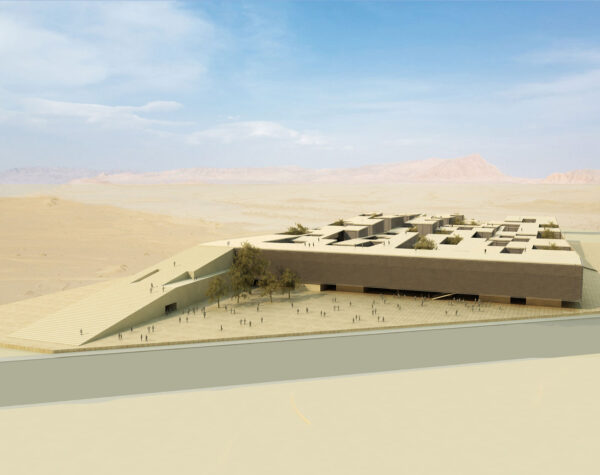
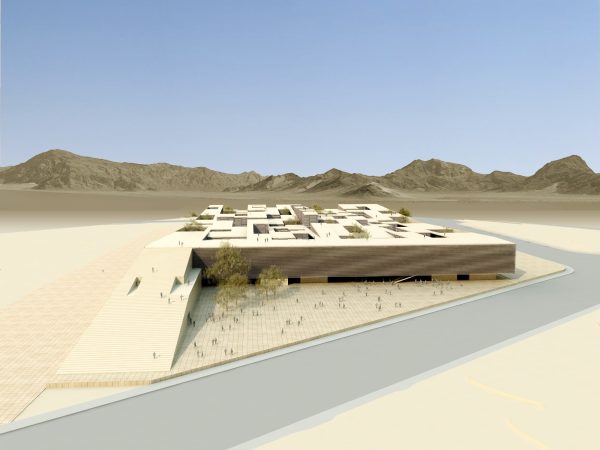
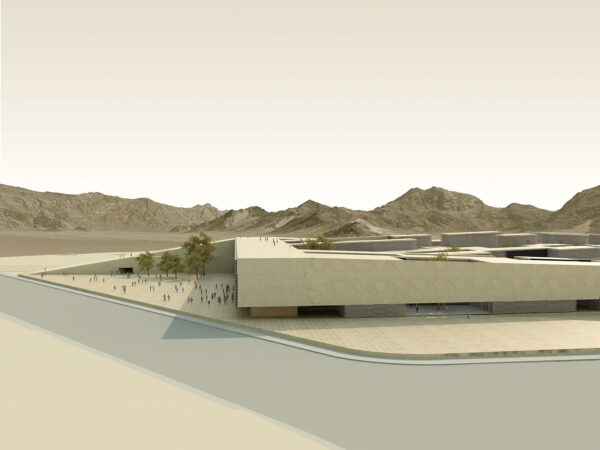
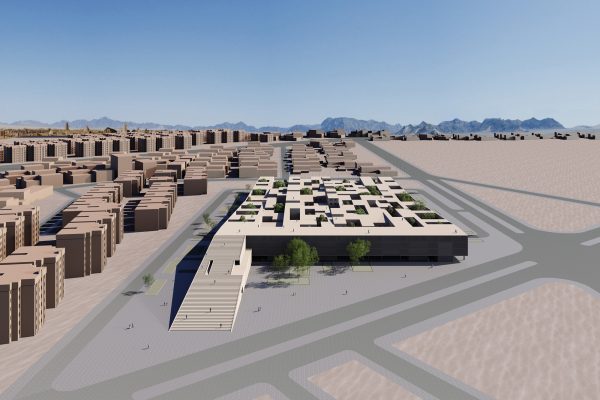
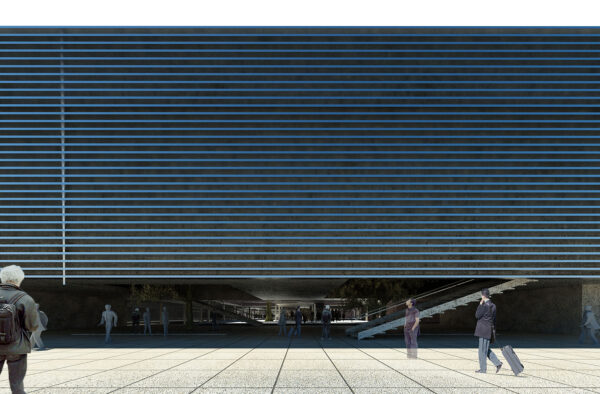
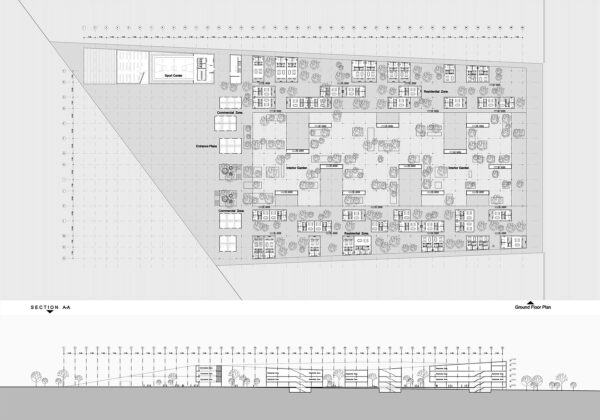
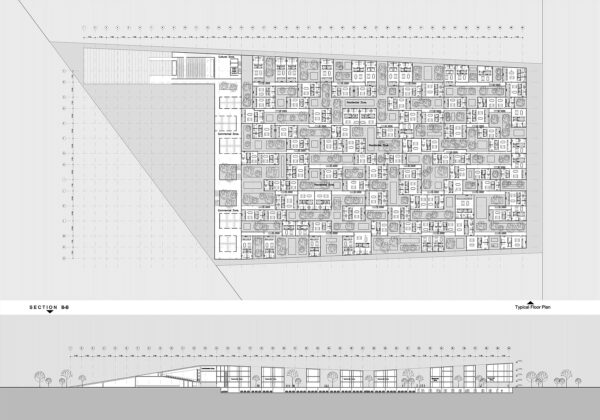
By dividing the trapezoidal site into a rectangular and a triangular portion, the project’s primary geometry was established. The triangular zone along the main boulevard became the entry plaza, while the rectangular portion accommodated the main residential fabric. Public programs—including commercial, administrative, and recreational functions—were positioned between these two parts. Together, they formed an L-shaped volume wrapping the north and east edges of the entry plaza and extending across three levels, mediating between the city and the residential quarters.
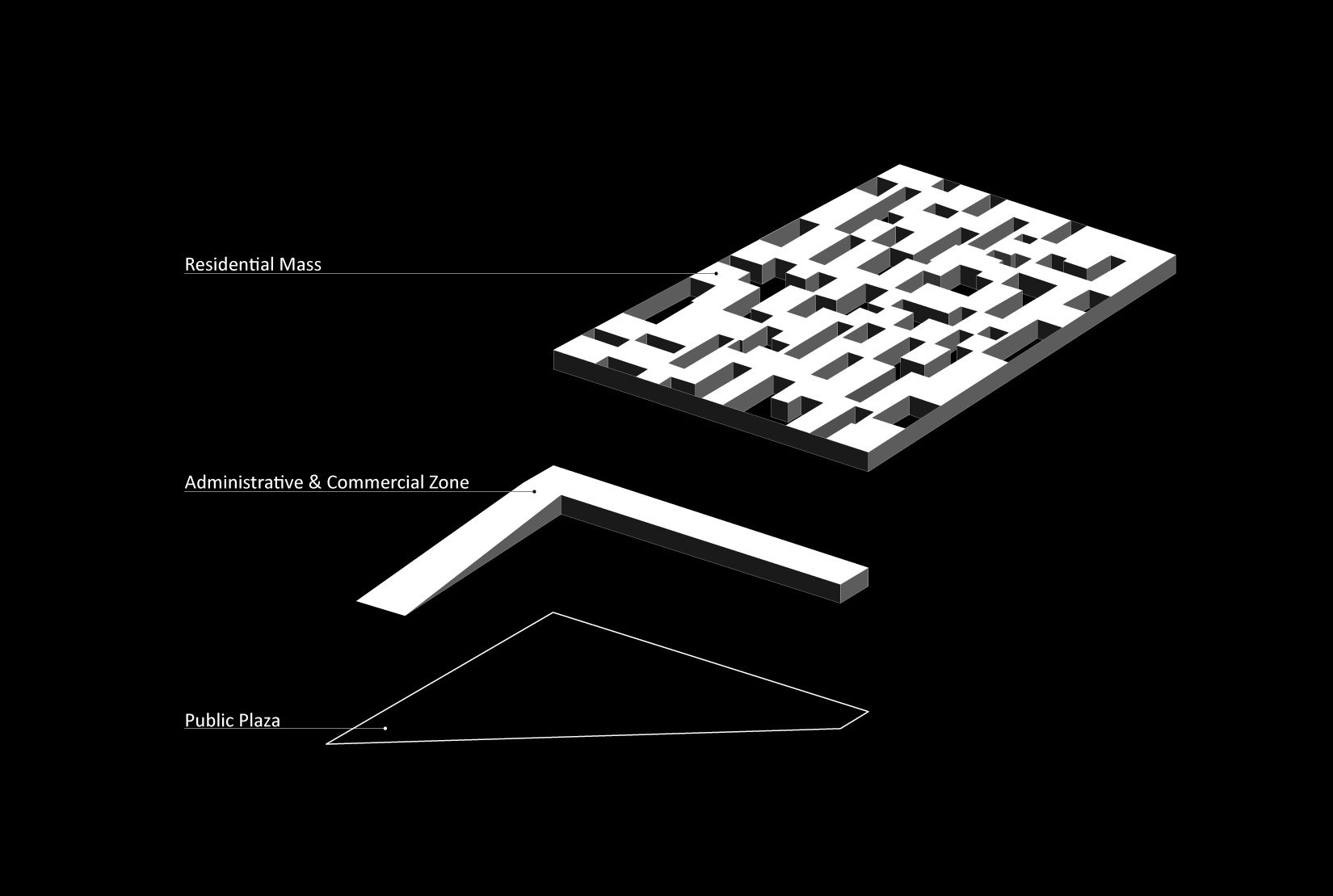
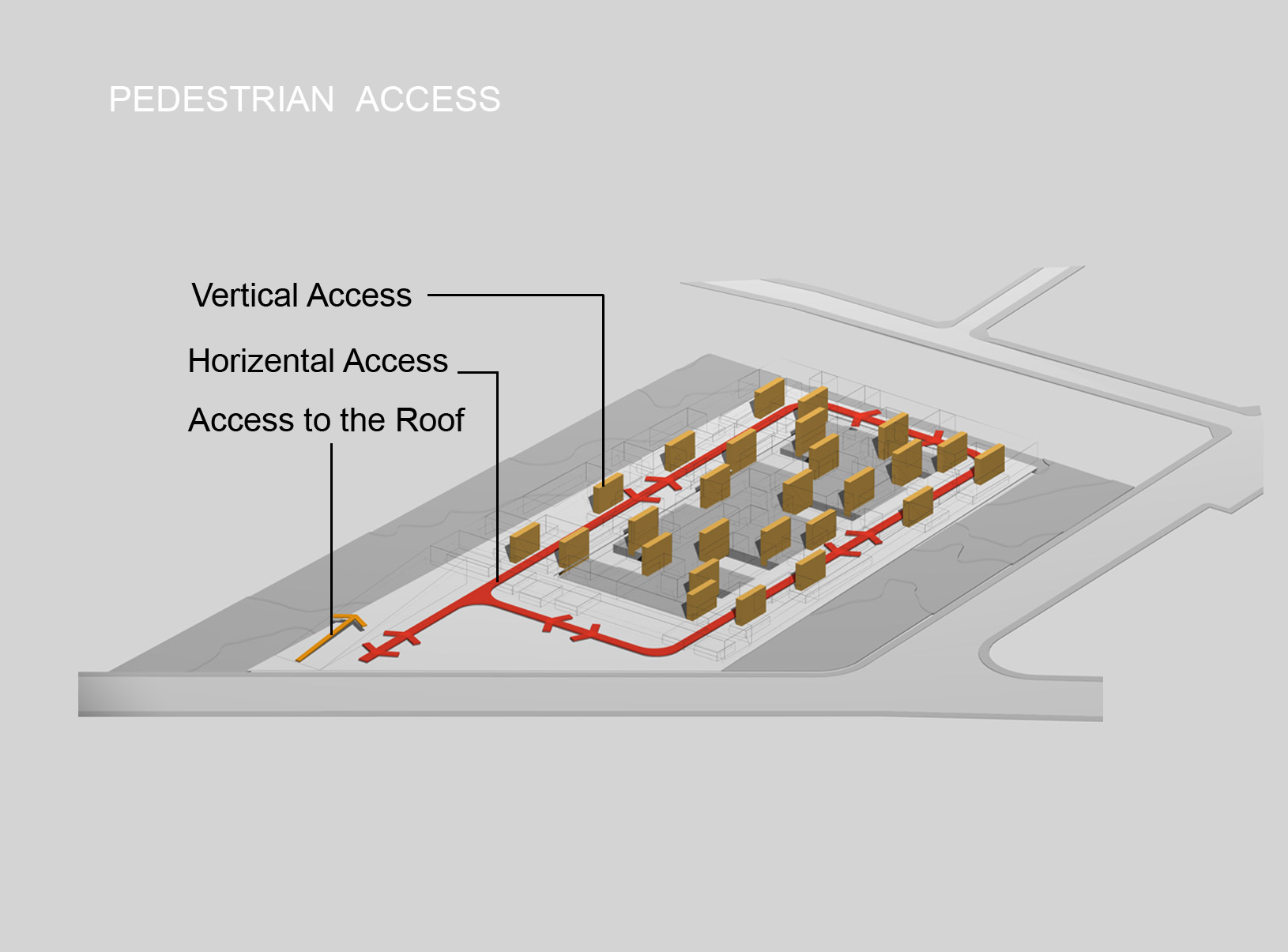
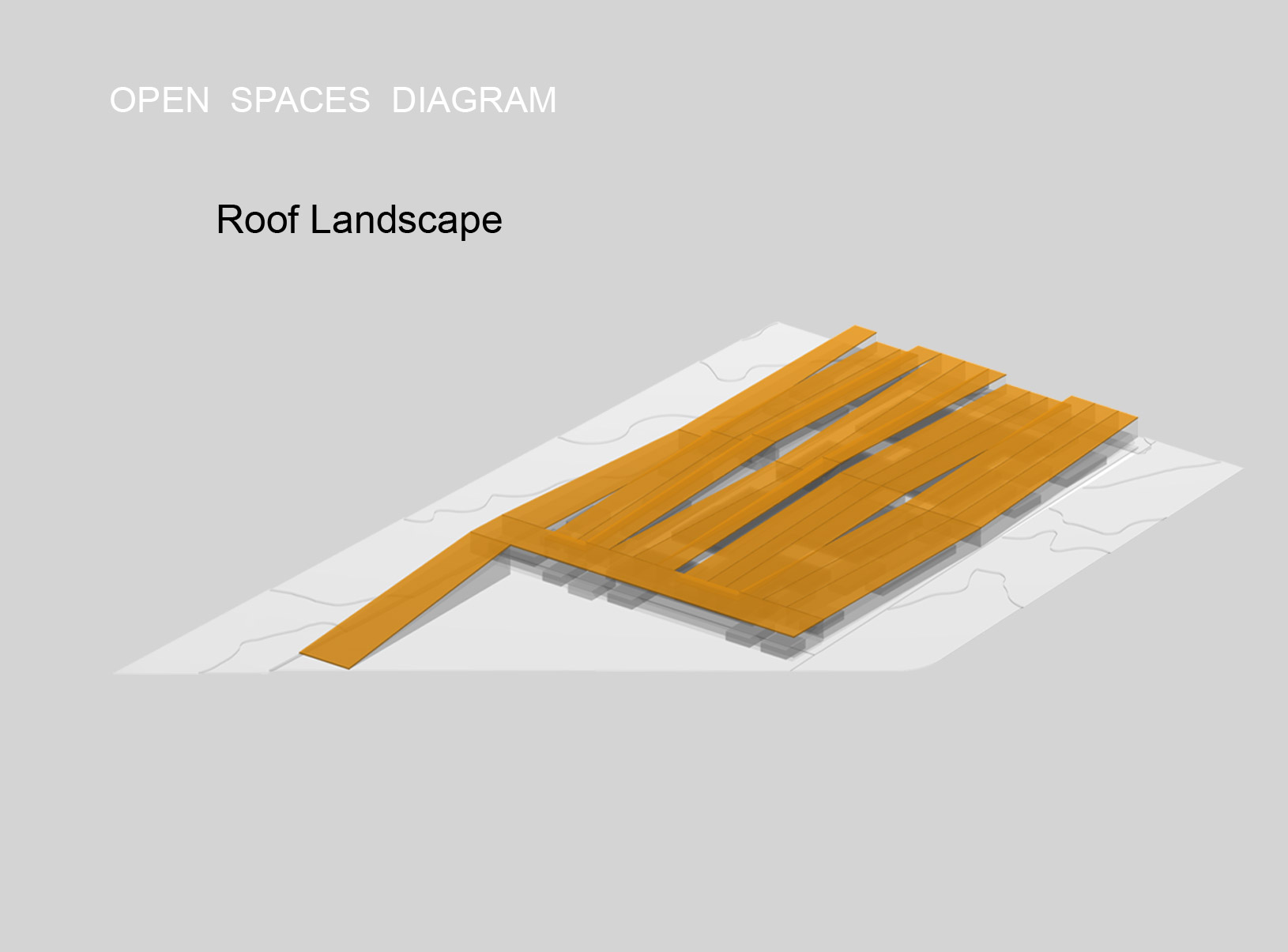
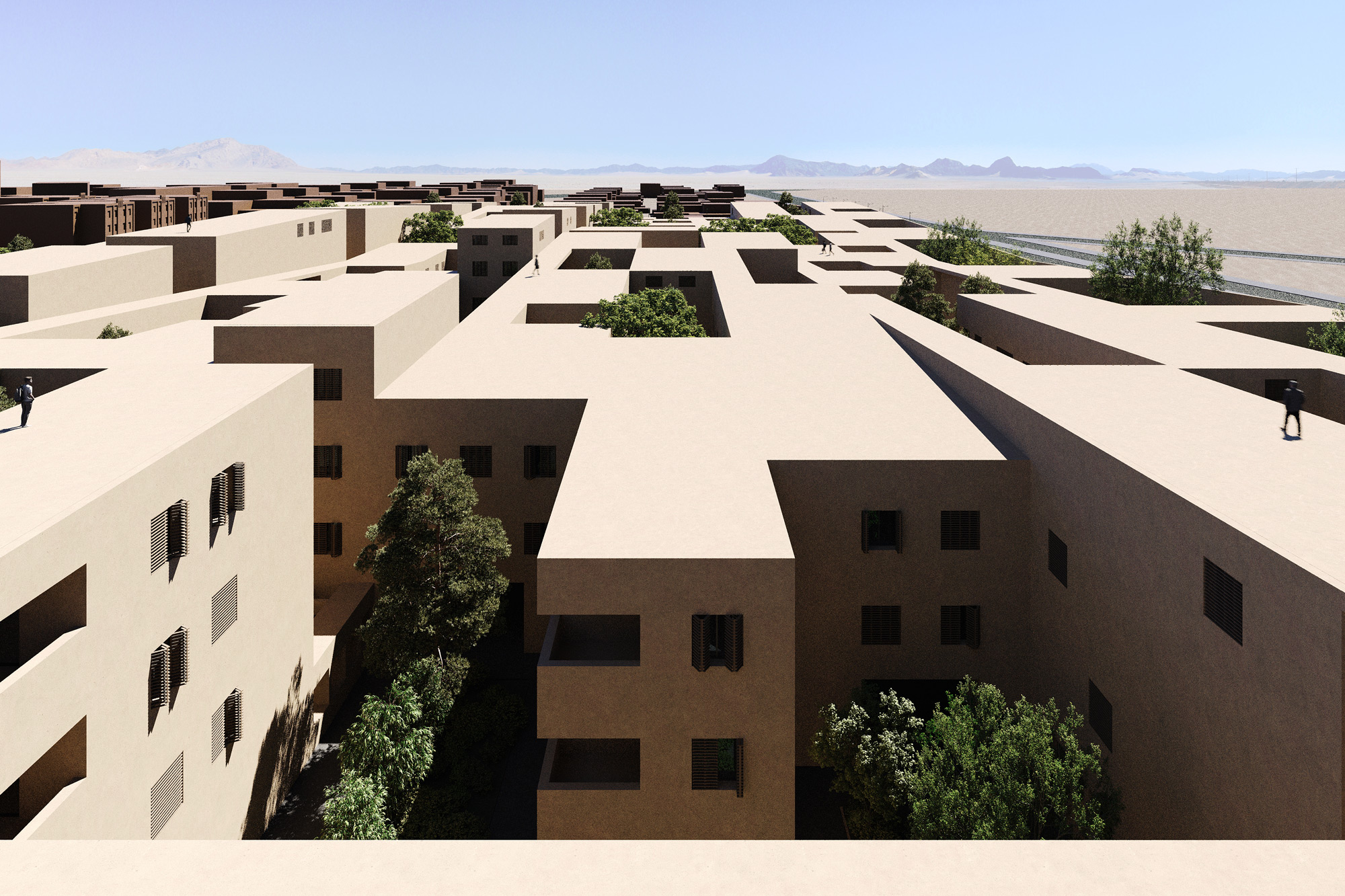
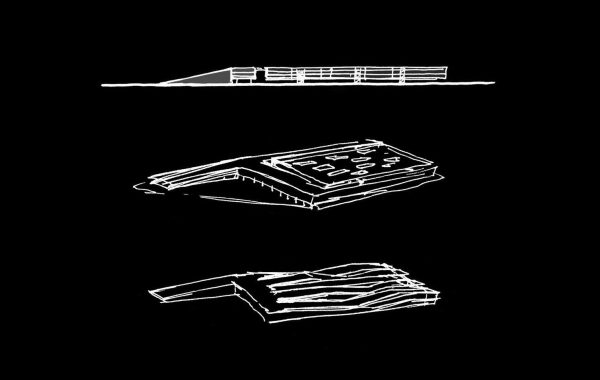
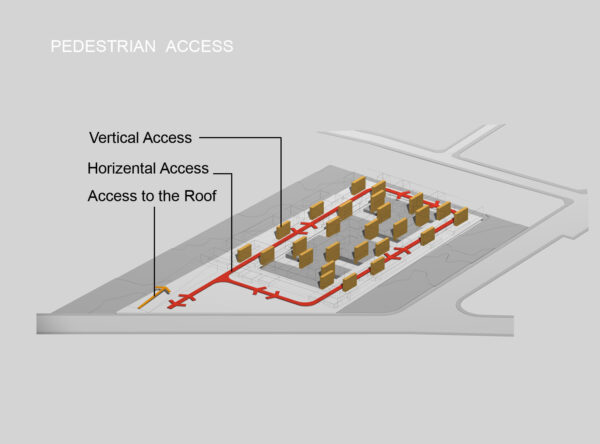
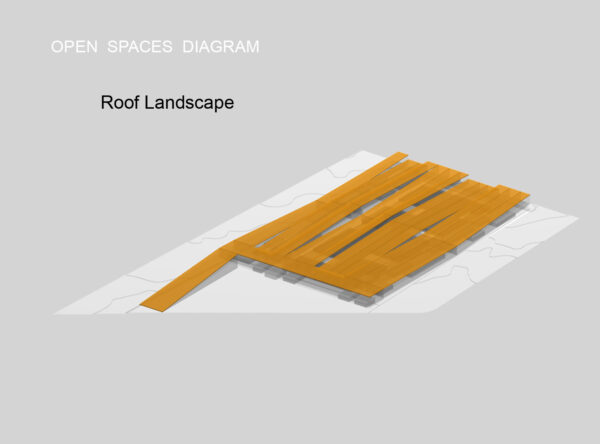
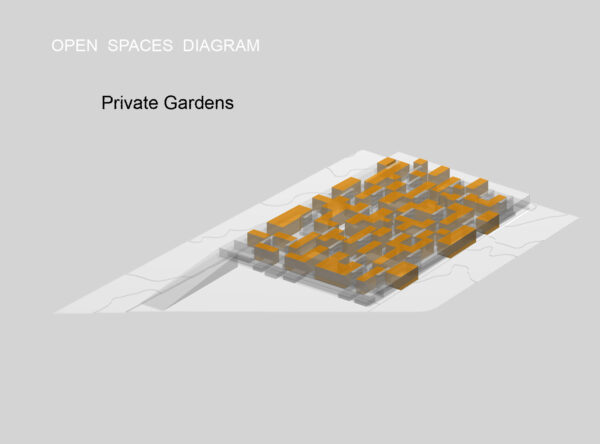
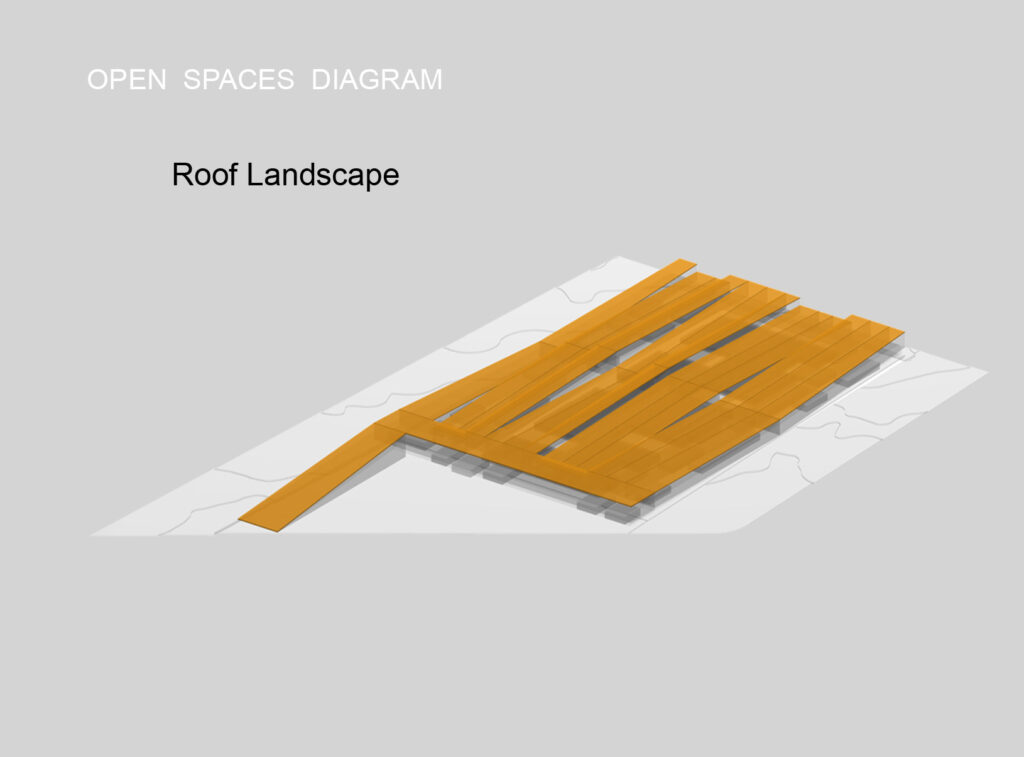
The roof of this L-shaped structure was gently sloped and connected directly to the plaza surface, creating a continuous public path that rises from ground level to the roofscape. This gesture reinforced the project’s horizontal character and expanded the public realm vertically without introducing height. The residential fabric itself was conceived as a porous, low-rise structure, two to three stories high, seamlessly integrated with the L-shaped service block. The complex was designed to read as a cohesive urban field rather than a collection of individual buildings.
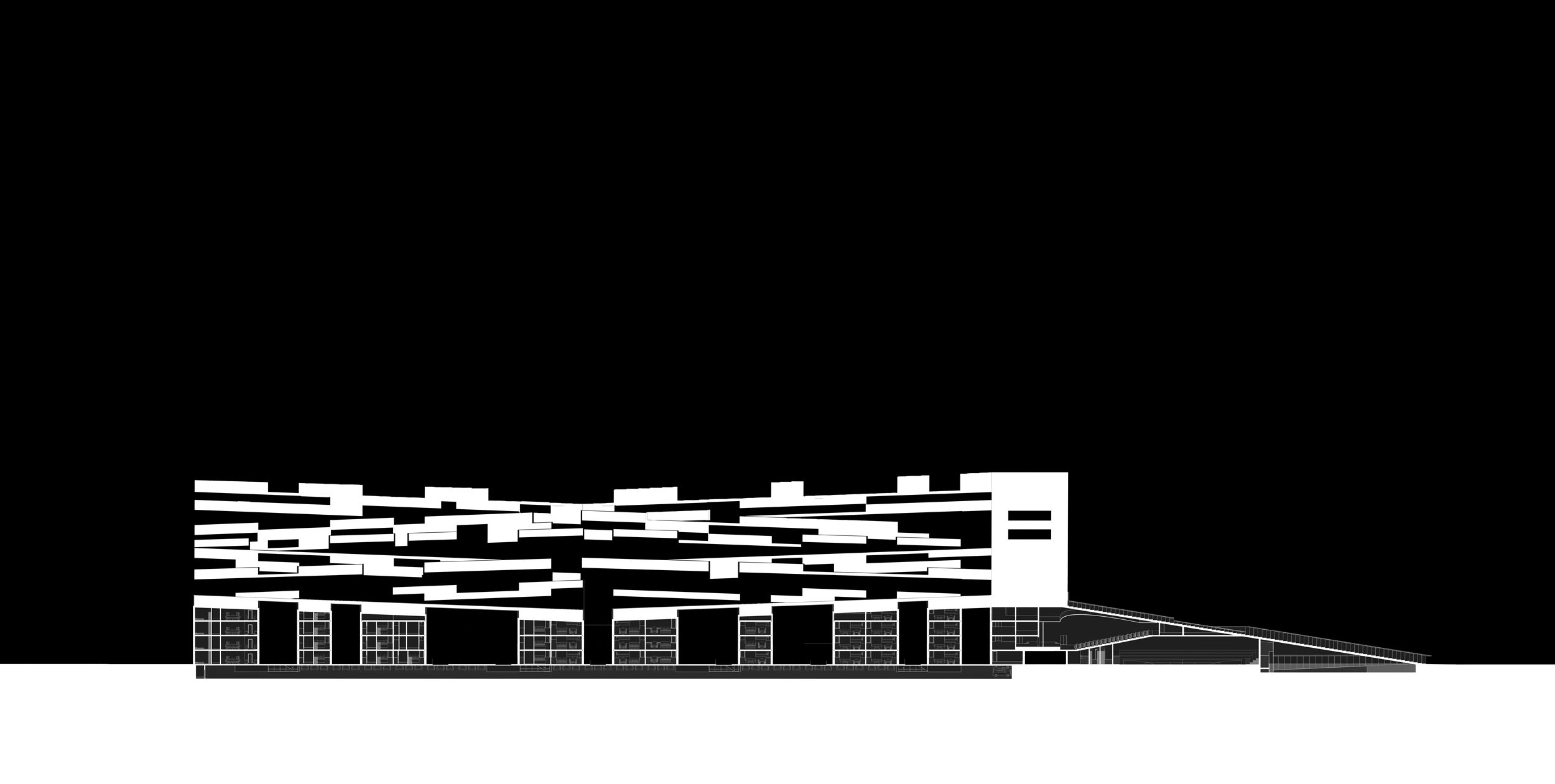
The project is organized around three primary spatial zones:
- The triangular entry plaza,
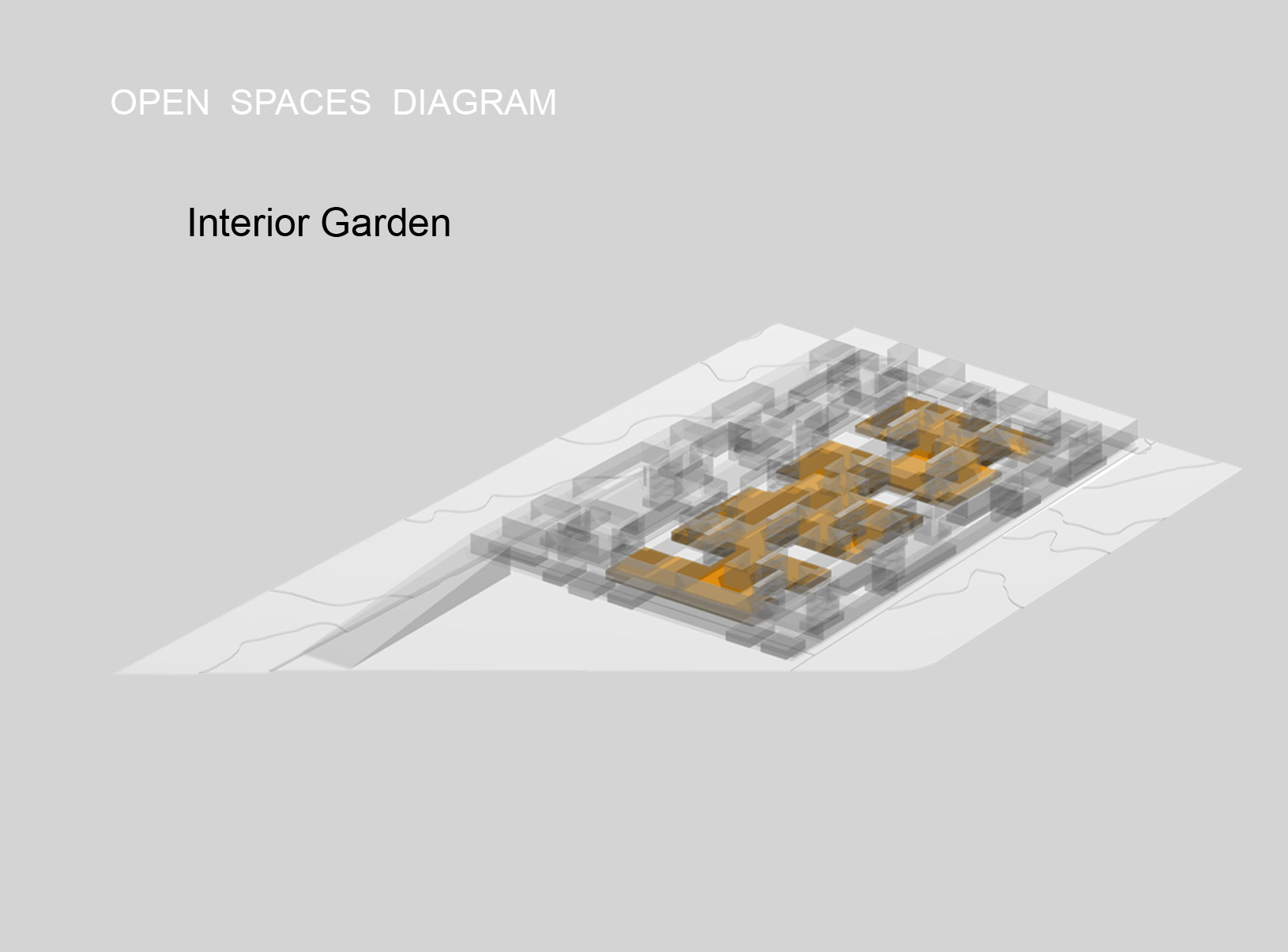
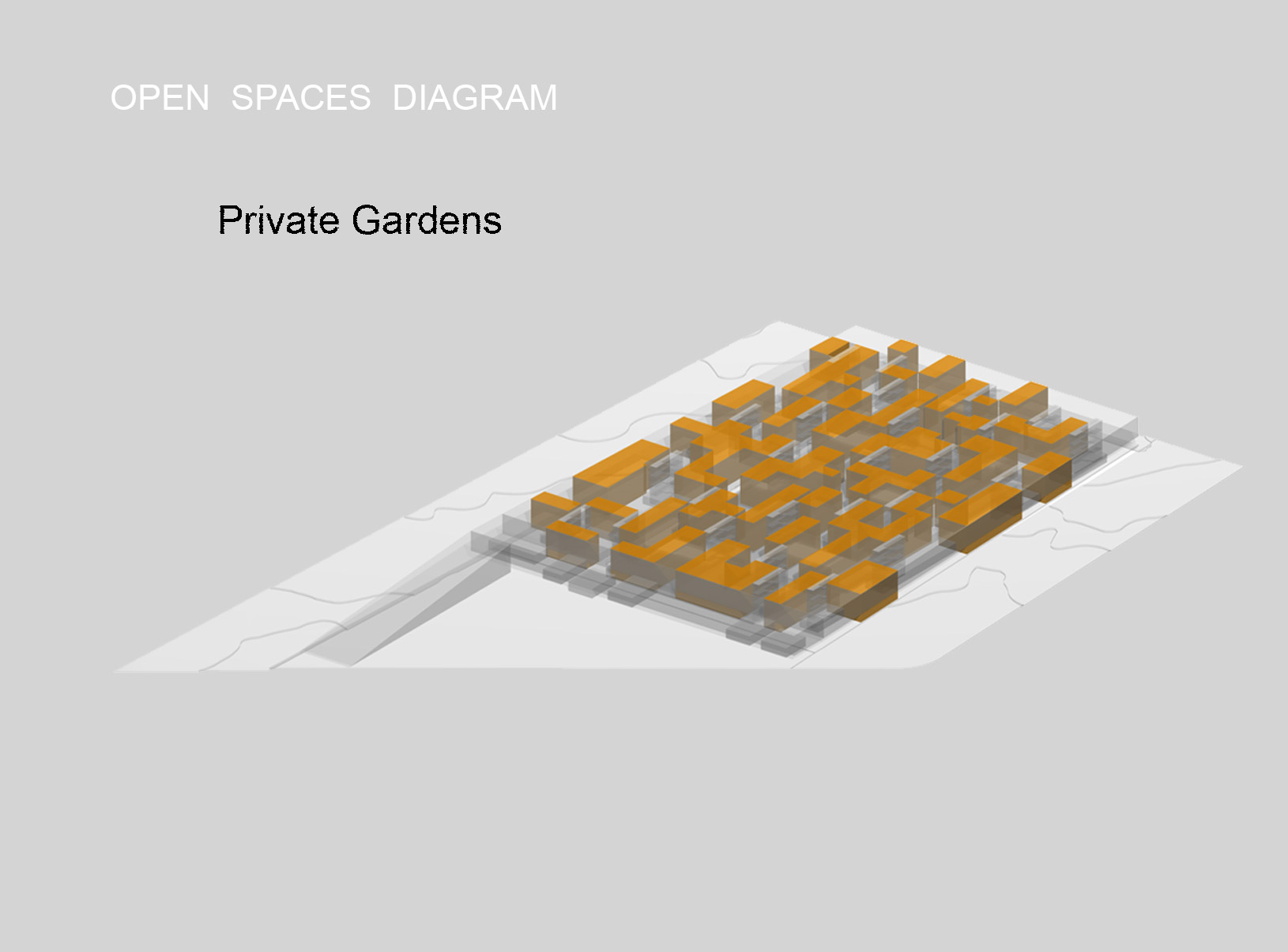
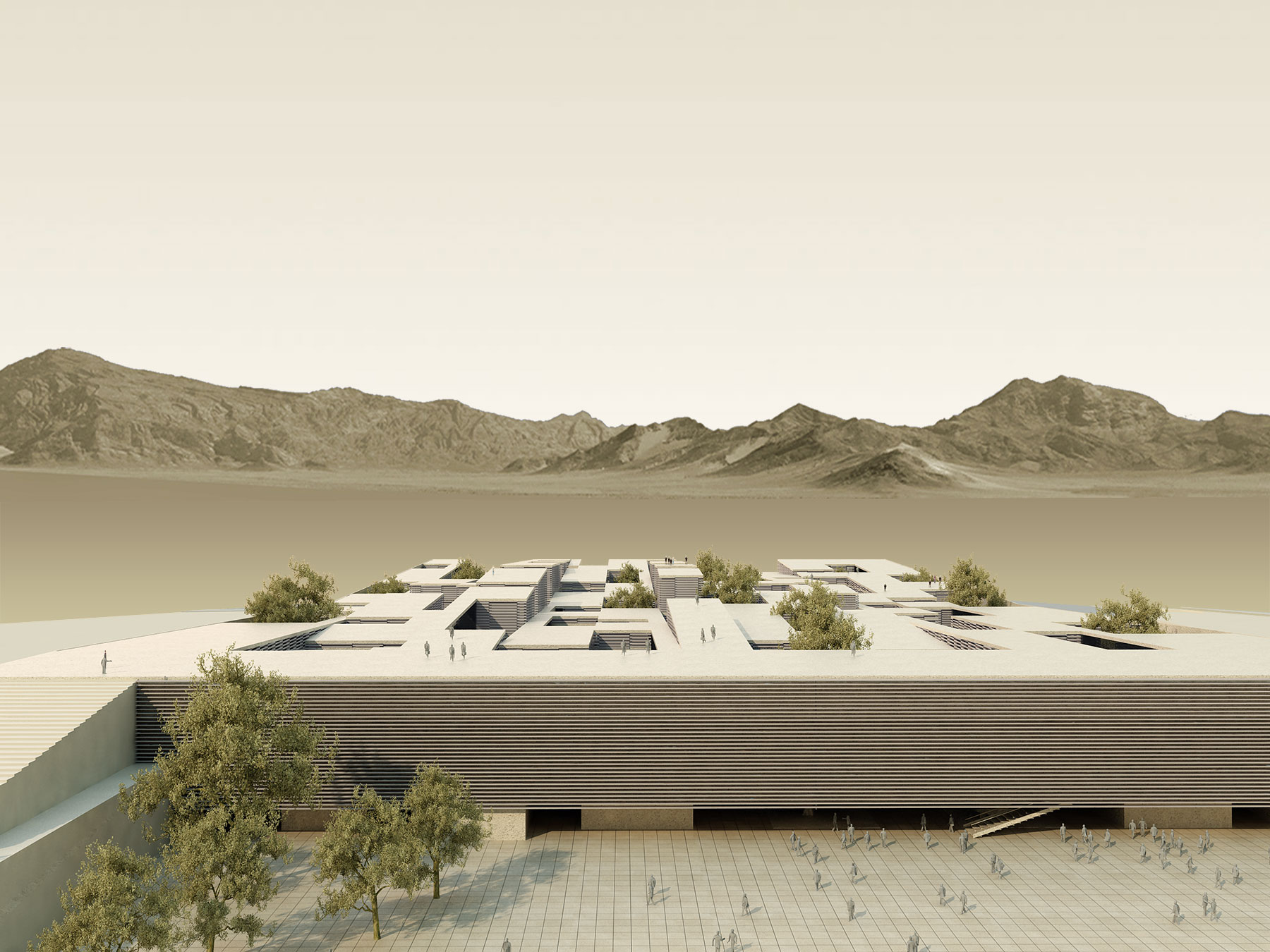
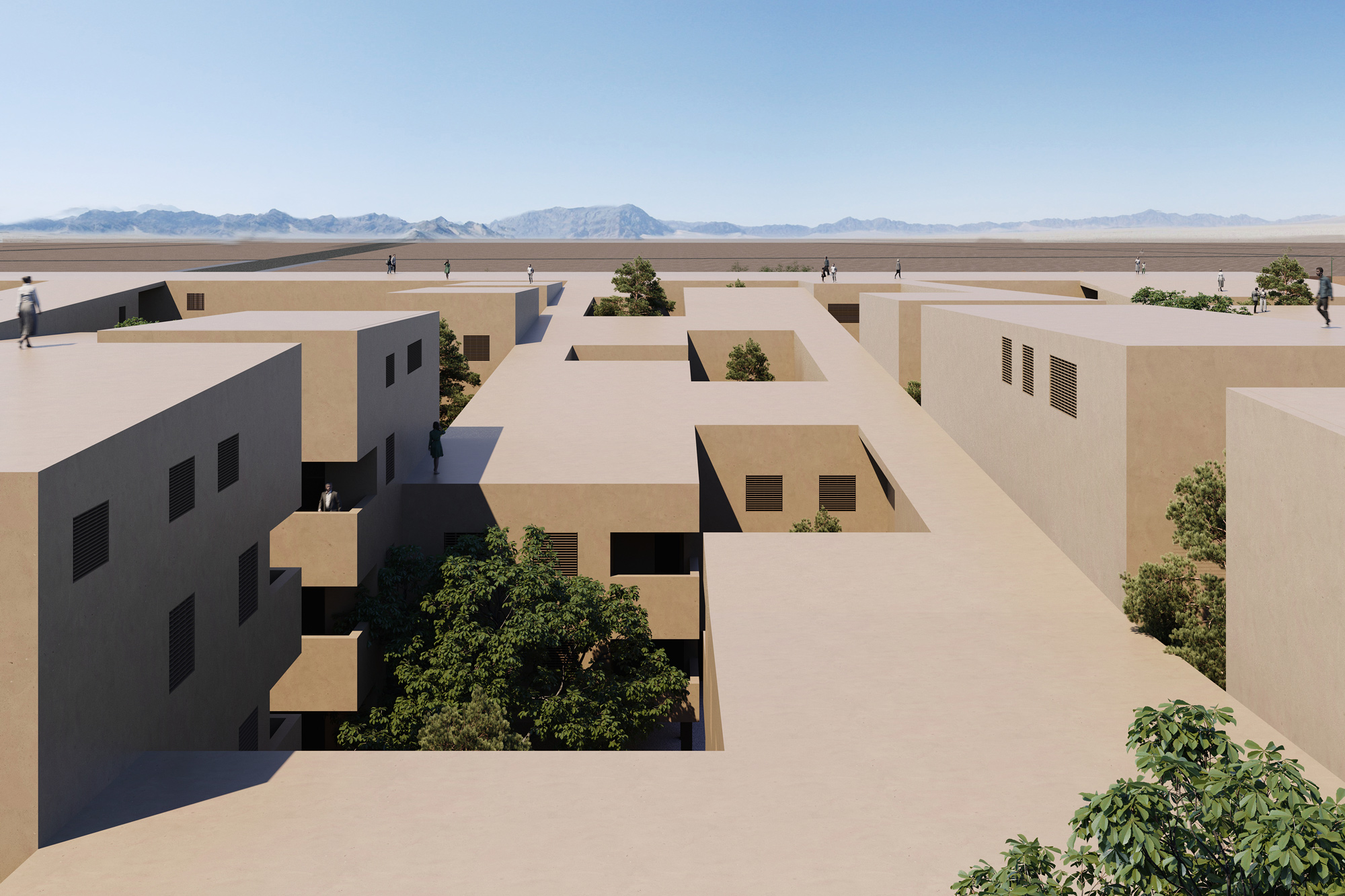
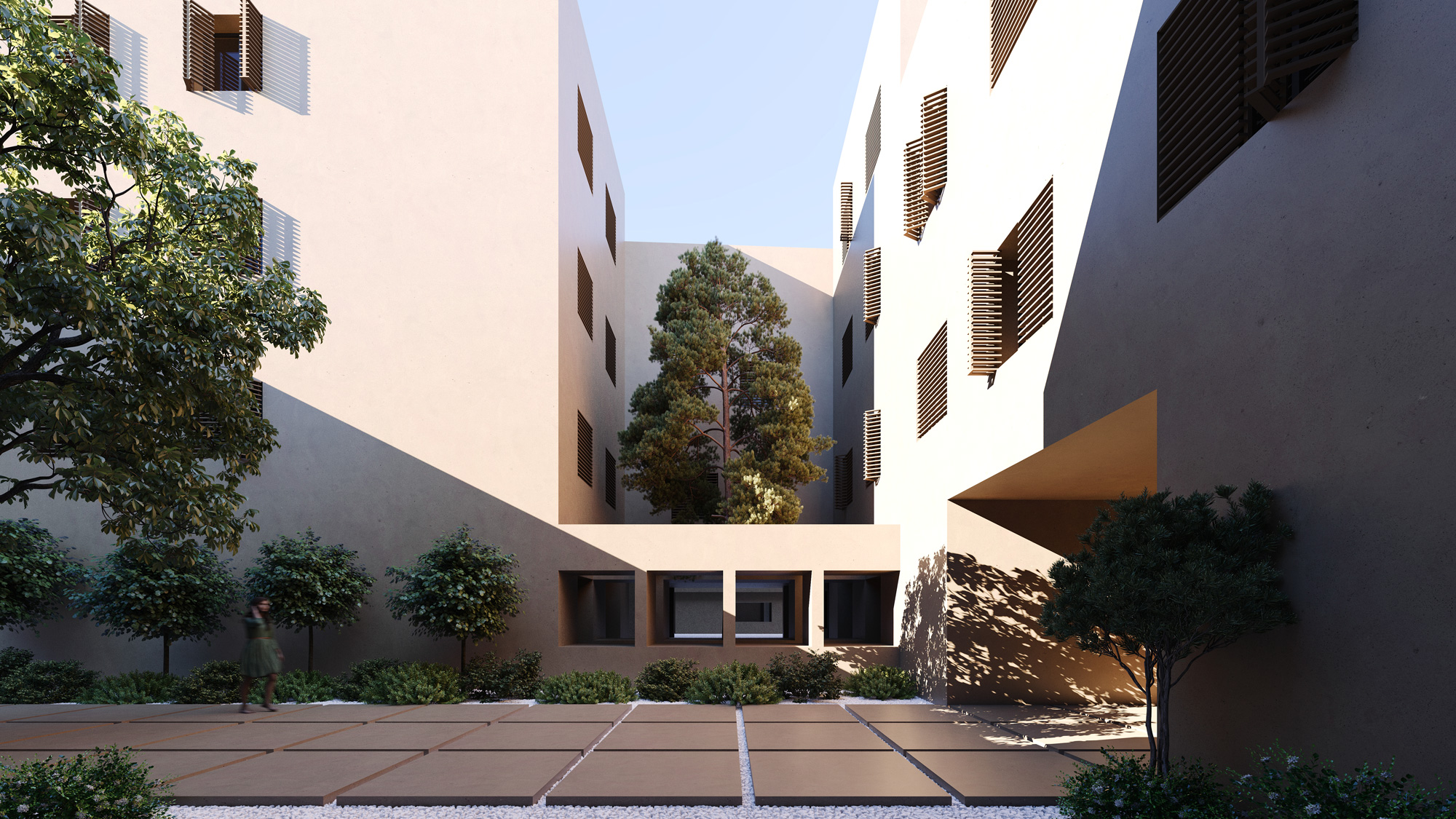
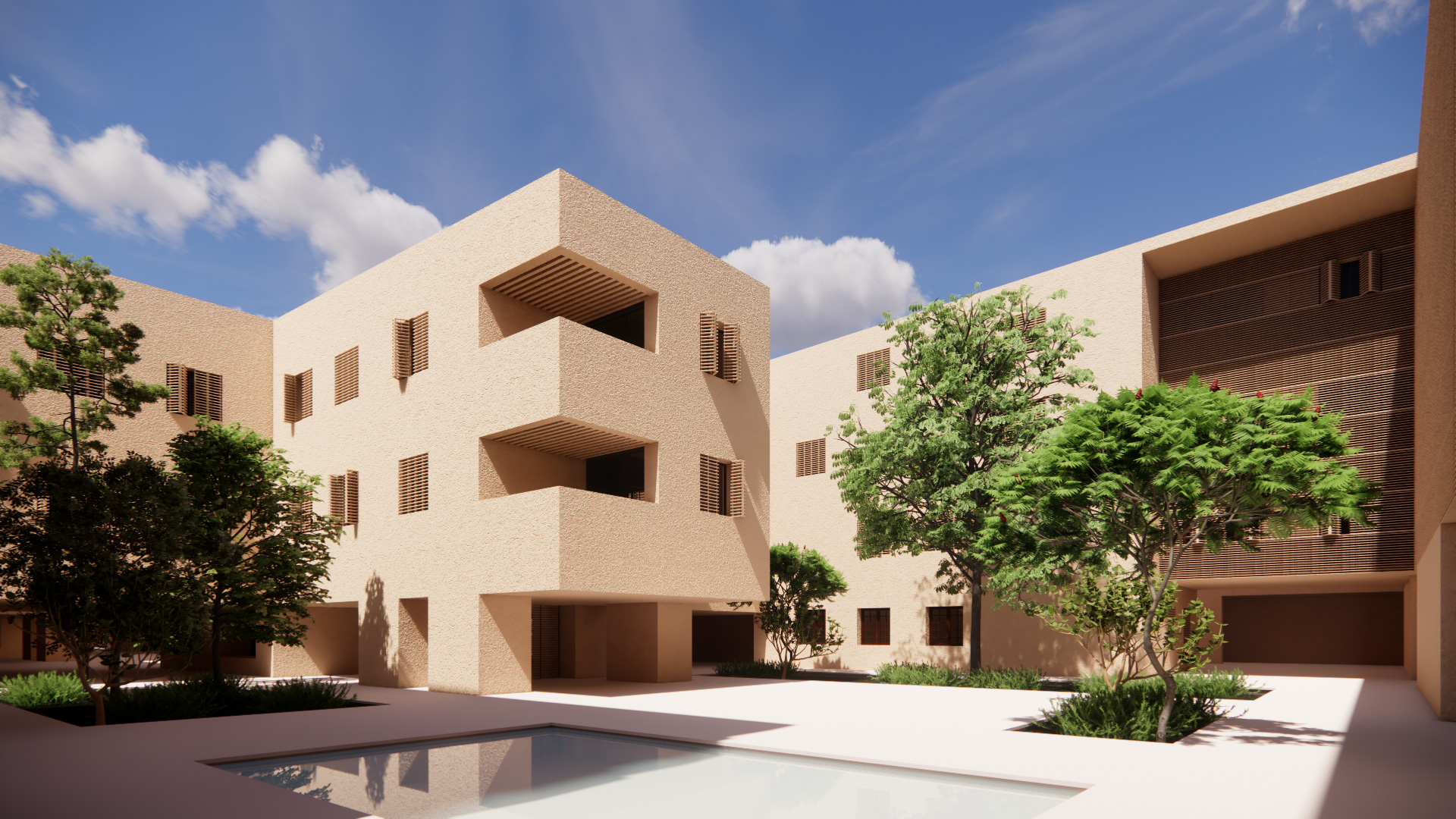
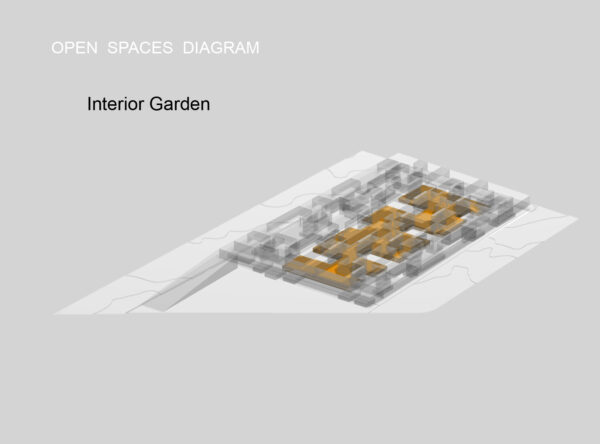
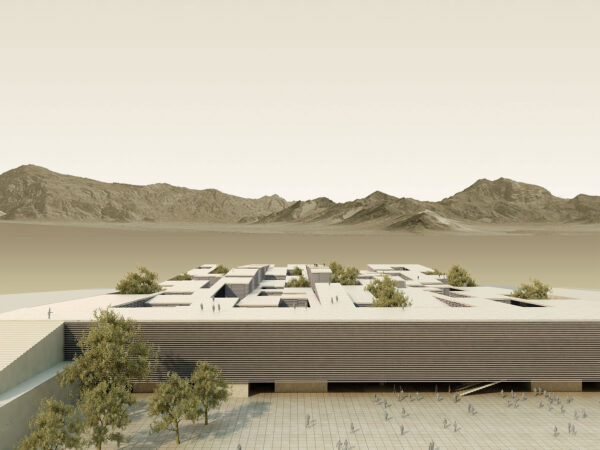
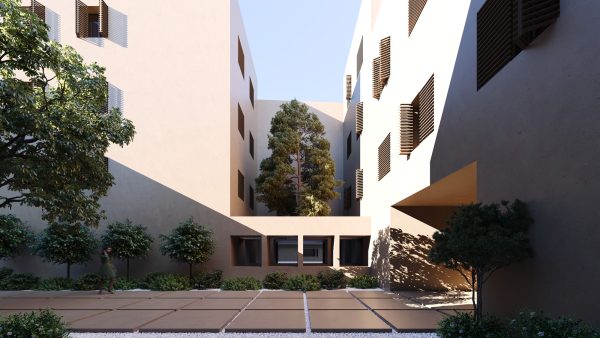
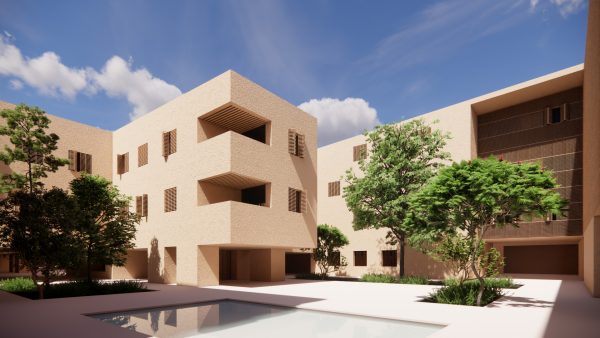
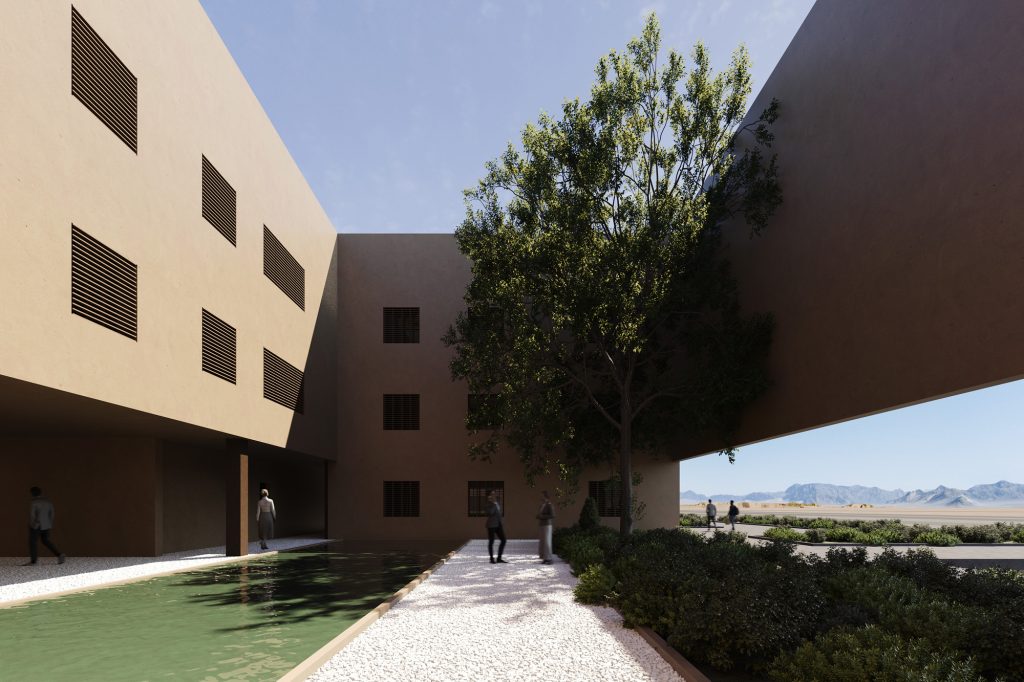
- A sequence of rectangular garden courtyards that function as climatic voids
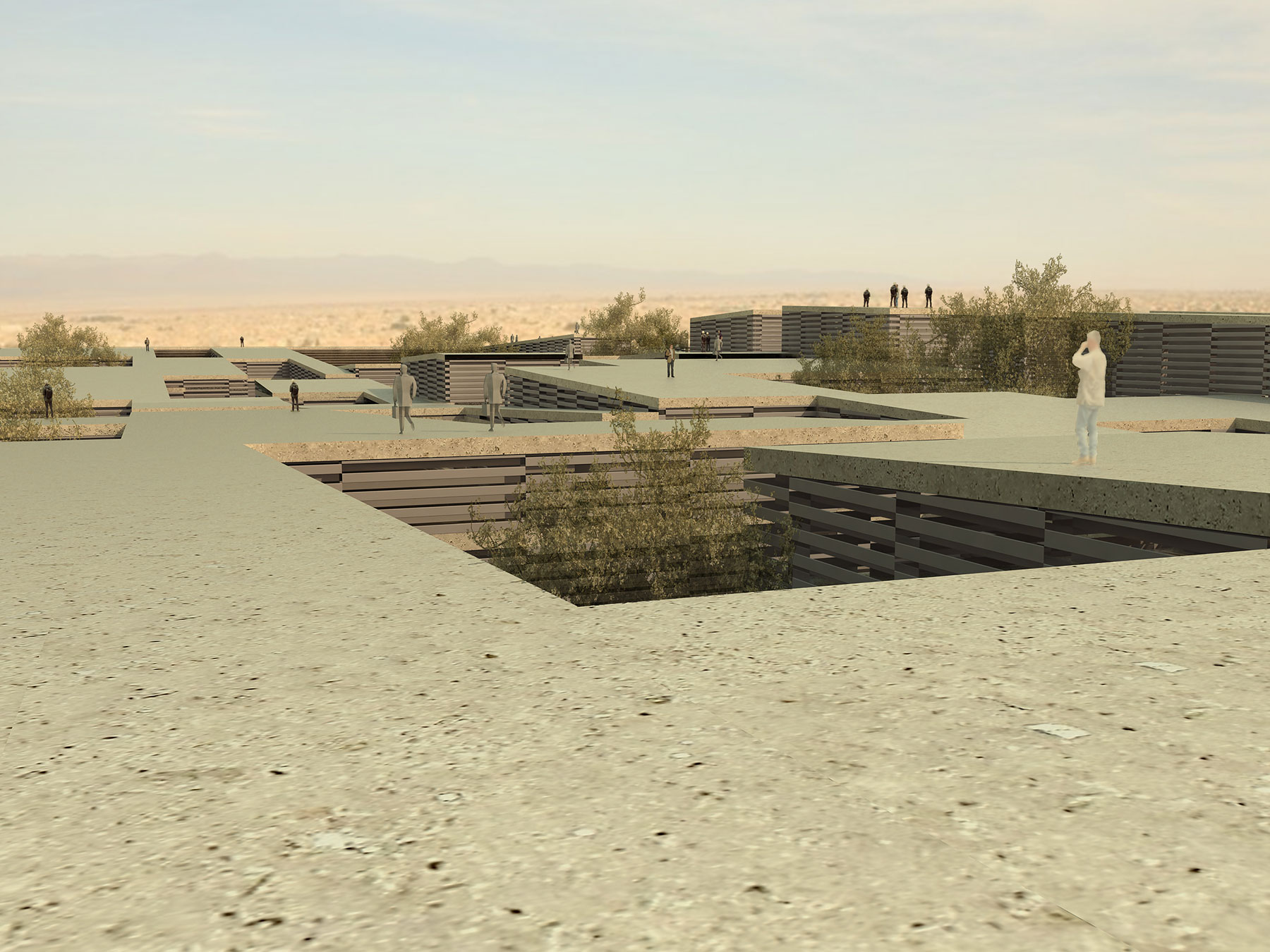
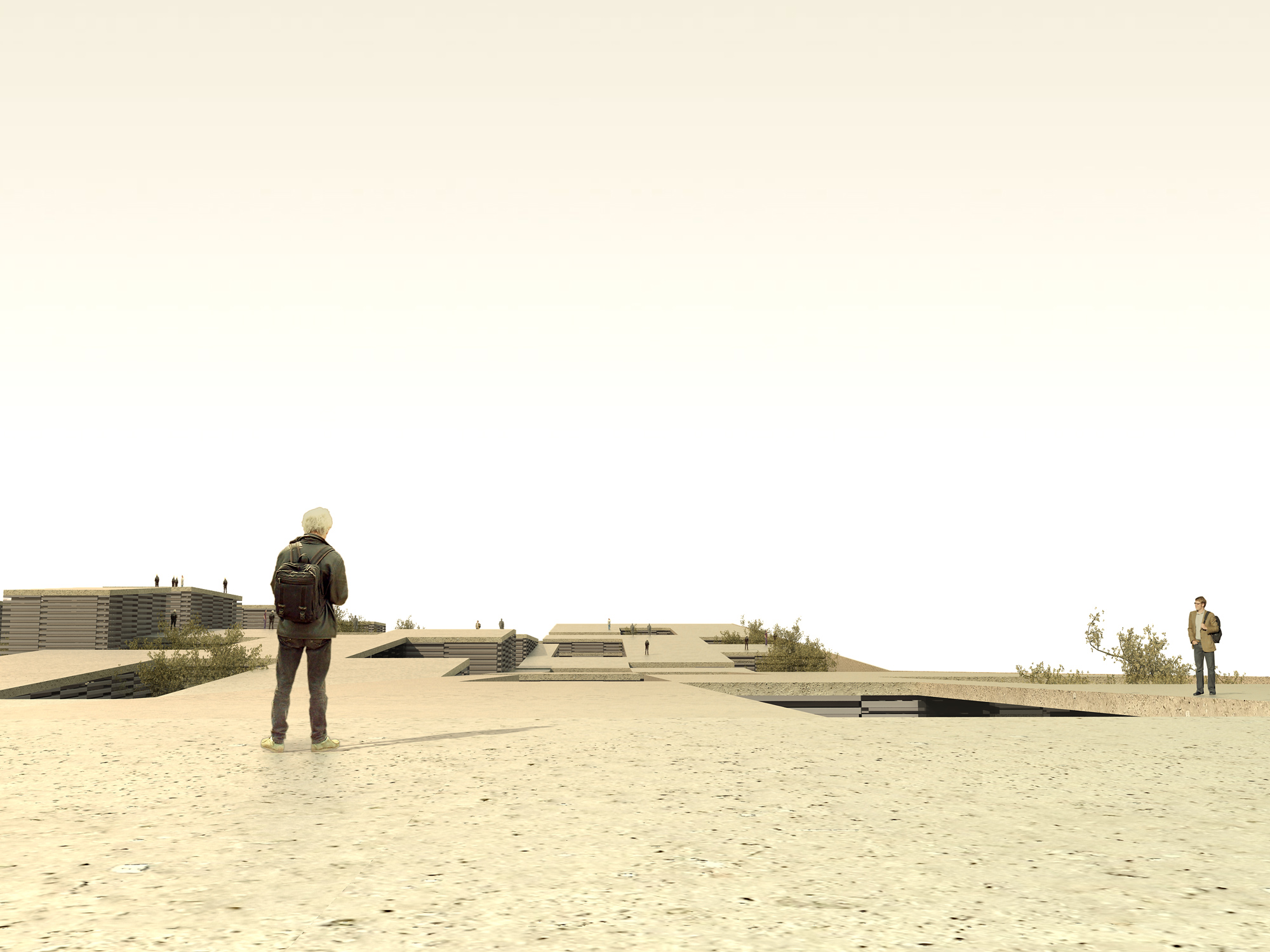
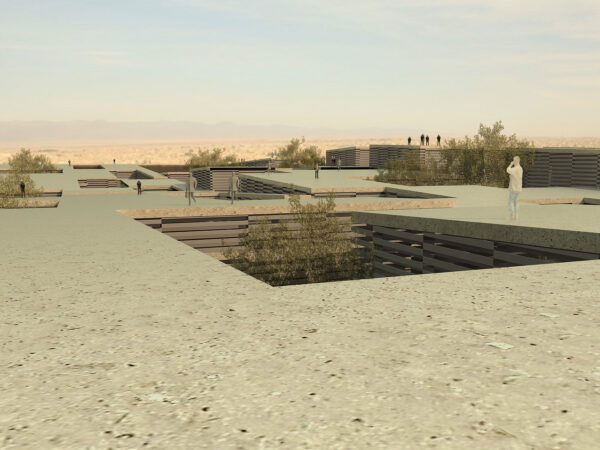
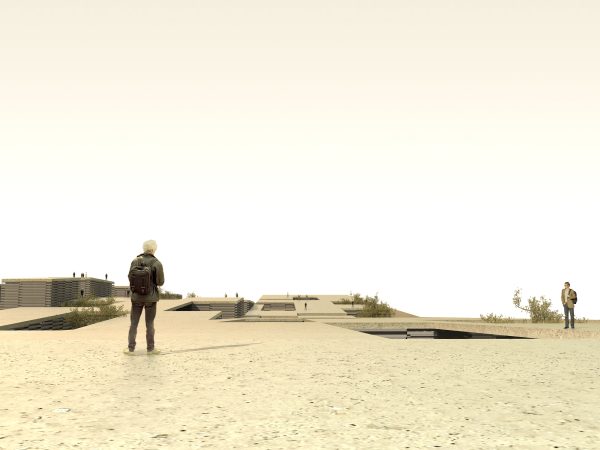
- An undulating roof terrace, forming the project’s fifth façade.
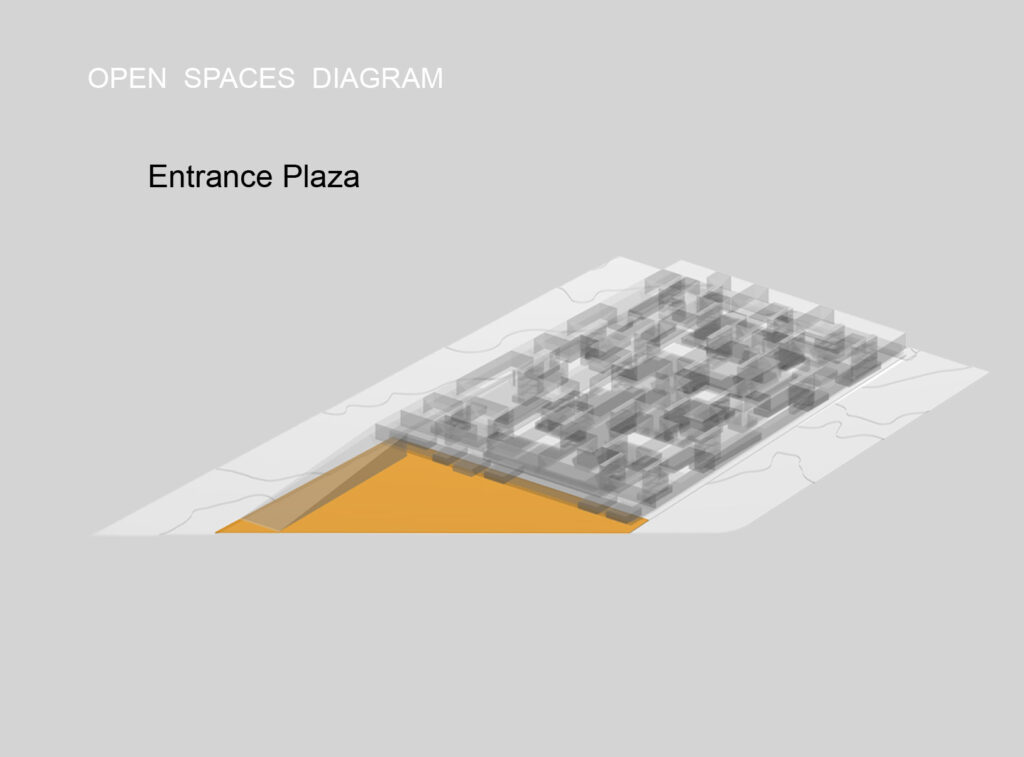
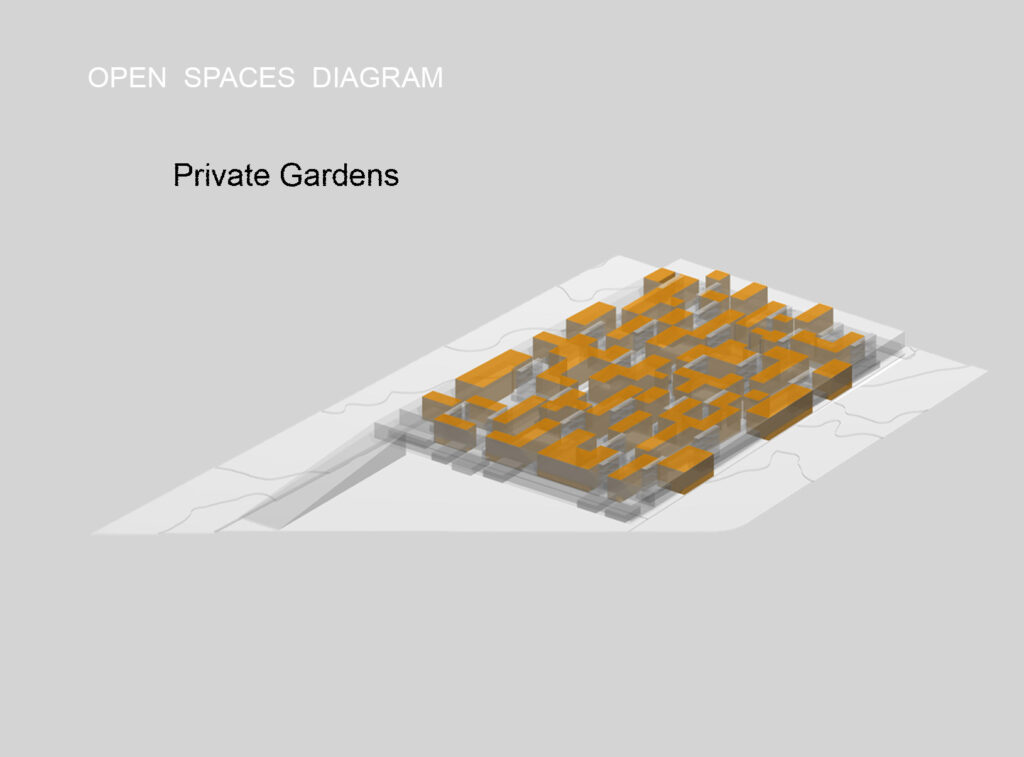
Spatial continuity among these elements enhances natural ventilation, passive cooling, and creates a series of layered and unexpected spatial experiences for residents. The triangular plaza operates as both the main entrance and a communal gathering space, hosting social events and ceremonies. Its strong geometric presence establishes a clear and memorable identity for the complex. The inner courtyards each possess a distinct character, incorporating water features and vegetation adapted to Yazd’s hot, arid climate. These spaces introduce humidity, shade, and filtered light into the residential environment.
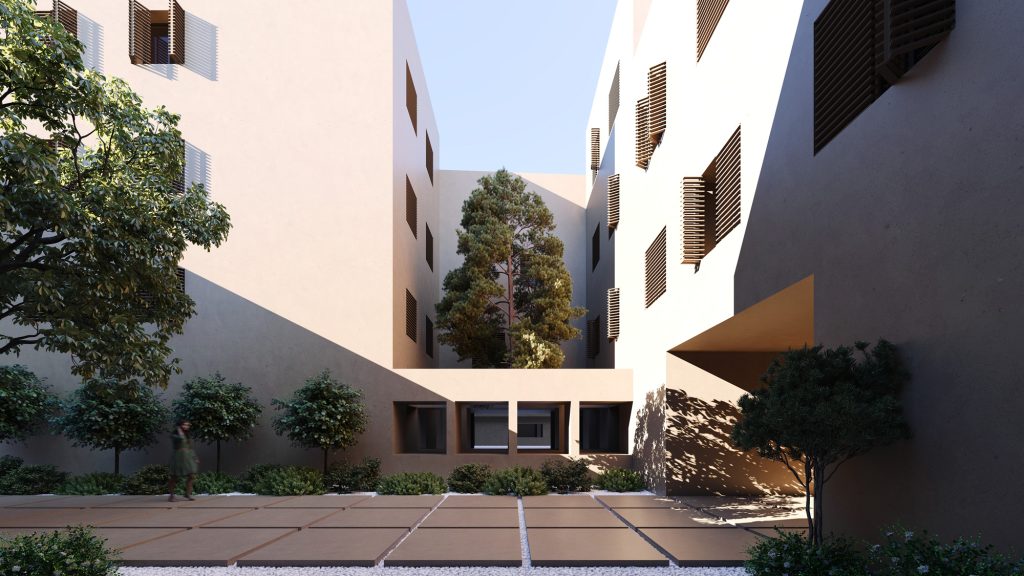
Finally, the wavy roof surface completes the trilogy of public spaces. Connected to the plaza through its broad inclined plane, the roof functions as an elevated urban terrace—a shared platform for collective life, particularly active during the cooler seasons.