















Tehran World Trade Center
Location
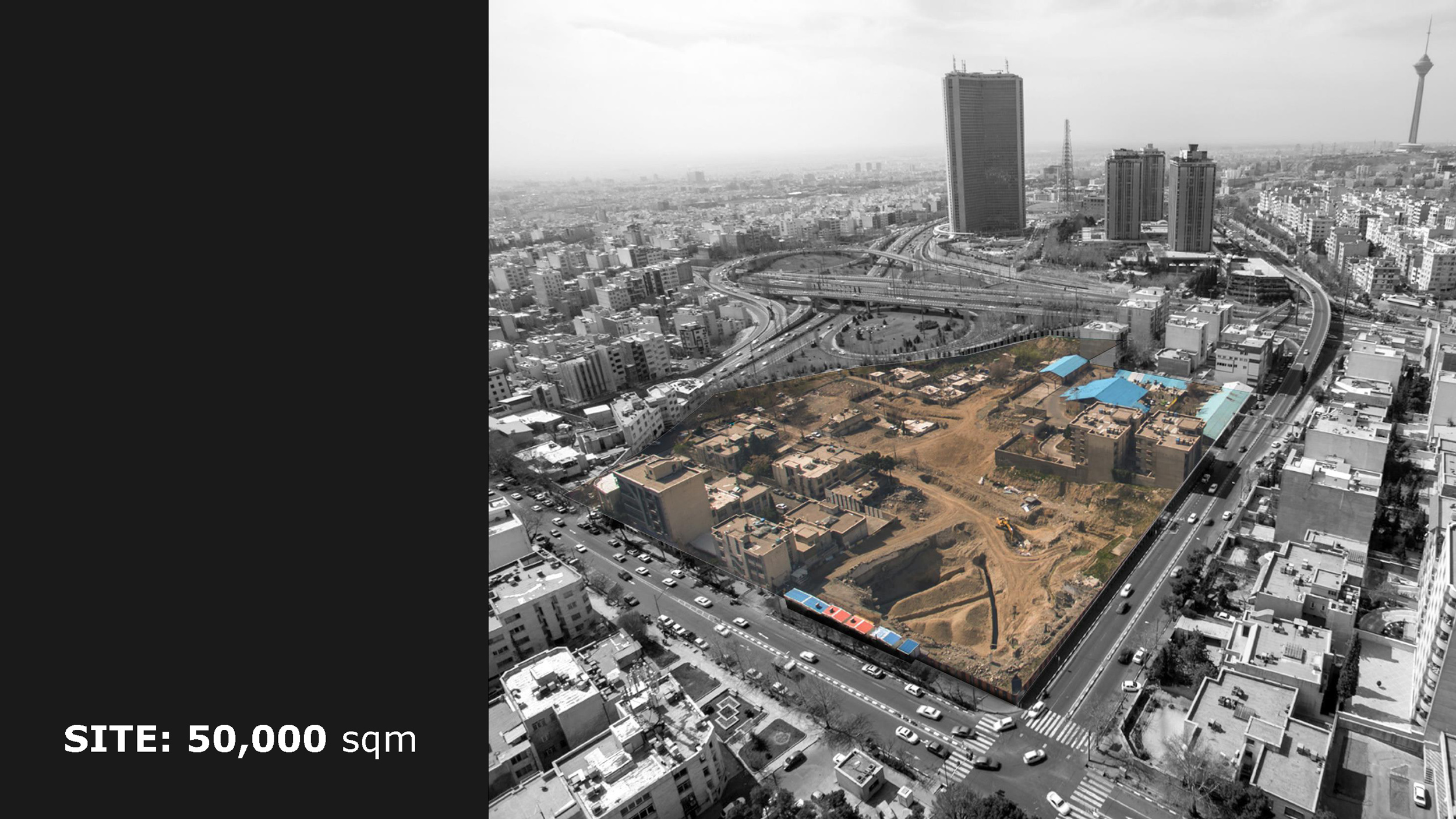
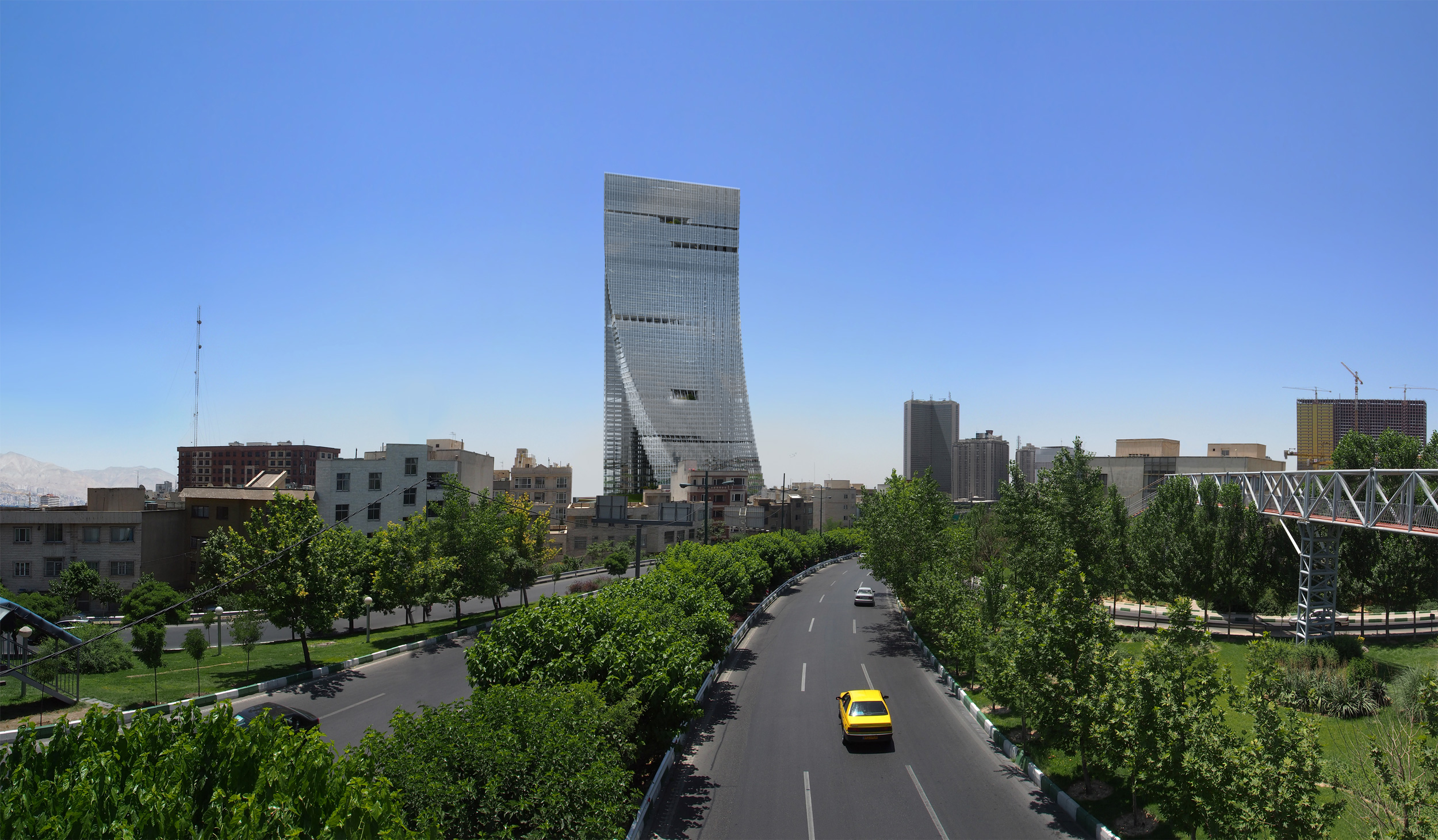
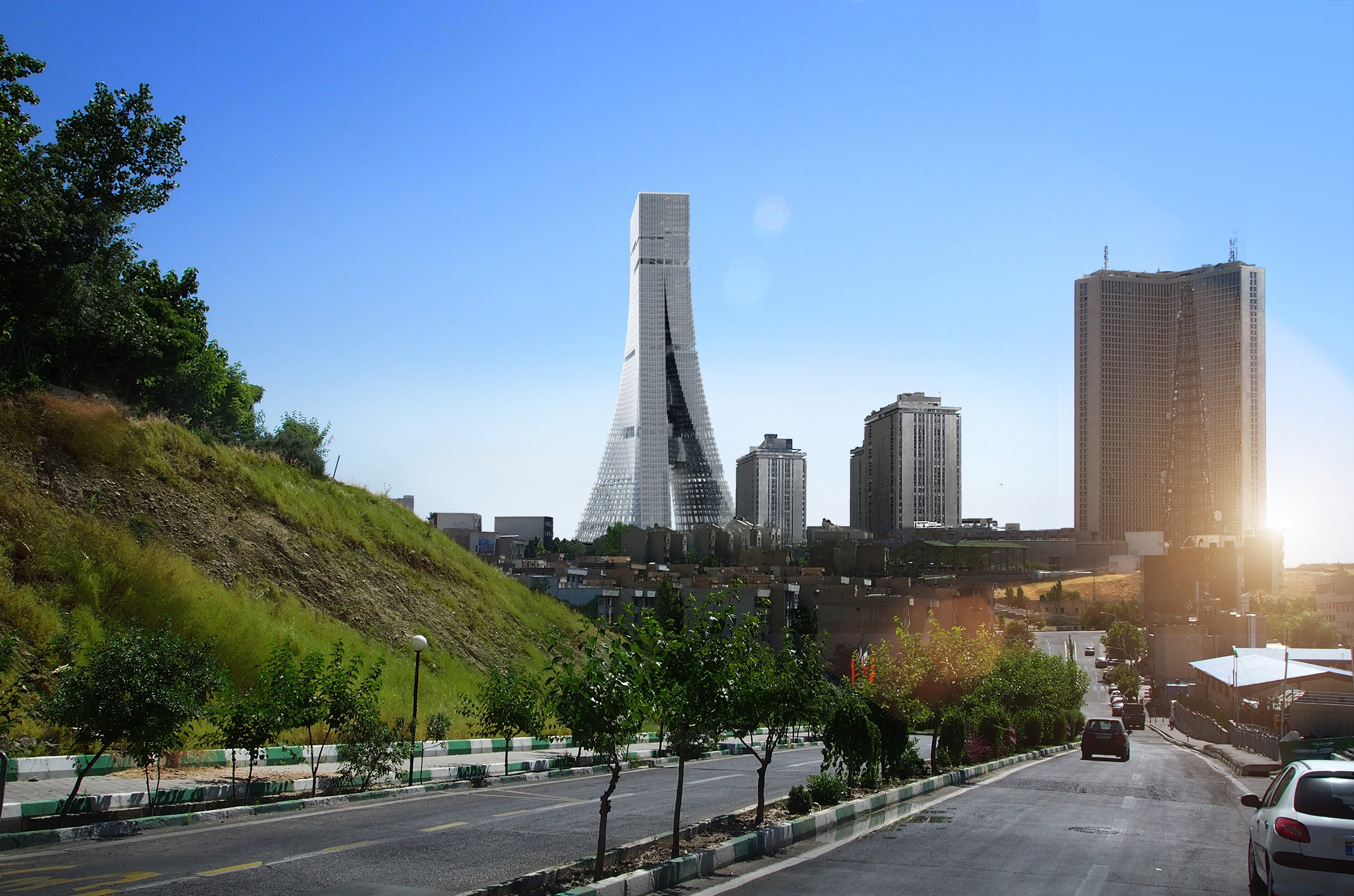
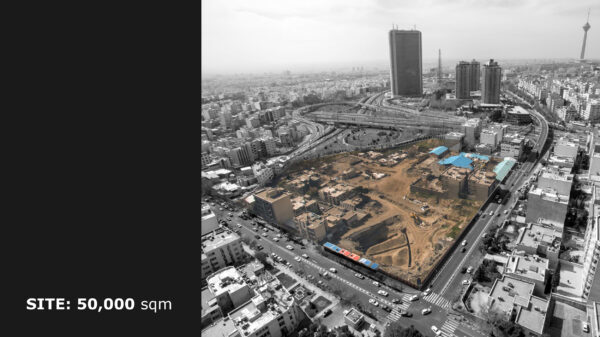
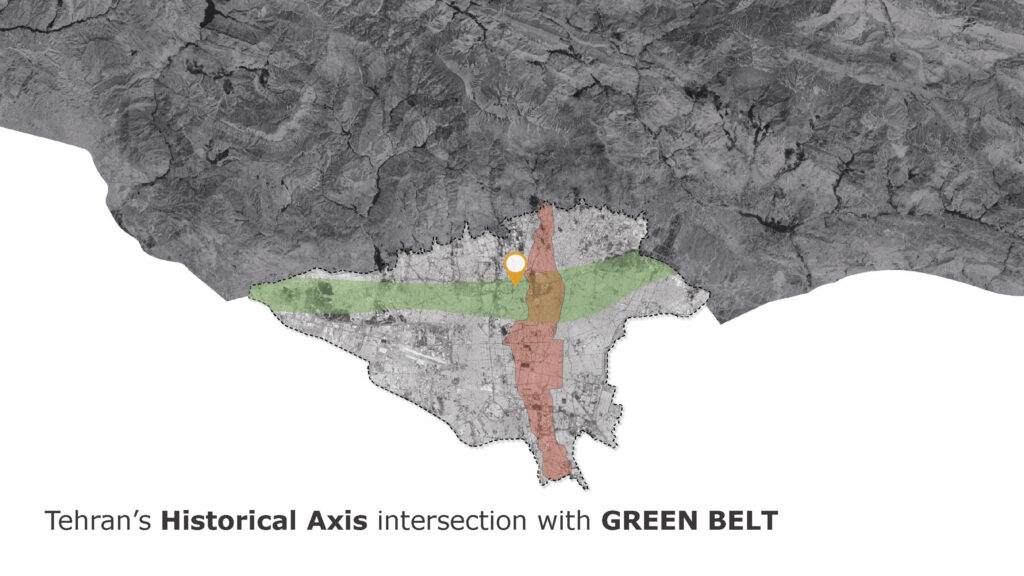
The site of the project is located almost in the heart of Tehran, on the southern slopes of the Alborz mountain range. It is close to the intersection of the historical districts (of the city) on the north-south axis and the city’s green belt on its east-west axis. As such, it will enjoy both a historical reminiscence and a uniquely pleasant mix of natural and man-made scenery. The location is also within an important administrative and commercial area of the city, which has excellent access to several highways. Spanning 50,000 square meters, the plot sits in a high-rise urban zone. The project includes commercial and business areas, as well as a hotel and parking space.
Architectural Concept
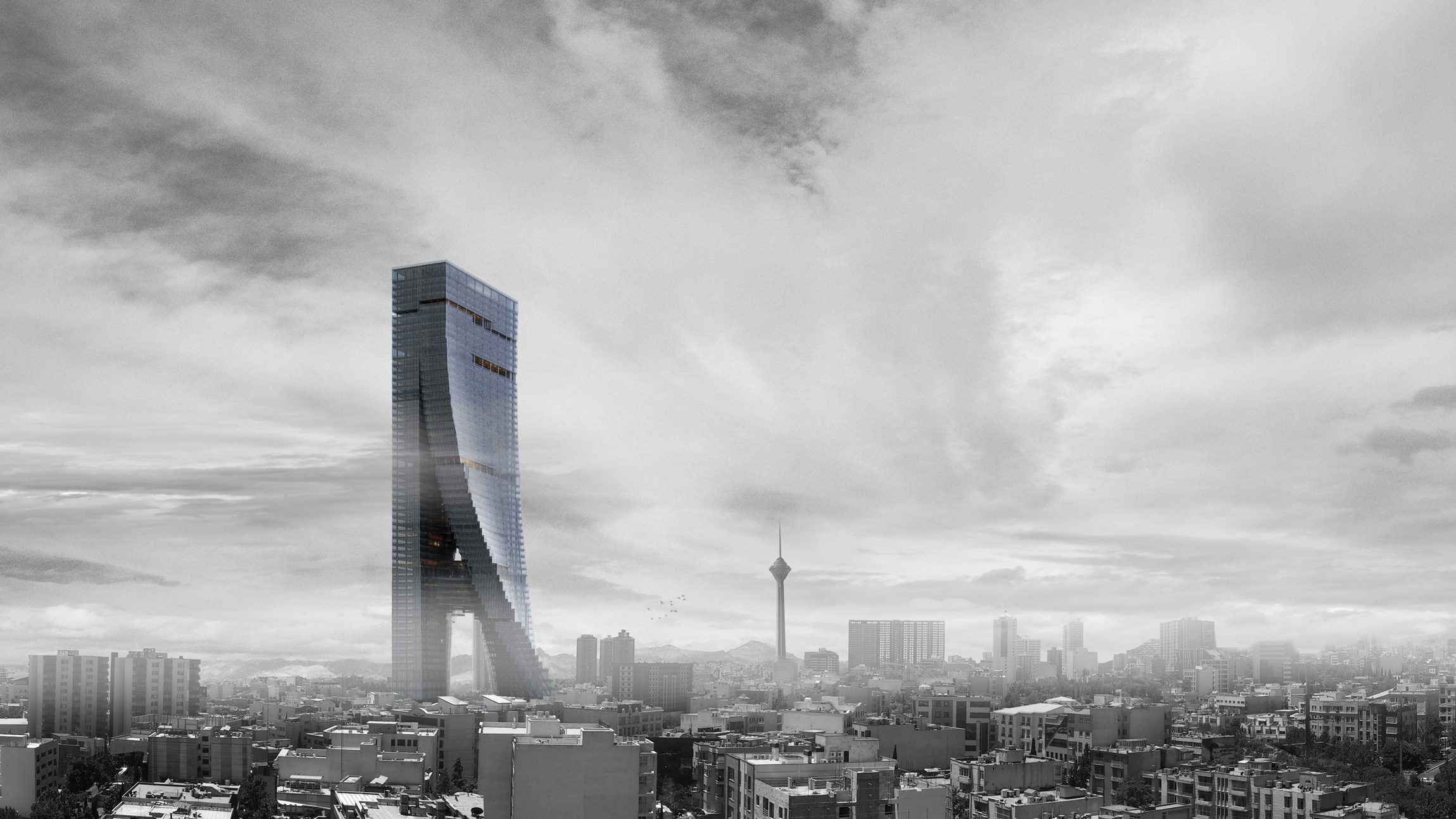
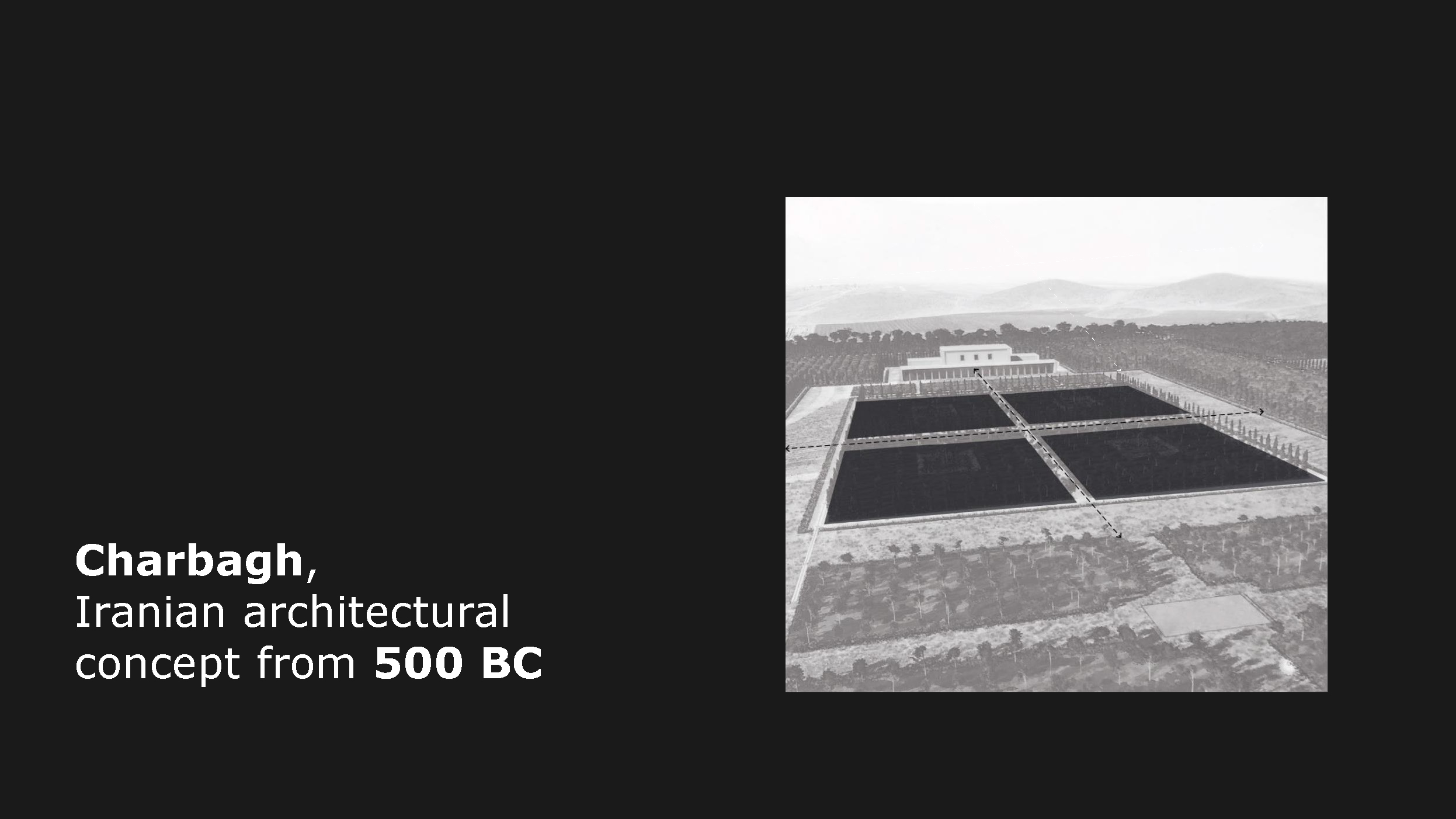
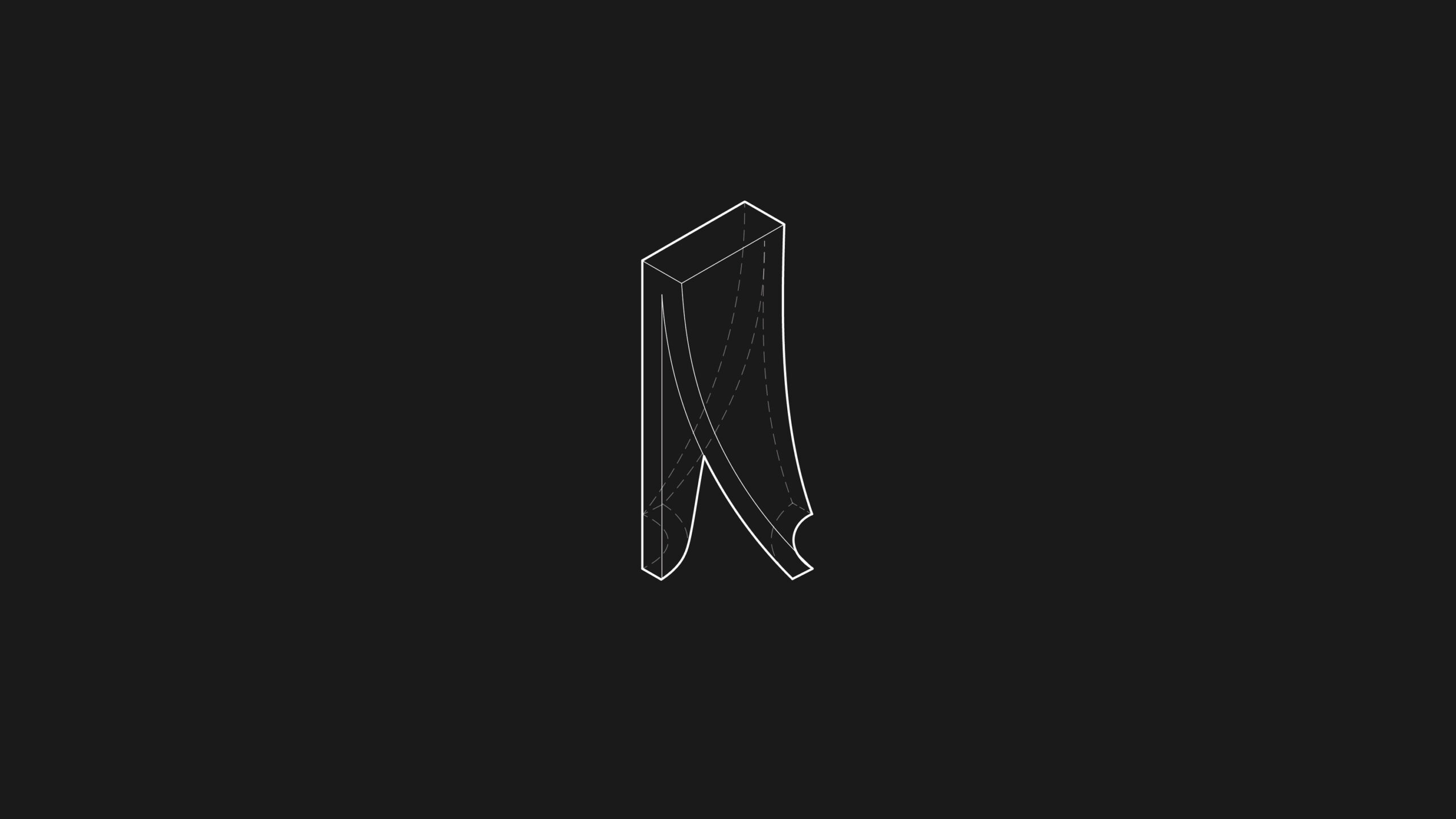
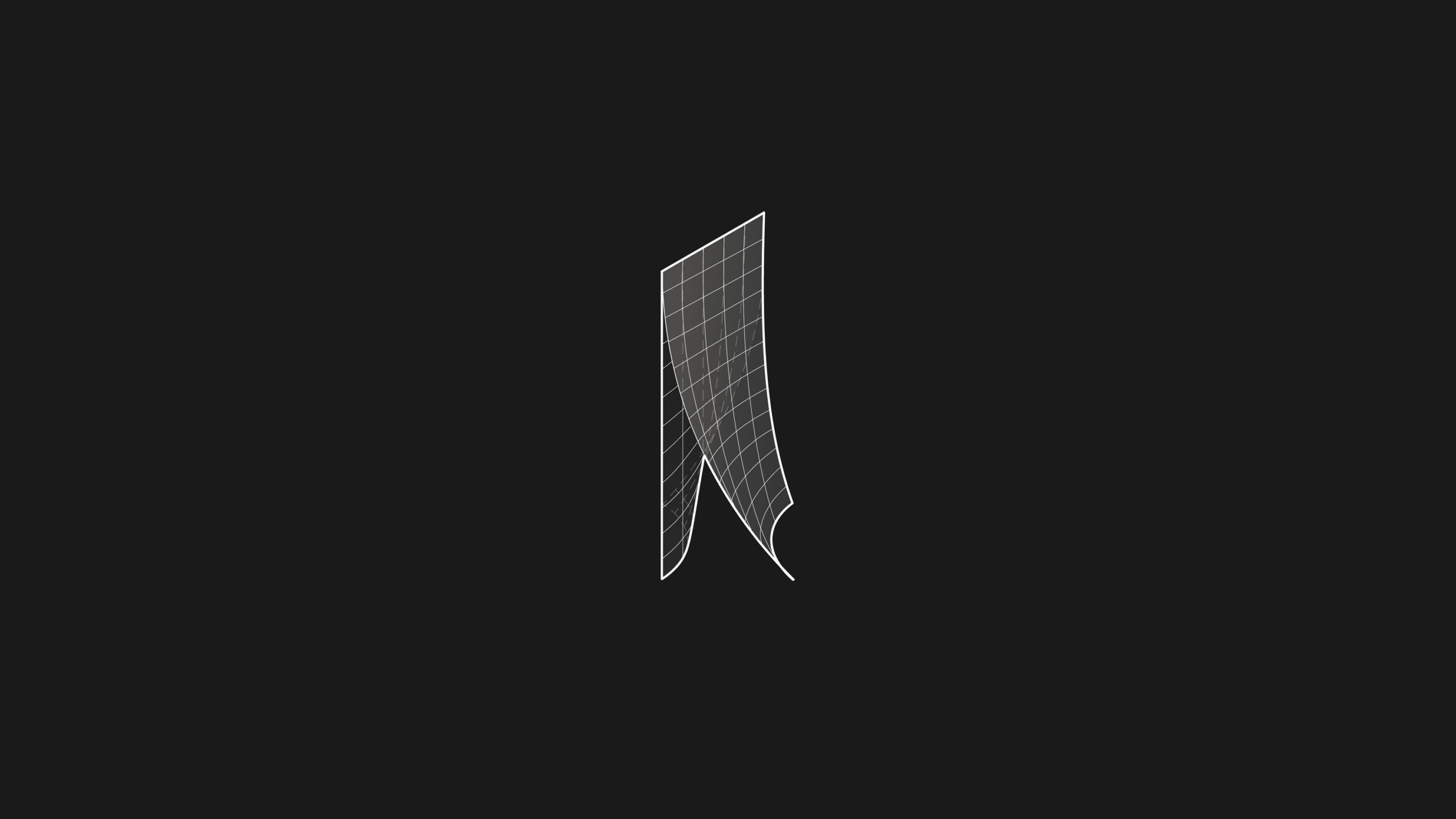
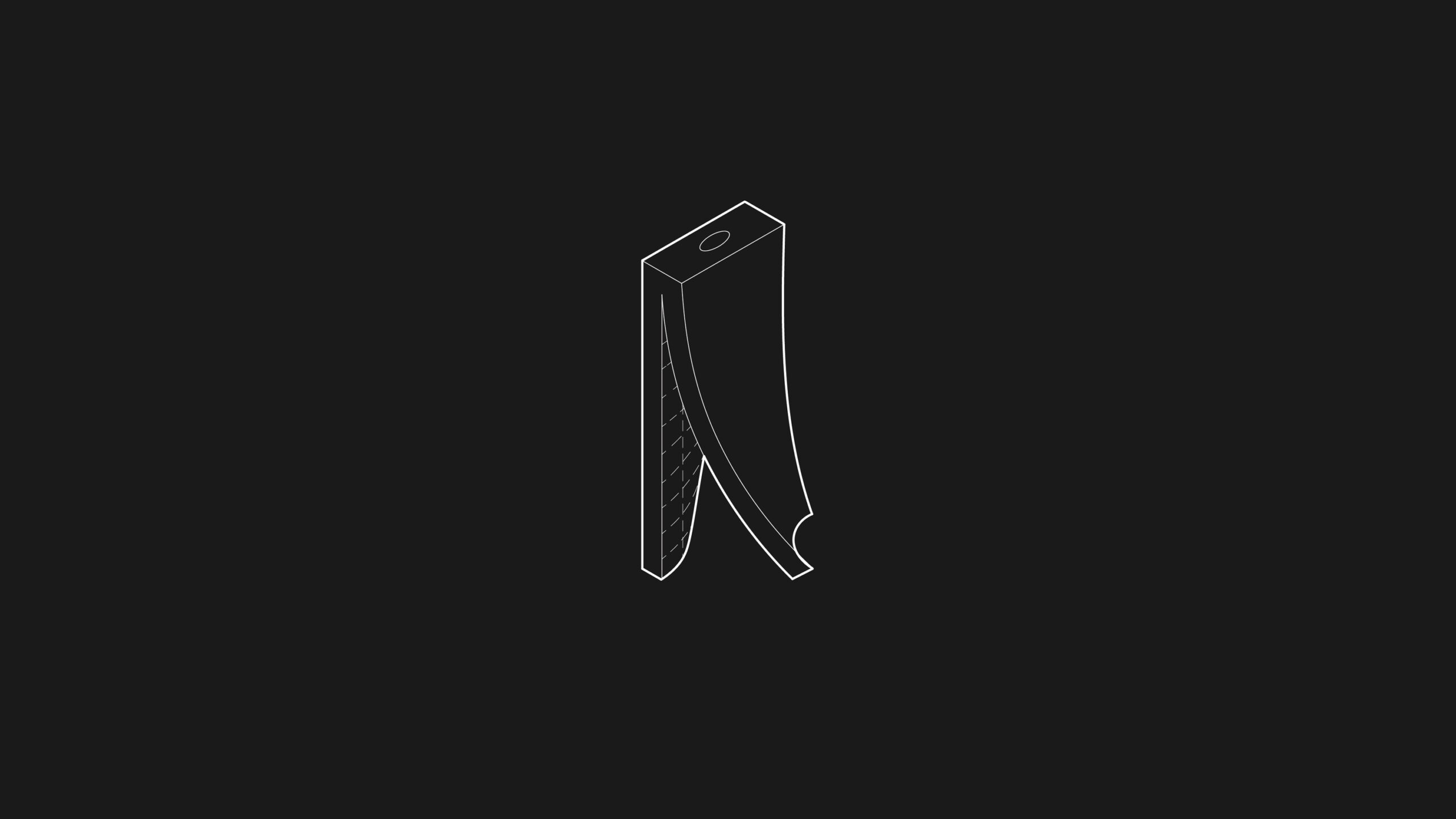
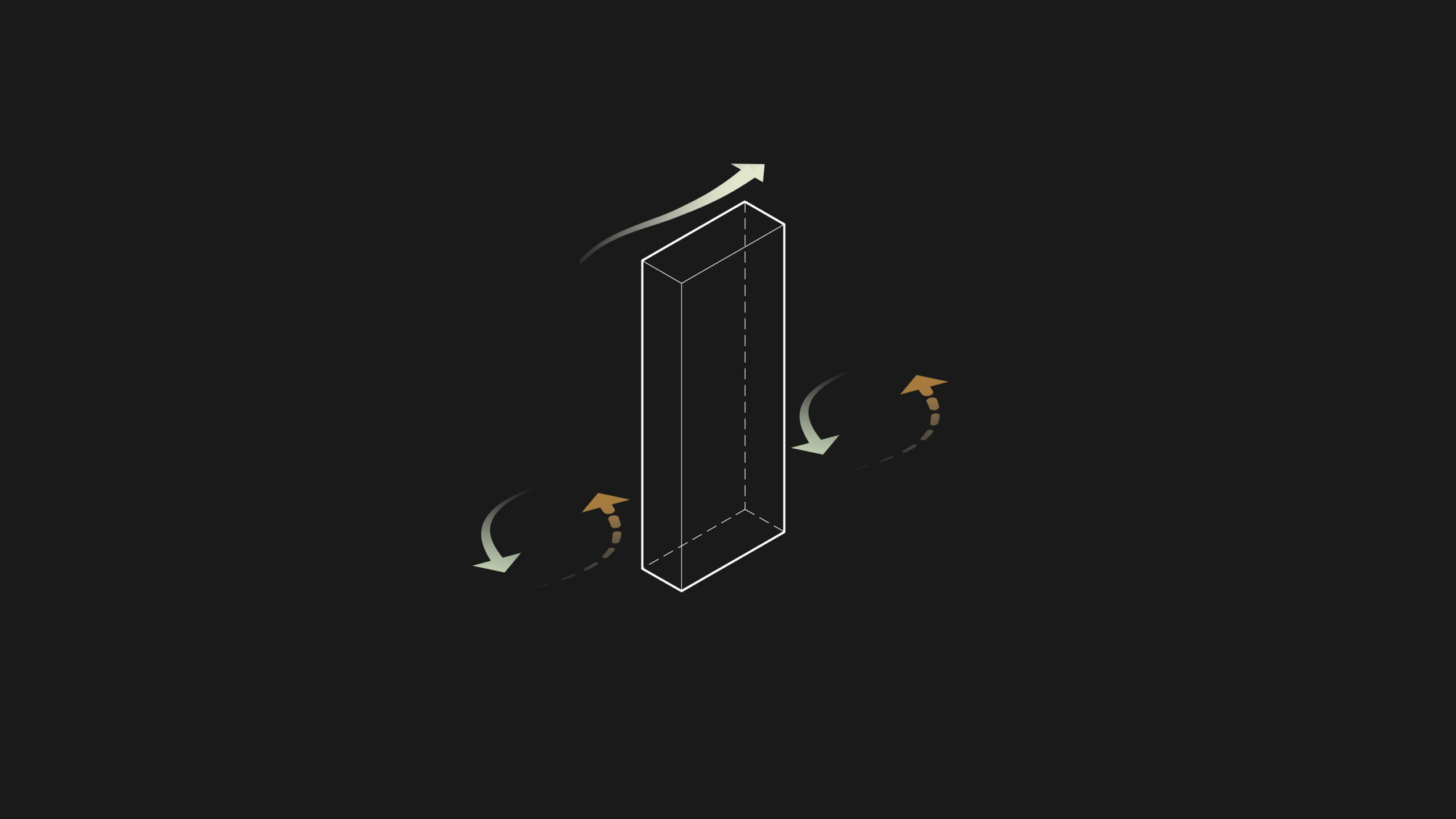
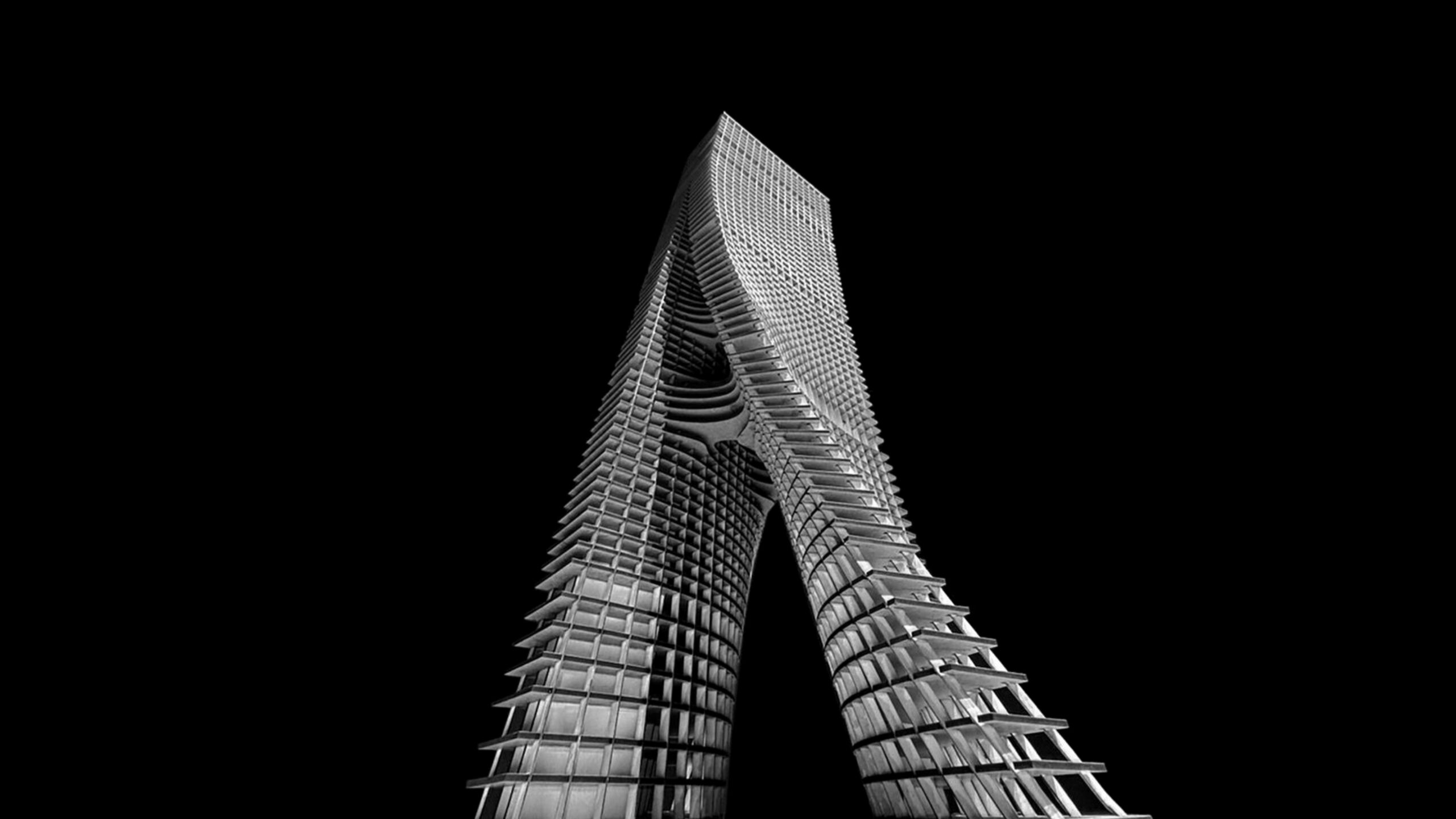
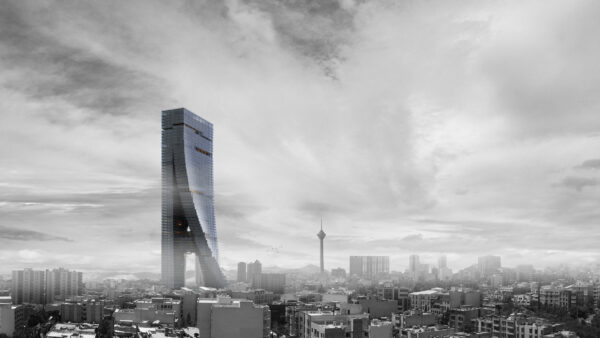
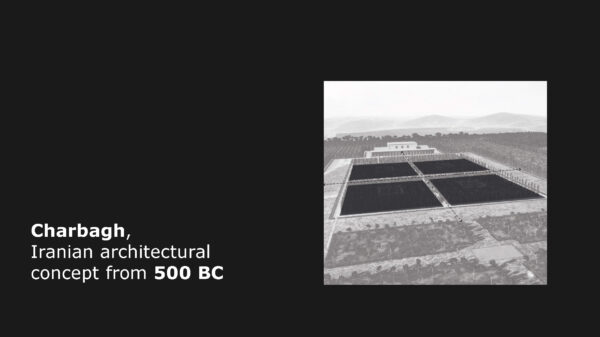
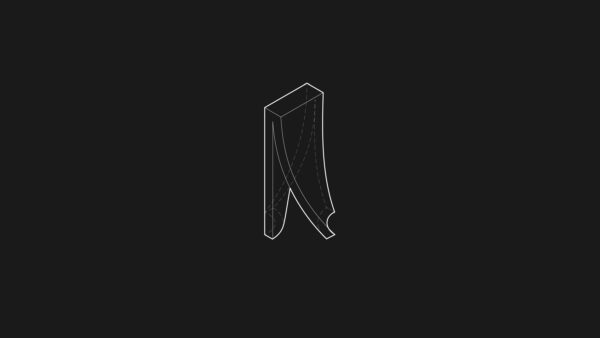
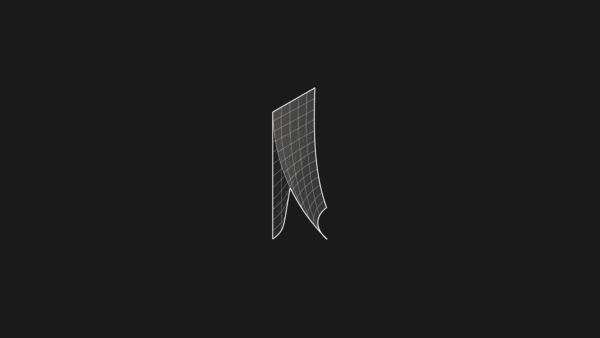
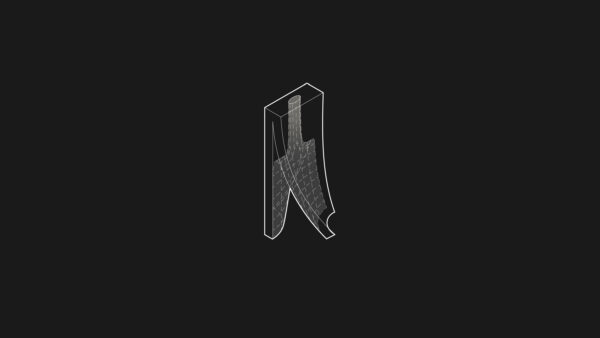
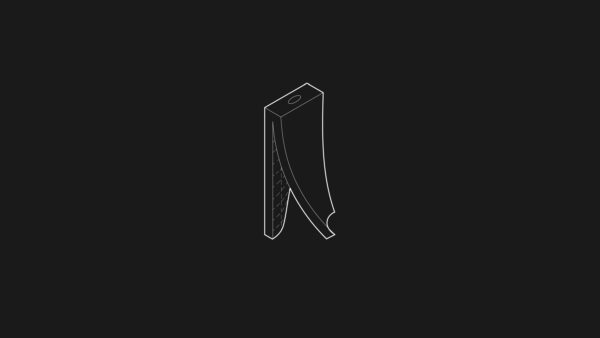
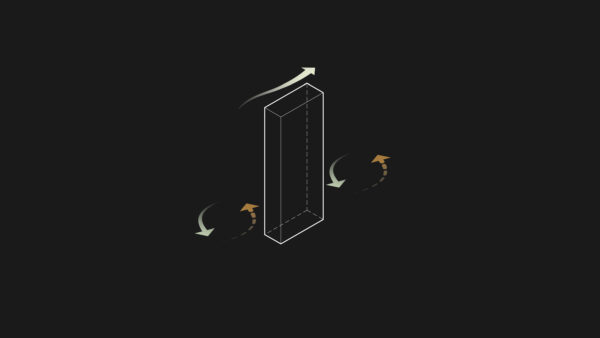
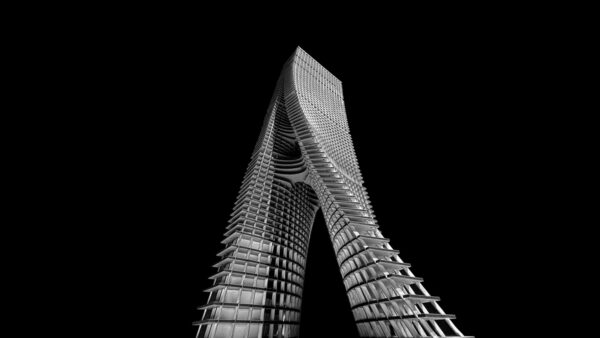
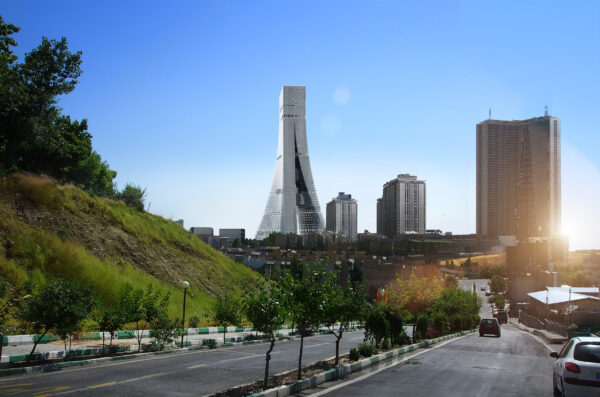
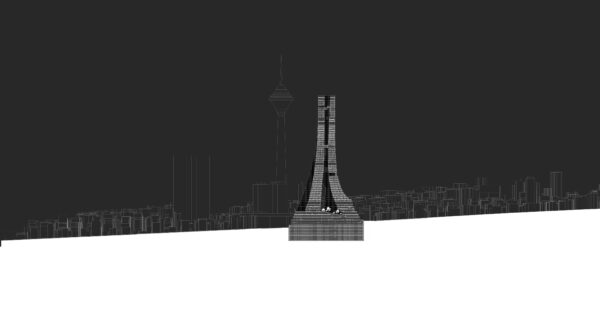
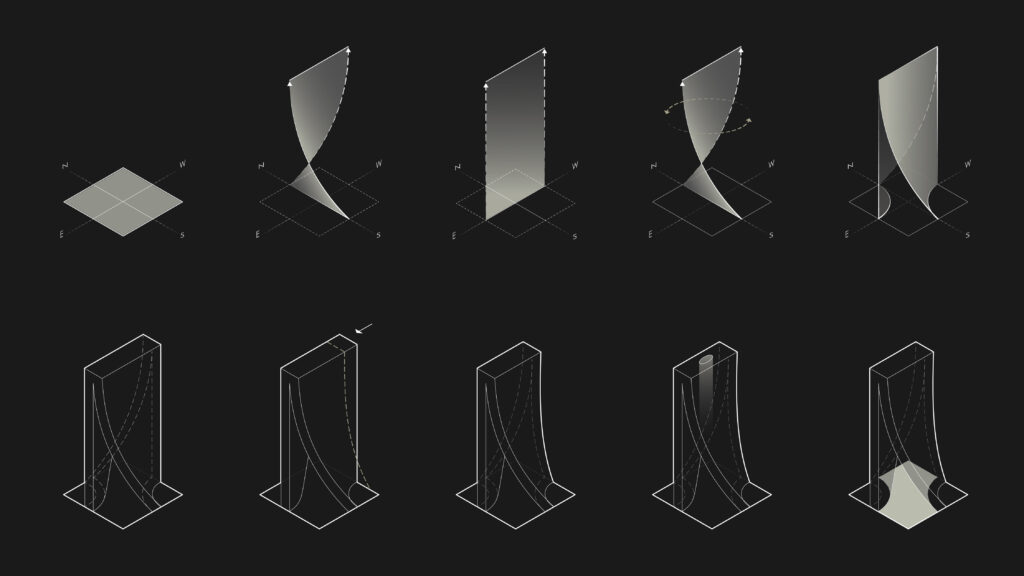
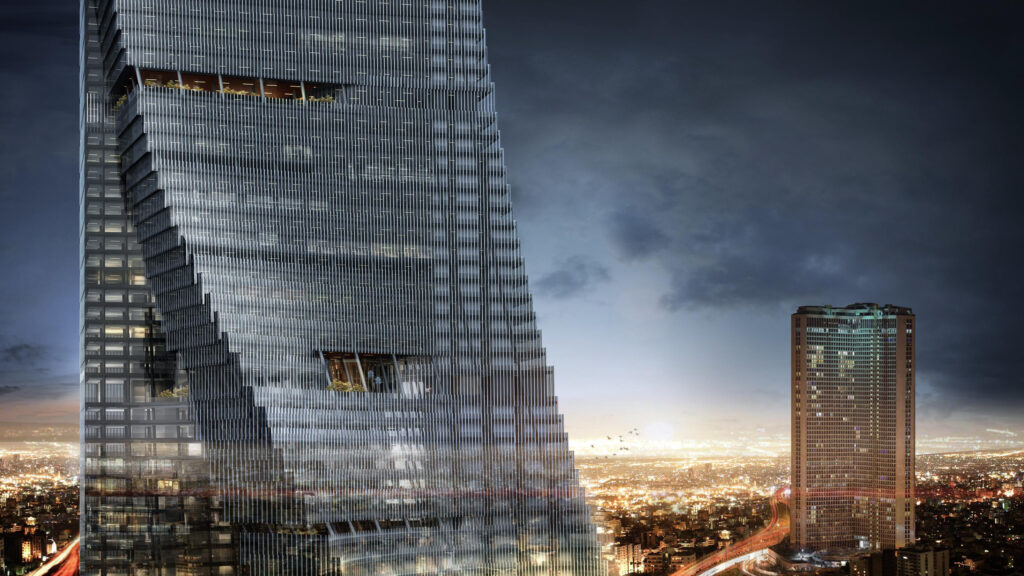
The main challenge of the project was to design a form of open structure for a high-rise tower. This meant striving for a major improvement over the ordinary cubic form. One that would generate an opening into the structure and therefore allow the tower to better interact with the environment and the climatic forces, such as sunlight, wind, and the surrounding green space, in order to save energy and achieve higher efficiency. The structure of Tehran WTC was designed using characteristic elements of Iranian architecture and the concept of ChaharBagh (the quadrilateral garden layout). Taking the climate and the main outlooks of the site into account, the tower’s body was set along the east-west axis, then with a 90-degree counter-clockwise rotation, the legs of the structure were set on the north-south axis, Then, by connecting the top points of the east-west axis in a curve to the ground-level vertices along the north-south axis, the basic diagram of the structure was born resembling a pair of strikingly tall curtains being drawn open from the bottom.
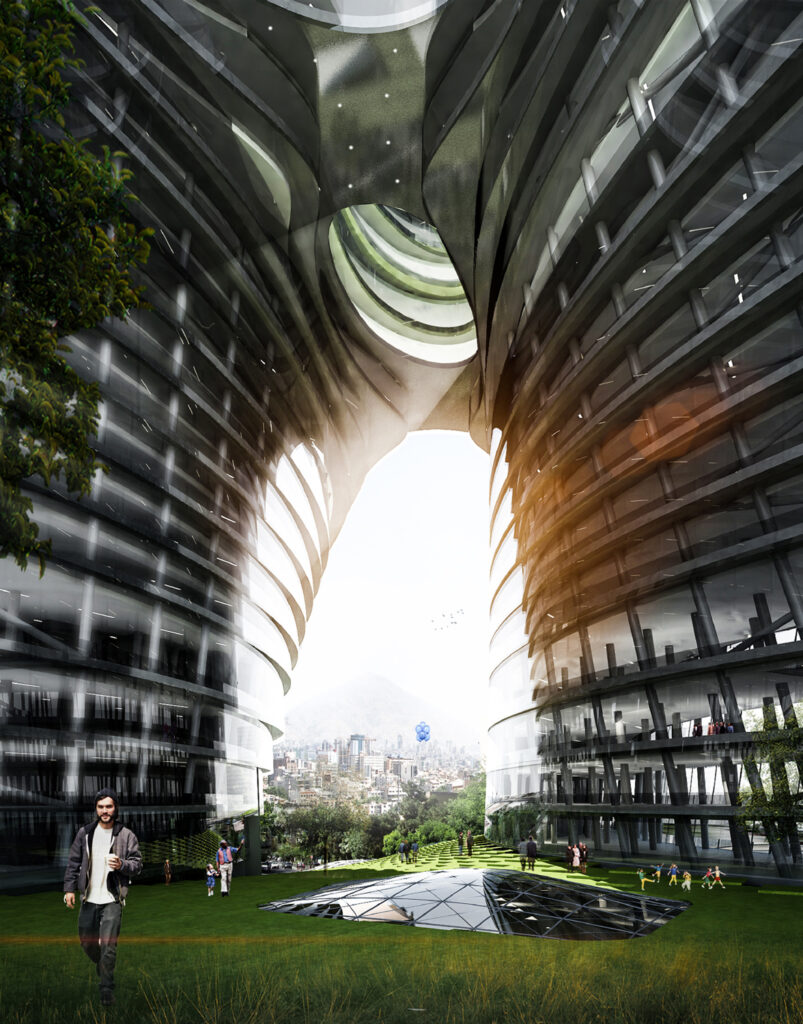
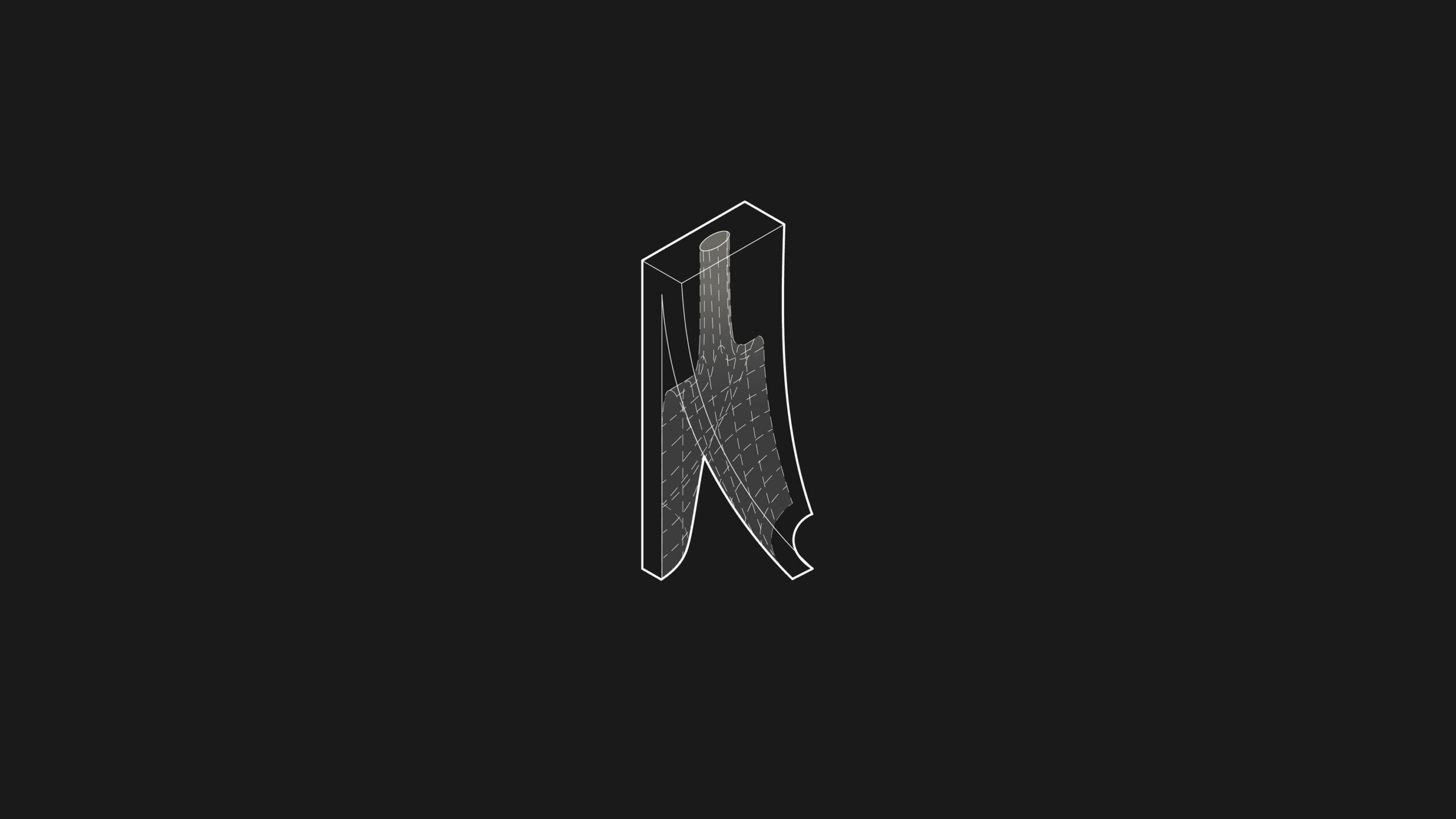
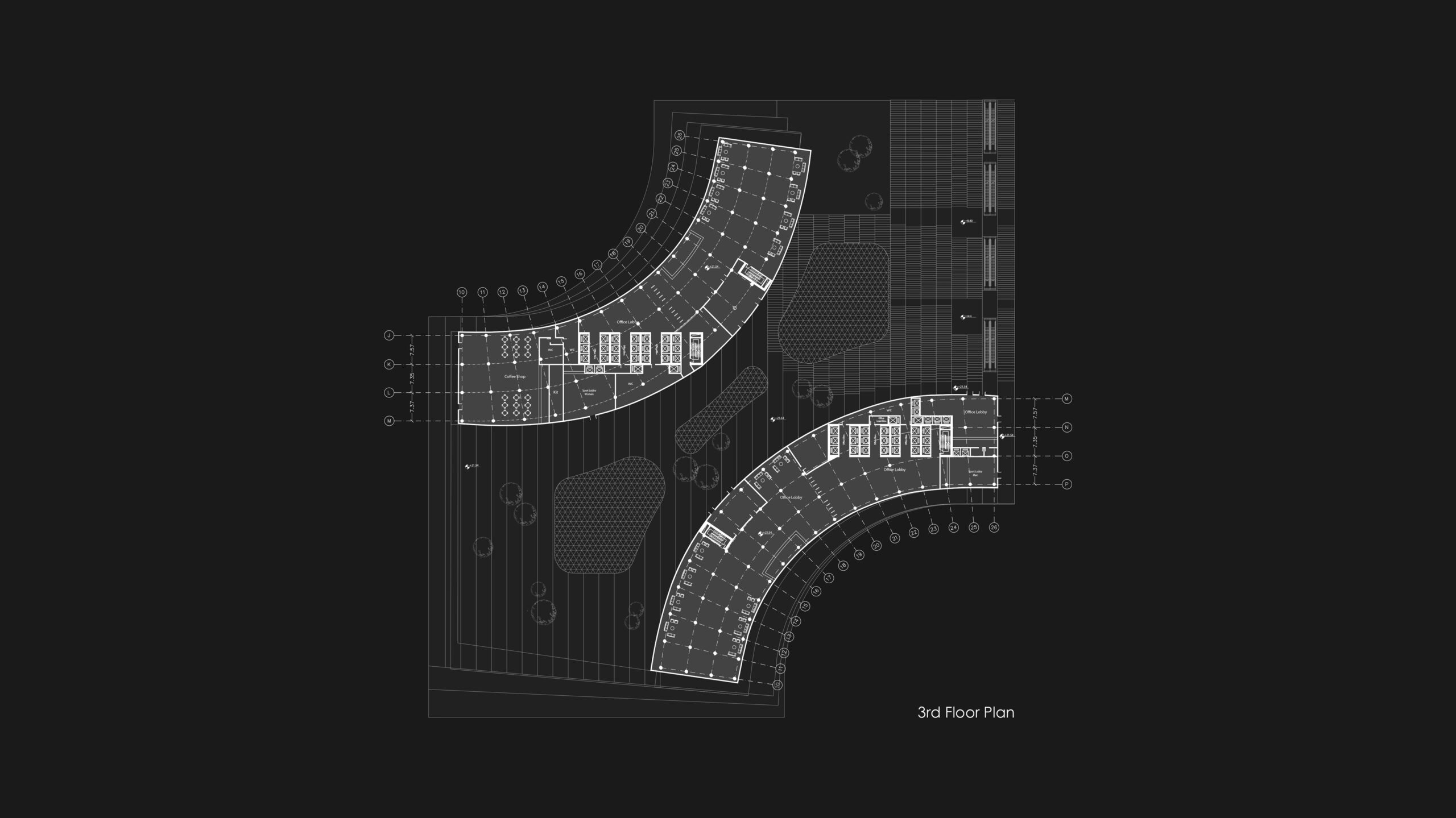
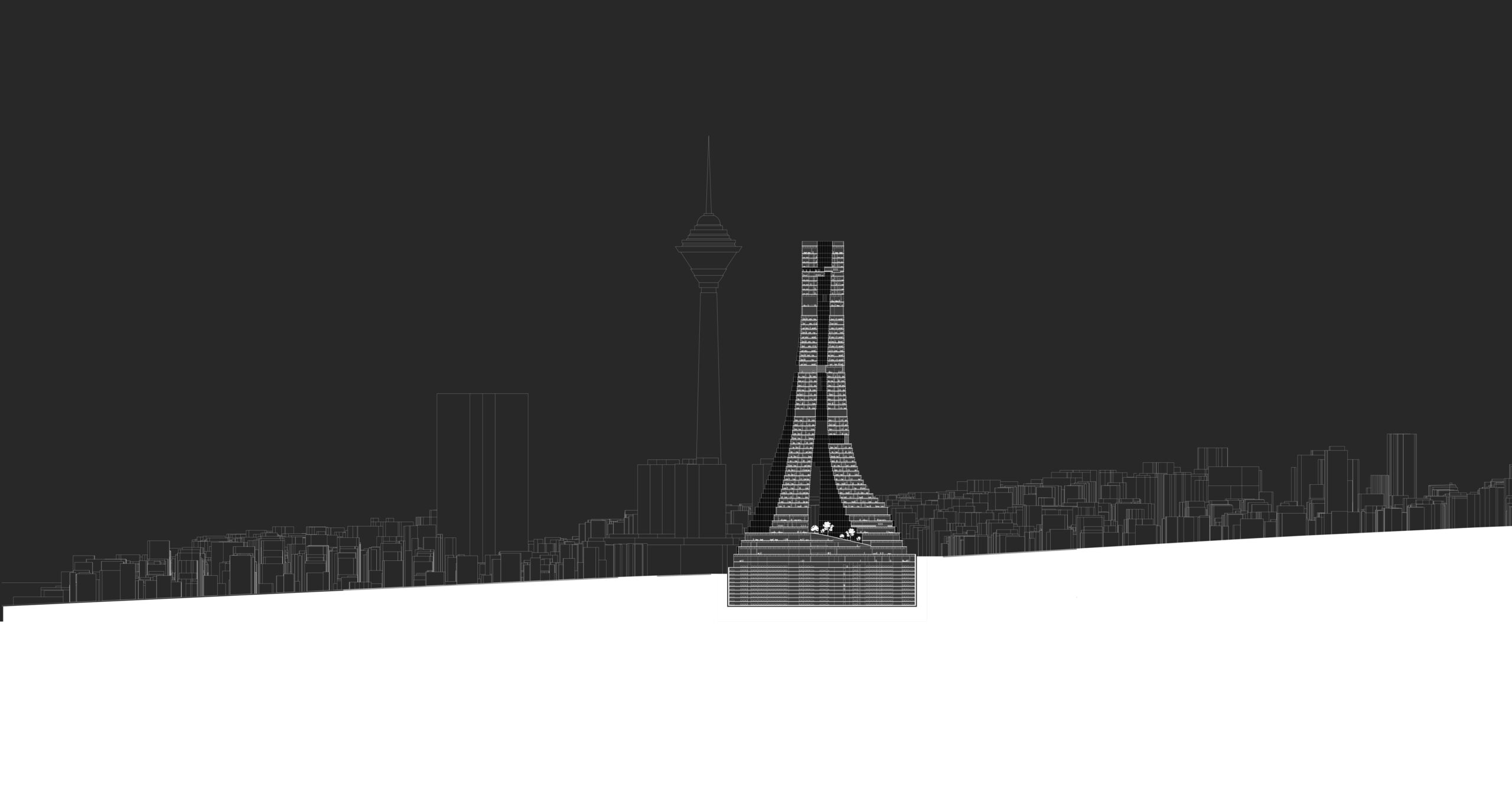
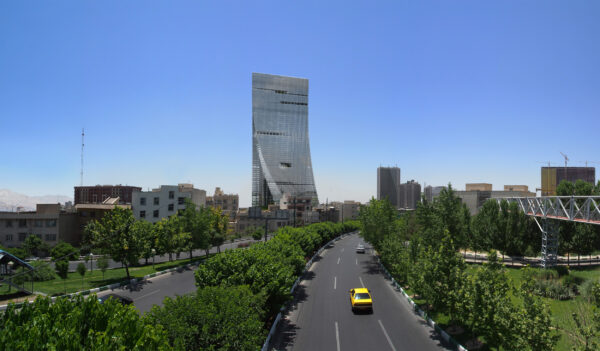
Finally, the actual figure of the tower emerged as we generated a 3D model of the primary diagram. Considering the proximity of Tehran to Mount Damavand, and to create a [conceptual] connection between the two, a diagonal cut was made on the main body, which facilitates this dialogue. The empty space formed between the curtains was redesigned to be a vast multi-level garden, which became a connector of the tower’s different programs. By allowing the roof of the commercial section to reach the ground level, we create a vast sloping roof that becomes a public garden between the draping curtains of the tower. This generates an interior landscape for the offices (in the building). It will also provide an accessible public space for the residents of the neighborhood. The garden also provides fresh views and a novel experience of the city of Tehran. The office section forms the main body of the tower in the shape of two curved volumes, each with its separate circulation system provided by one of the two main concrete cores.
Spatial Organization
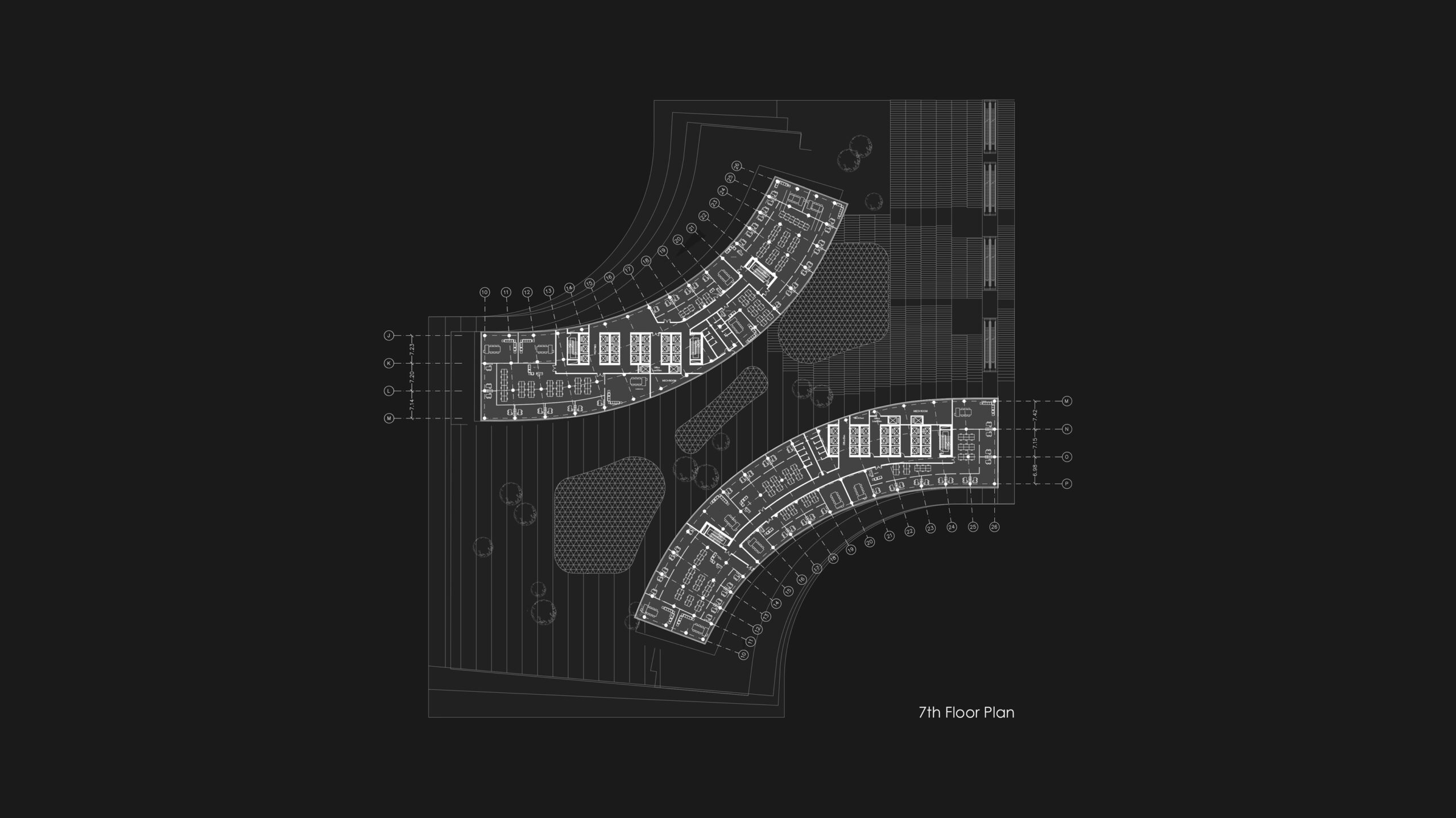
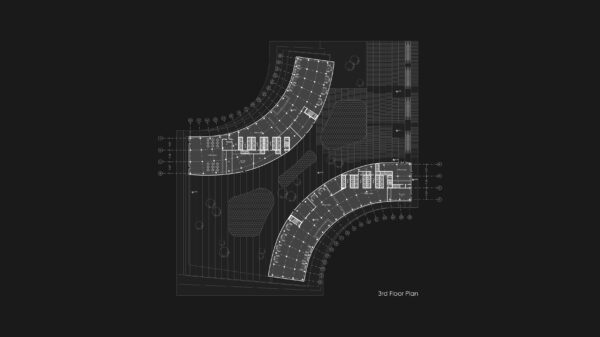
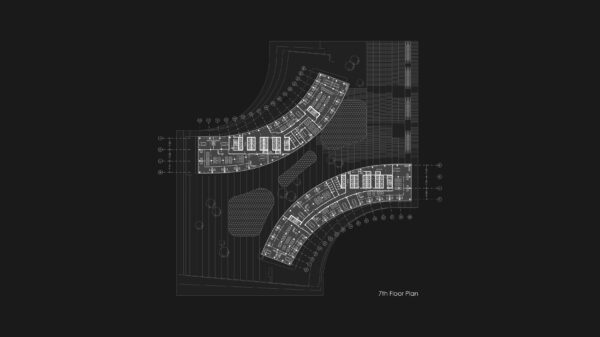
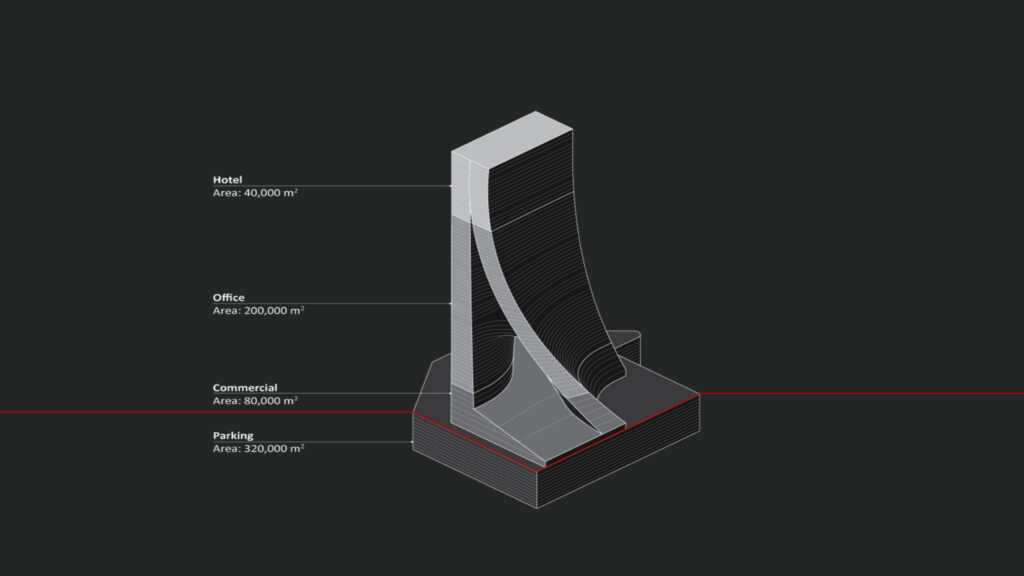
The total area of Tehran WTC tower is 650,000 square meters and consists of 320,000 square meters of parking space in the basements, 80,000 square meters of commercial and retail space housed between the 1st basement and the 2nd floor, 200,000 square meters of office space from the 3rd up to the 48th floor, and a hotel of 40,000 square meters in the top ten floors from the 50th to 60th; each of the these will have separate entrances. On the other hand, some open spaces are designed at different levels of the tower, which would transform it into a new public destination.
Passive Design System
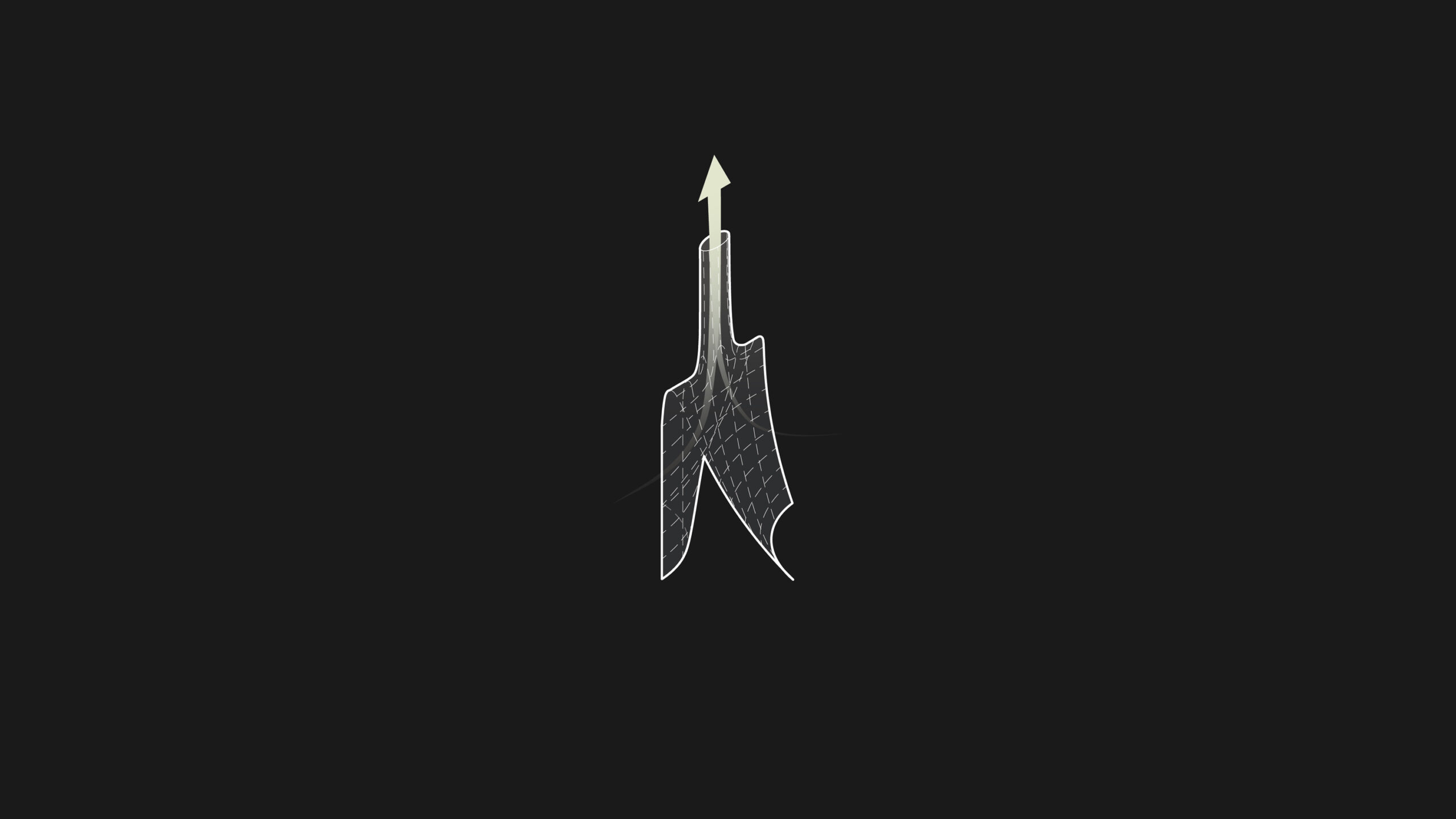
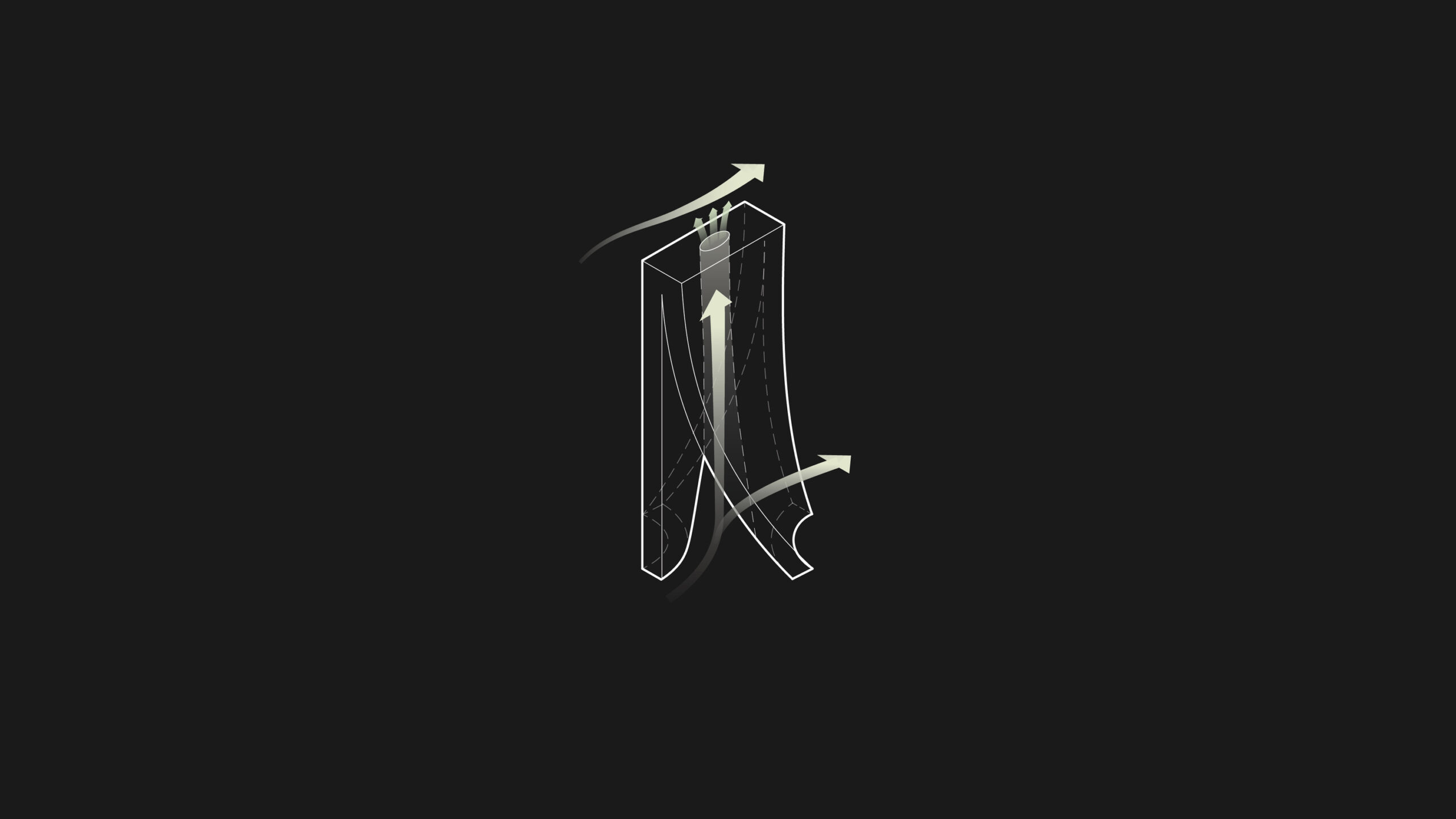
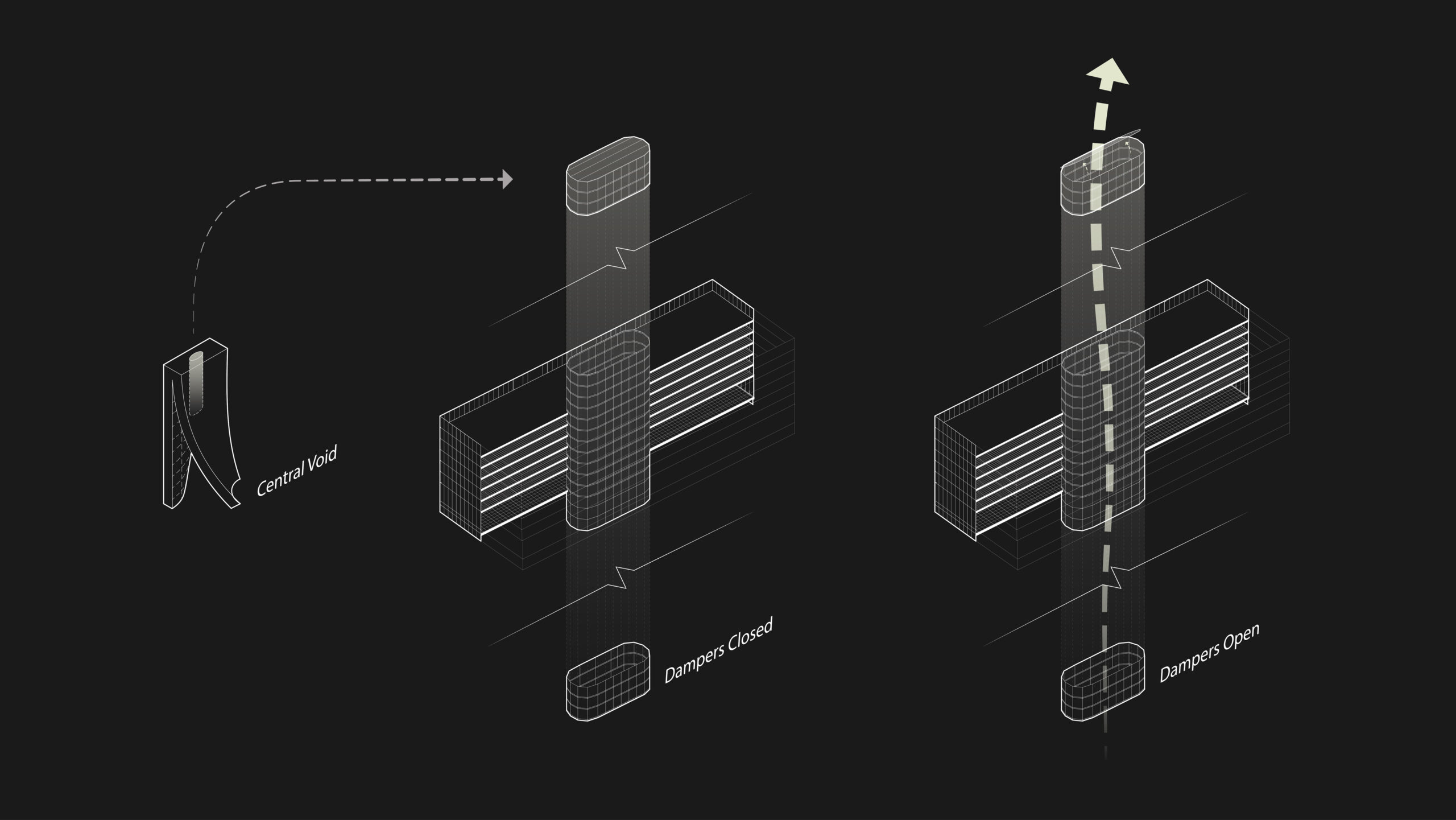
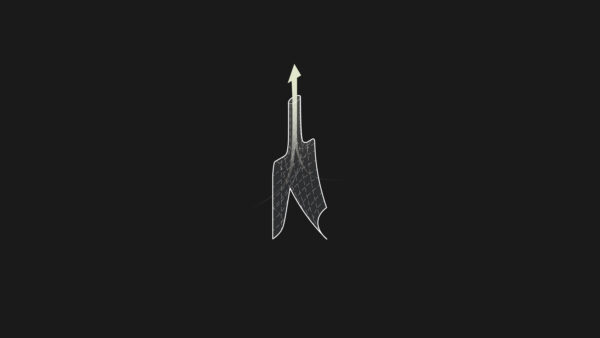
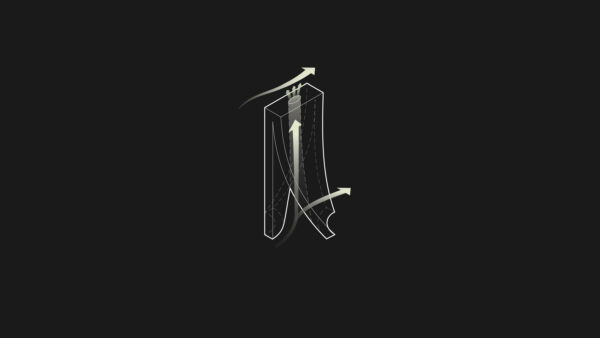
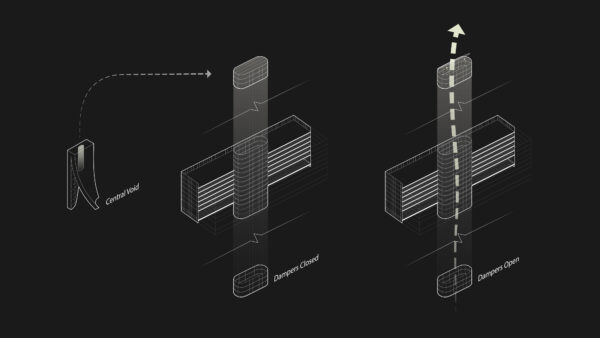
In designing the Tehran WTC, we have included a hollow space inside the tower, perpendicular to the garden axis, to implement the concept of a solar chimney. A solar chimney is a mechanism that allows benefiting from the natural airflow during hot and cold seasons. So by creating a vertical void in the upper floors of the tower and implementing controllable hatches, the air will flow naturally through the tower, which will save a significant amount of energy. During the summer, the air inside the solar chimney is heated by sunlight and moves upwards. Opening the hatches on the roof allows the warm air to exit, which in turn pulls fresh air from the bottom of each floor into the internal spaces and cools down the building.
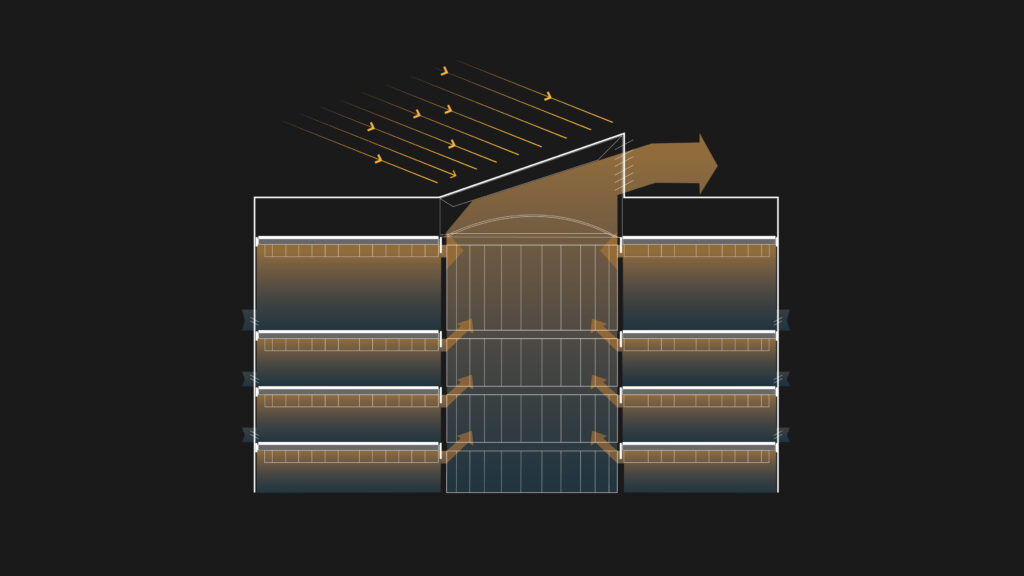
In winter, shutting the hatches traps the air and prevents heat loss. This mechanism increases the Passive Mode from 11% – as is the typical rate for conventional buildings – to double that rate, achieving a highly-efficient 22%.
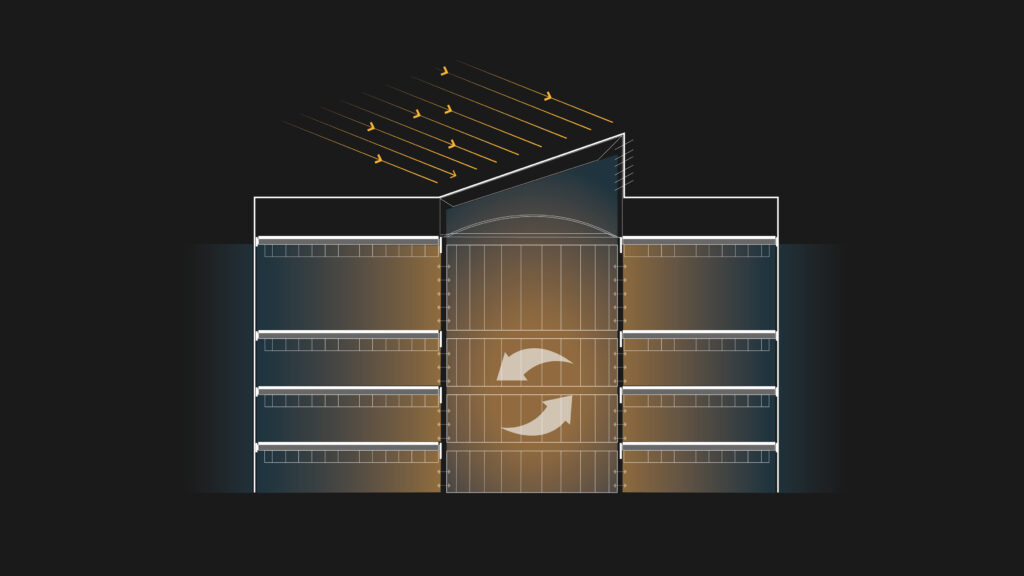
Additionally, the north-south orientation of the tower’s body as well as its rotation enables maximum use of natural lighting for the spaces, while the middle atrium provides light for the internal spaces of the building. Given the changing center of gravity in our plans for different levels and the core systems being off-center, we implemented a system of shear walls and moment frames, in addition to a belt truss system and a braced tube system to control the torsional irregularity of the building as we were in the design stage.
Facade Design
To benefit from the beautiful view of the natural surroundings, Sun Energy glass was chosen as the material to be used for the main façade of the project, which consists of multi-layered glass with a light-sensitive film layer in between, which can adapt to the intensity of the sunlight. In order to further control the intensity of sunlight on the glass, vertical mullions that are 50 cm wide are placed corresponding to the grid of the glass sheets. Consequently, during the hot seasons of the year, especially in the afternoons when the sun shines at an oblique angle, mullions act as vertical canopies and prevent the sunlight from entering directly through the glass. Also for natural ventilation, dampers (or UBrackets) will be installed close to the lower frames of the windows, and horizontal louvers will be set up close to the ceiling to cast shadows on interior spaces during summer as well as to bounce light off the office ceilings helping the farthest and the least bright parts of the space to be lit.
Public Open Space
To provide a space to enjoy fresh air during coffee breaks, a number of public balconies have been designed at different levels. Public spaces will not only exist at ground level. They will be found at varying levels of the mid and top sections, serving as the main connectors of the volumes of the tower while generating a pleasant and uniquely creative working space. The purpose of this project is not merely to create another object but to offer an urban concept and a tower design that continues from and merges with its public spaces.